


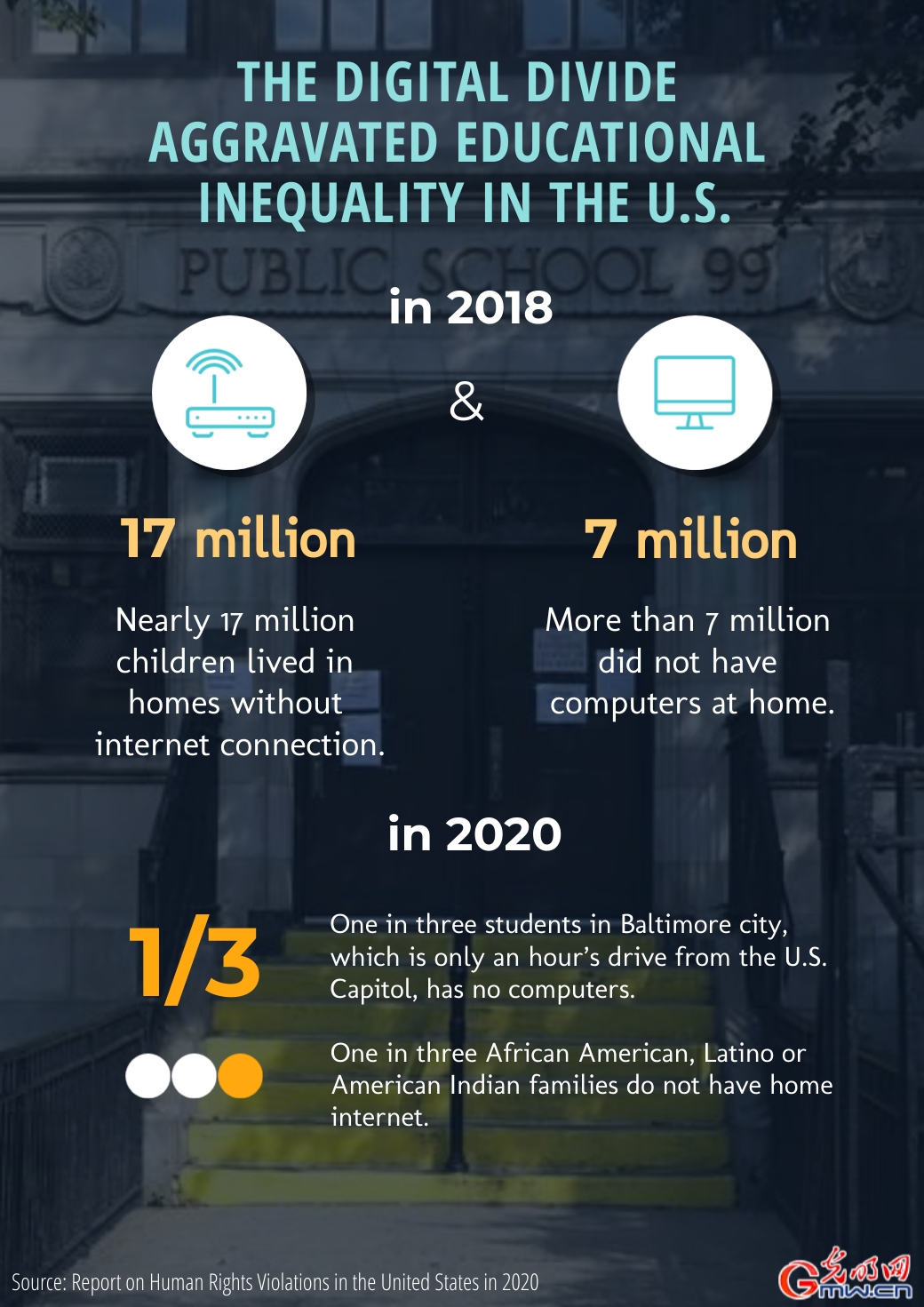
The digital divide aggravated educational inequality. In 2018, nearly 17 million children lived in homes without internet connection, and more than 7 million did not have computers at home, according to a report that analyzed census data for that year. The website of Politico reported on Sept. 23, 2020 that one in three students in Baltimore city, which is only an hour’s drive from the U.S. Capitol, has no computers. One in three African American, Latino or American Indian families do not have home internet. Virtual learning became a mainstream education pattern during the epidemic. Compared with their wealthier peers, low-income and minority children are less likely to have appropriate technology and home environments for independent study because of their family backgrounds and therefore are at a disadvantage in e-learning, further aggravating the educational divide caused by poverty and racial inequality.
点击右上角 微信好友
微信好友
 朋友圈
朋友圈

请使用浏览器分享功能进行分享