



Wax printing colored Miao people's life
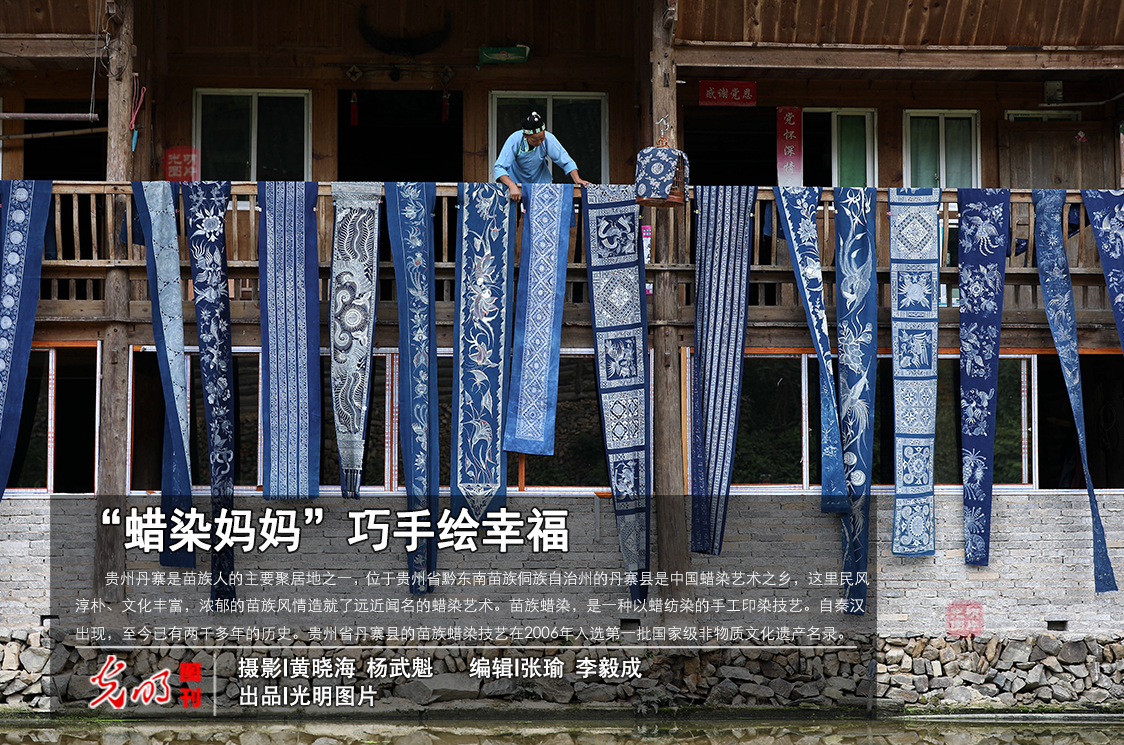
Under the administration of the Qiandongnan Miao and Dong Autonomous Prefecture, Danzhai County in the southeast of Guizhou province is one of the places where the Miao ethnic minority group population has grown extensively. Renowned for its ethnic culture and traditions, Danzhai country is the frequent goal of tourists from home and abroad.
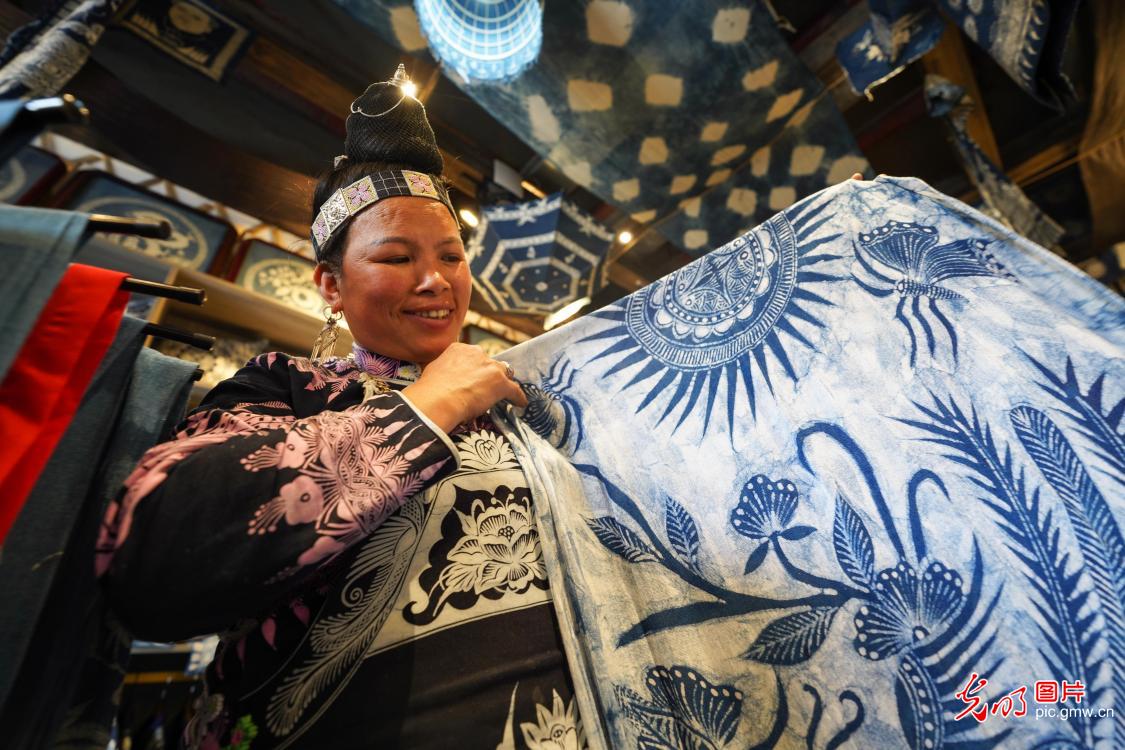
Wax printing, also knows as Batik, is a traditional process of resist-dyeing that uses wax to draw patterns on fabrics.
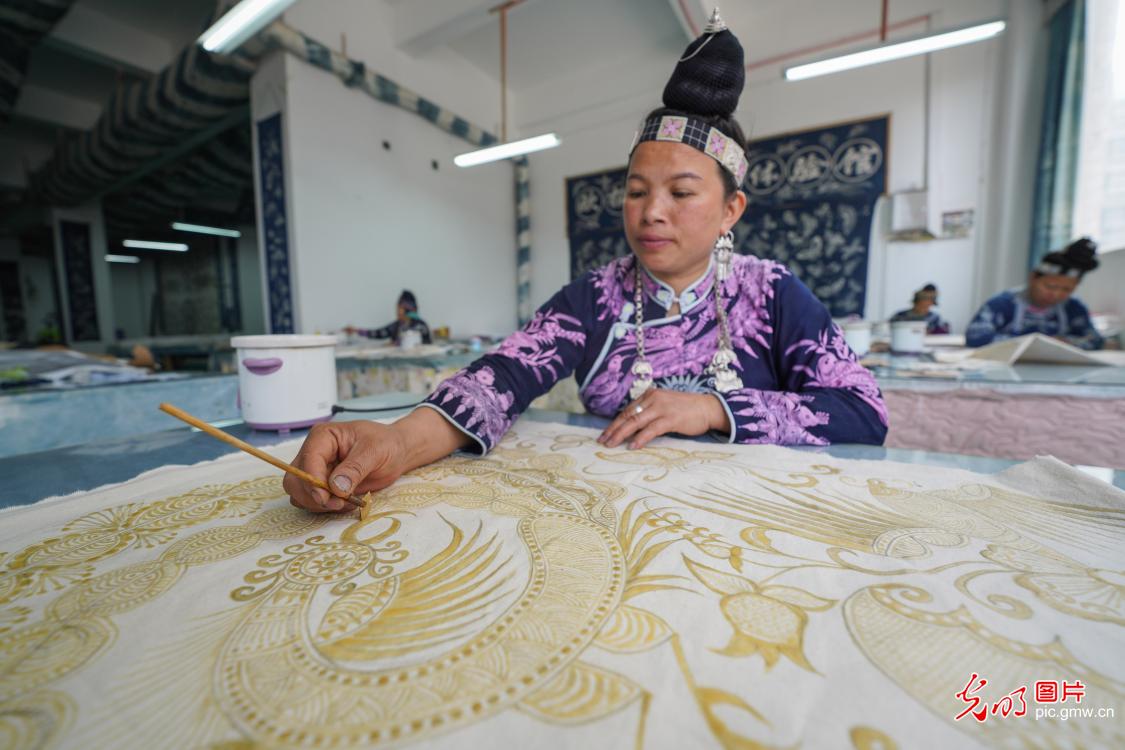
Before drawing with wax, the Miao artists would firstly use the needle to press a draft of the pattern. The next step is indigo dyeing. After the dye is set, the fabric is boiled to remove the wax, eventually revealing the blue and white pattern.
Dating back to the late Qin or early Han dynasty, wax printing is one of the three ancient Chinese handicraft methods of producing dyed and multi-colored textiles.
With a history of more than 2000 years, wax printing was approved as a national cultural intangible heritage in China.
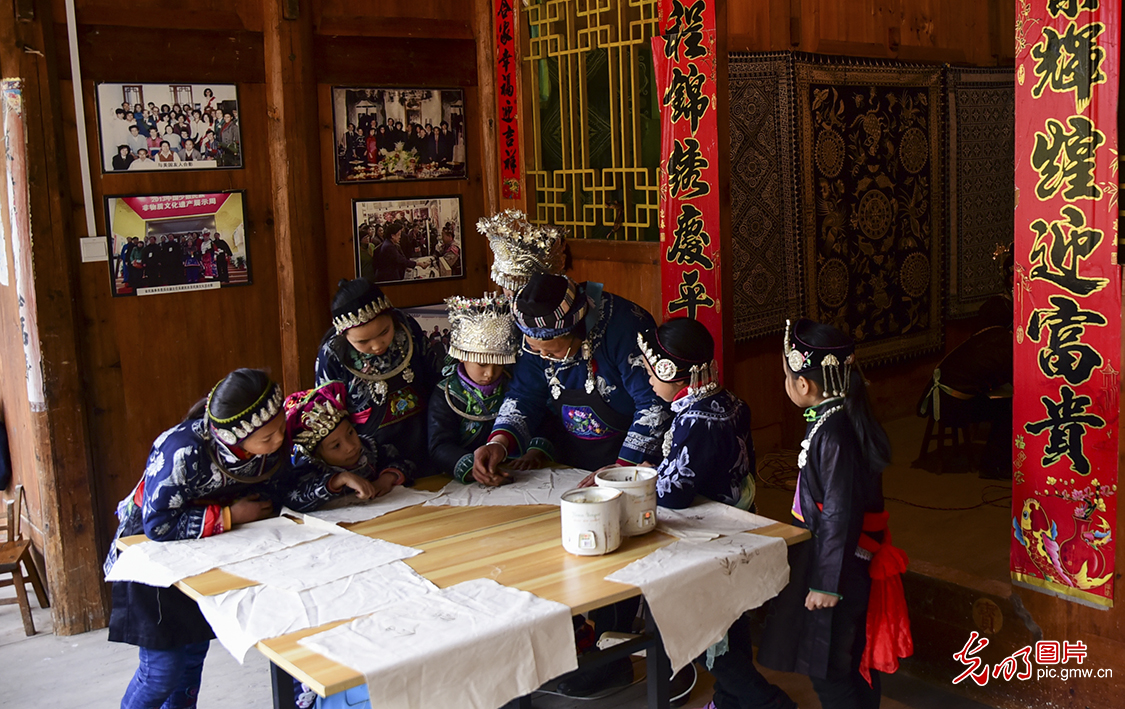
Yanger Baolang, a 46-year-old woman of Miao ethnic group, is one of the cultural inheritors of the traditional ethnic technique. Her hardwork and high proficiency not only earn her a better living, but also bring wealth to other local people.
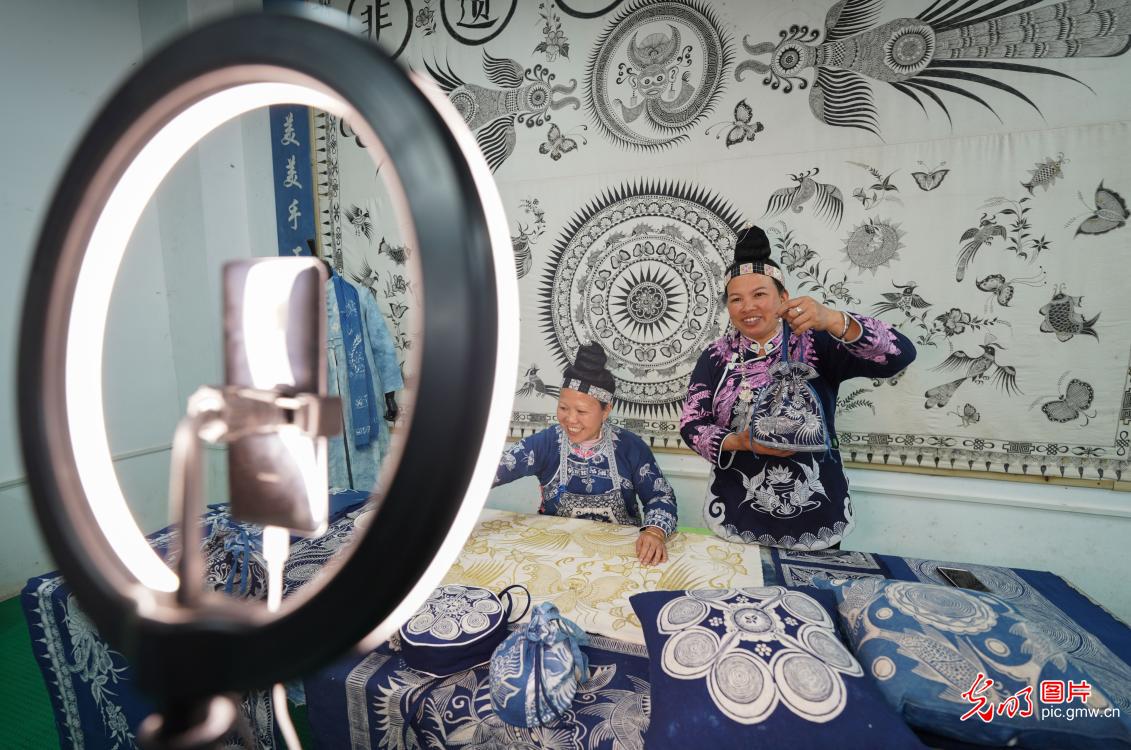
By establishing a wax printing workshop, Yanger Baolang has developed a cultural and creative industry, covering the whole process from designing, manufacturing and selling. With the help of various live-streaming platform, their wax print fabrics are able to reach both the domestic and global market. (Yang Wukui/Guangming Picture)
[ Editor: WXL ]
More From Guangming Online
Medics from Fujian leave for Shanghai to aid in battle against COVID-19 resurgence
New int'l land-sea transport service to Indo-China Peninsula launched
Another makeshift hospital under construction in Shanghai
Tourists view tulips in Suiping County, Henan
In pics: blooming gagea flowers on grassland in Zhaosu, Xinjiang
Greek workers stage 24-hour general strike over high prices