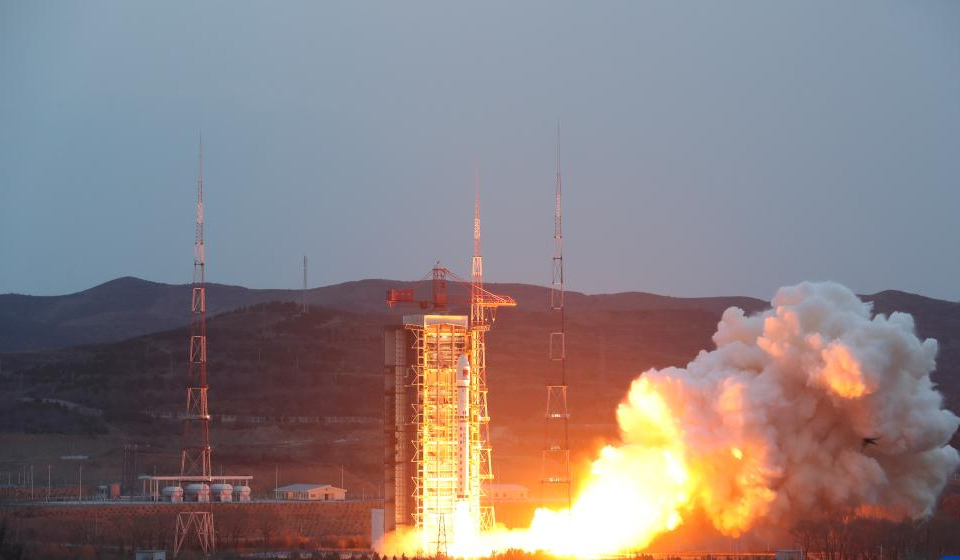


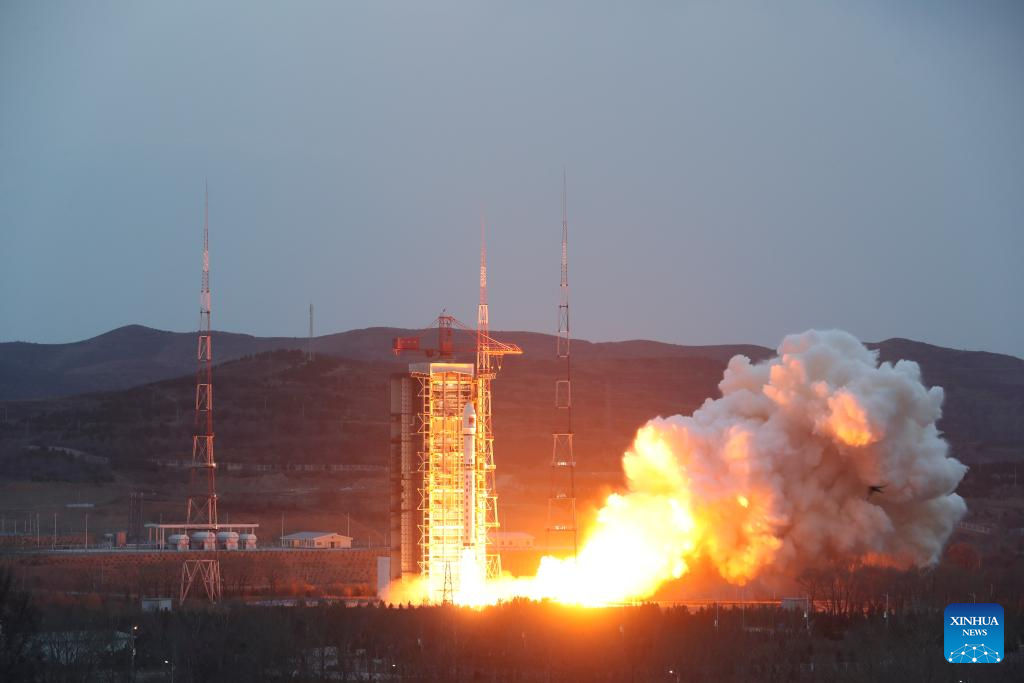
A Long March-2D rocket carrying satellites of the PIESAT-1 constellation blasts off from the Taiyuan Satellite Launch Center in north China's Shanxi Province, March 30, 2023. China launched a Long March-2D carrier rocket on Thursday evening to place new remote-sensing satellites in space.
The satellites of the PIESAT-1 constellation were lifted at 6:50 p.m. (Beijing Time) on Thursday from the Taiyuan Satellite Launch Center in northern China's Shanxi Province, and then entered the preset orbit. (Photo by Zheng Bin/Xinhua)
TAIYUAN, March 30 (Xinhua) -- China launched a Long March-2D carrier rocket on Thursday evening to place new remote-sensing satellites in space.
The satellites of the PIESAT-1 constellation were lifted at 6:50 p.m. (Beijing Time) on Thursday from the Taiyuan Satellite Launch Center in northern China's Shanxi Province, and then entered the preset orbit.
They will mainly provide commercial remote-sensing data services.
This mission was the 469th flight of the Long March carrier rockets. ■
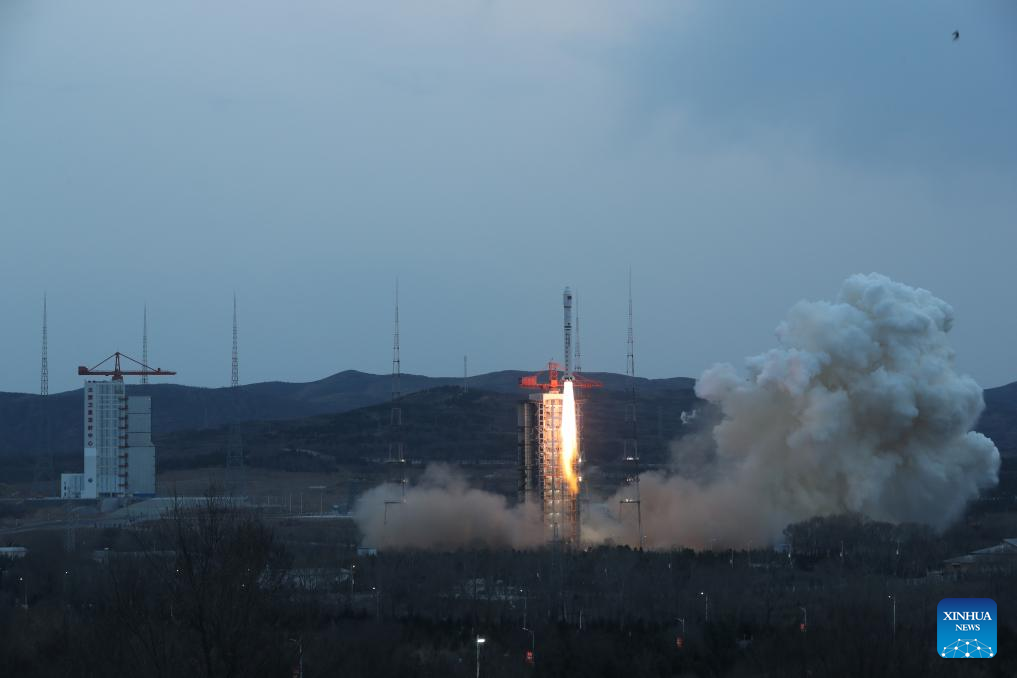
A Long March-2D rocket carrying satellites of the PIESAT-1 constellation blasts off from the Taiyuan Satellite Launch Center in north China's Shanxi Province, March 30, 2023. China launched a Long March-2D carrier rocket on Thursday evening to place new remote-sensing satellites in space.
The satellites of the PIESAT-1 constellation were lifted at 6:50 p.m. (Beijing Time) on Thursday from the Taiyuan Satellite Launch Center in northern China's Shanxi Province, and then entered the preset orbit. (Photo by Zheng Bin/Xinhua)
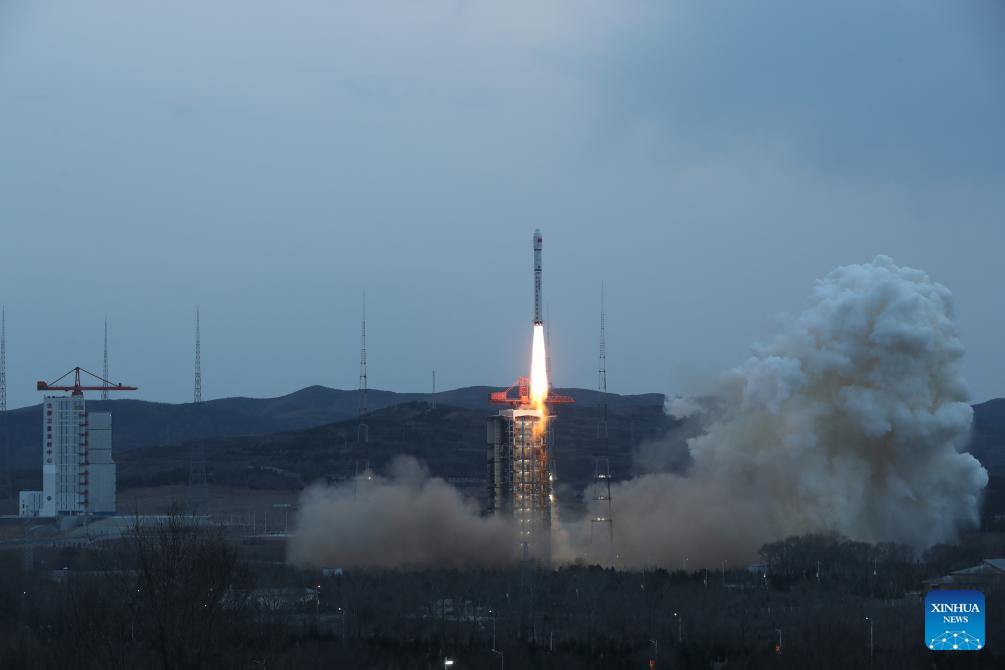
A Long March-2D rocket carrying satellites of the PIESAT-1 constellation blasts off from the Taiyuan Satellite Launch Center in north China's Shanxi Province, March 30, 2023. China launched a Long March-2D carrier rocket on Thursday evening to place new remote-sensing satellites in space.
The satellites of the PIESAT-1 constellation were lifted at 6:50 p.m. (Beijing Time) on Thursday from the Taiyuan Satellite Launch Center in northern China's Shanxi Province, and then entered the preset orbit. (Photo by Zheng Bin/Xinhua)
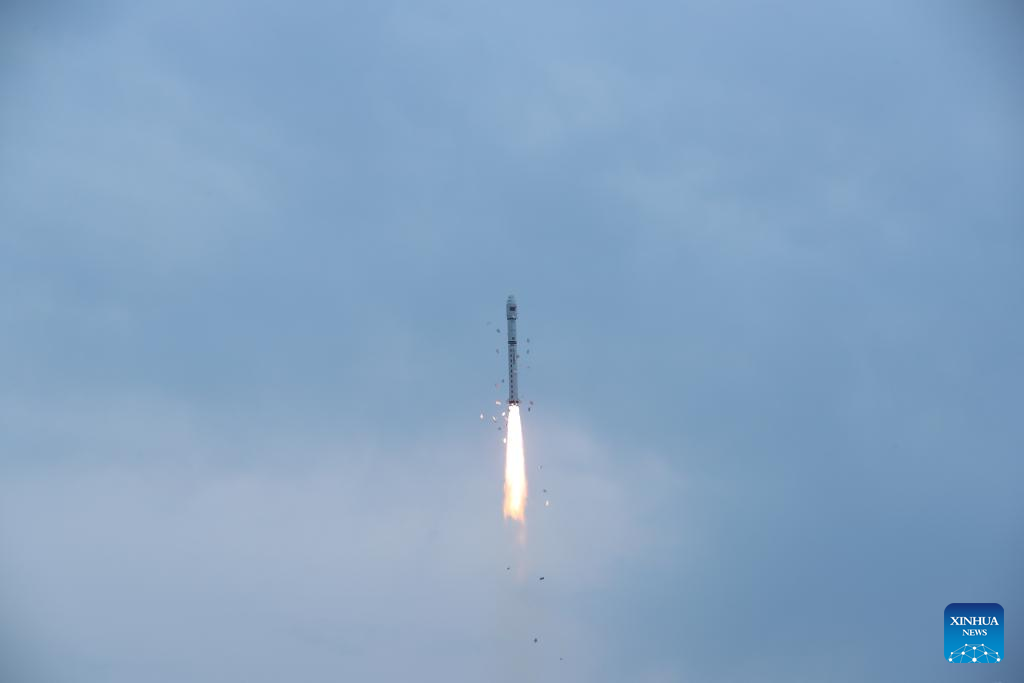
A Long March-2D rocket carrying satellites of the PIESAT-1 constellation blasts off from the Taiyuan Satellite Launch Center in north China's Shanxi Province, March 30, 2023. China launched a Long March-2D carrier rocket on Thursday evening to place new remote-sensing satellites in space.
The satellites of the PIESAT-1 constellation were lifted at 6:50 p.m. (Beijing Time) on Thursday from the Taiyuan Satellite Launch Center in northern China's Shanxi Province, and then entered the preset orbit. (Photo by Zheng Bin/Xinhua)
点击右上角 微信好友
微信好友
 朋友圈
朋友圈

请使用浏览器分享功能进行分享