


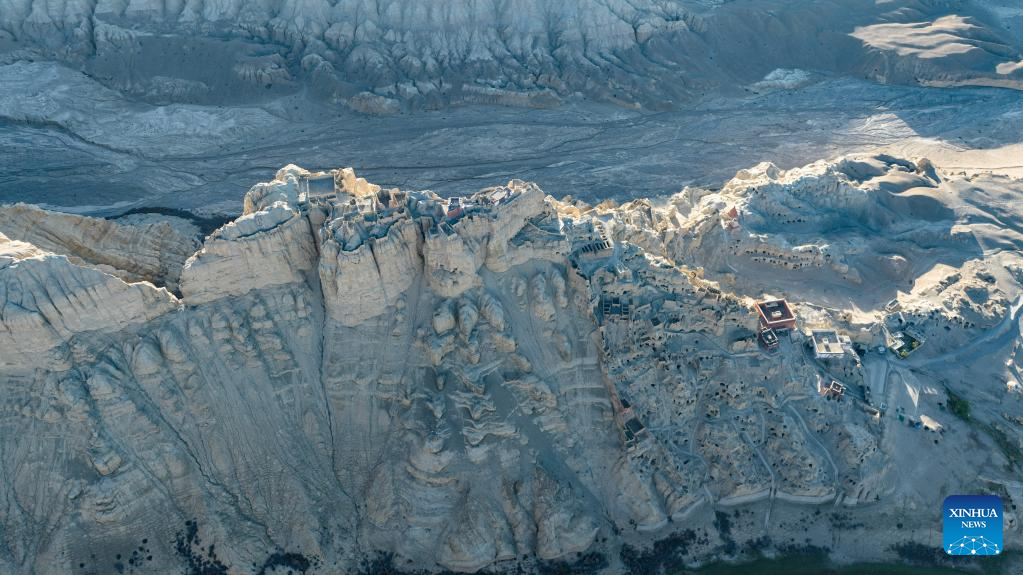
This aerial photo taken on May 26, 2023 shows the scenery of the ruins of the Guge Kingdom at dusk in Zanda County of Ngari Prefecture, southwest China's Tibet Autonomous Region. The ancient Guge Kingdom was probably founded in the 10th century but it was abandoned by the end of the 17th century. Only the mud-and-rock structures remained, sheltering their relics and wall paintings from the elements.
The Guge Kingdom Ruins are among the first group of historical relics placed under state protection in China. Remains of the kingdom's main castle now lie atop a riverside mountain, covering 180,000 square meters. (Xinhua/Yang Zhisen)
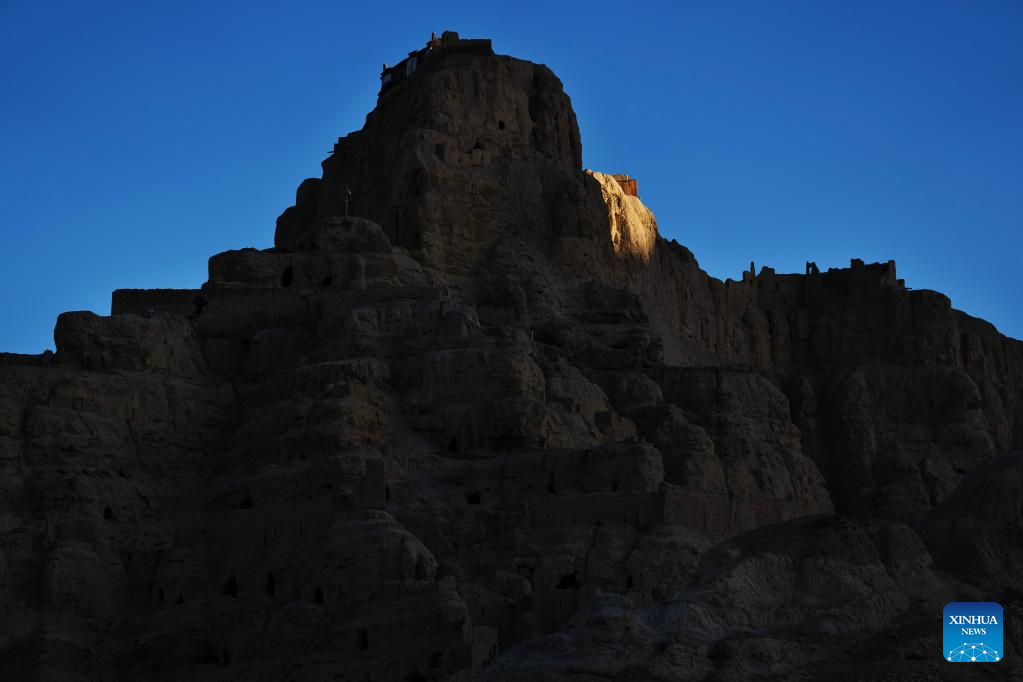
This photo taken on May 26, 2023 shows the sunset glow illuminating the ruins of the Guge Kingdom at dusk in Zanda County of Ngari Prefecture, southwest China's Tibet Autonomous Region. The ancient Guge Kingdom was probably founded in the 10th century but it was abandoned by the end of the 17th century. Only the mud-and-rock structures remained, sheltering their relics and wall paintings from the elements.
The Guge Kingdom Ruins are among the first group of historical relics placed under state protection in China. Remains of the kingdom's main castle now lie atop a riverside mountain, covering 180,000 square meters. (Xinhua/Fei Maohua)
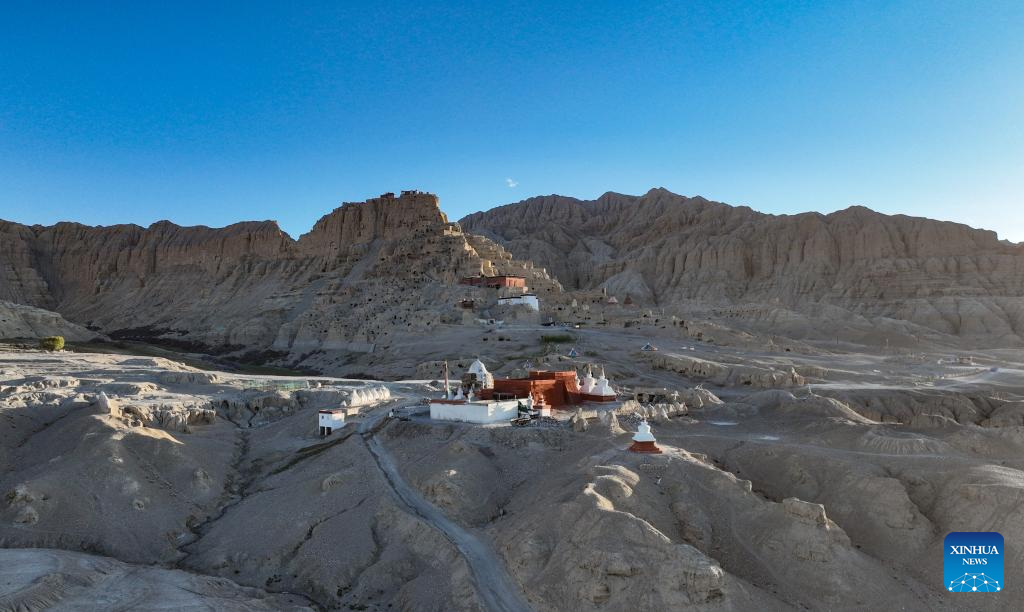
This aerial photo taken on May 26, 2023 shows the scenery of the ruins of the Guge Kingdom at dusk in Zanda County of Ngari Prefecture, southwest China's Tibet Autonomous Region. The ancient Guge Kingdom was probably founded in the 10th century but it was abandoned by the end of the 17th century. Only the mud-and-rock structures remained, sheltering their relics and wall paintings from the elements.
The Guge Kingdom Ruins are among the first group of historical relics placed under state protection in China. Remains of the kingdom's main castle now lie atop a riverside mountain, covering 180,000 square meters. (Xinhua/Jigme Dorje)
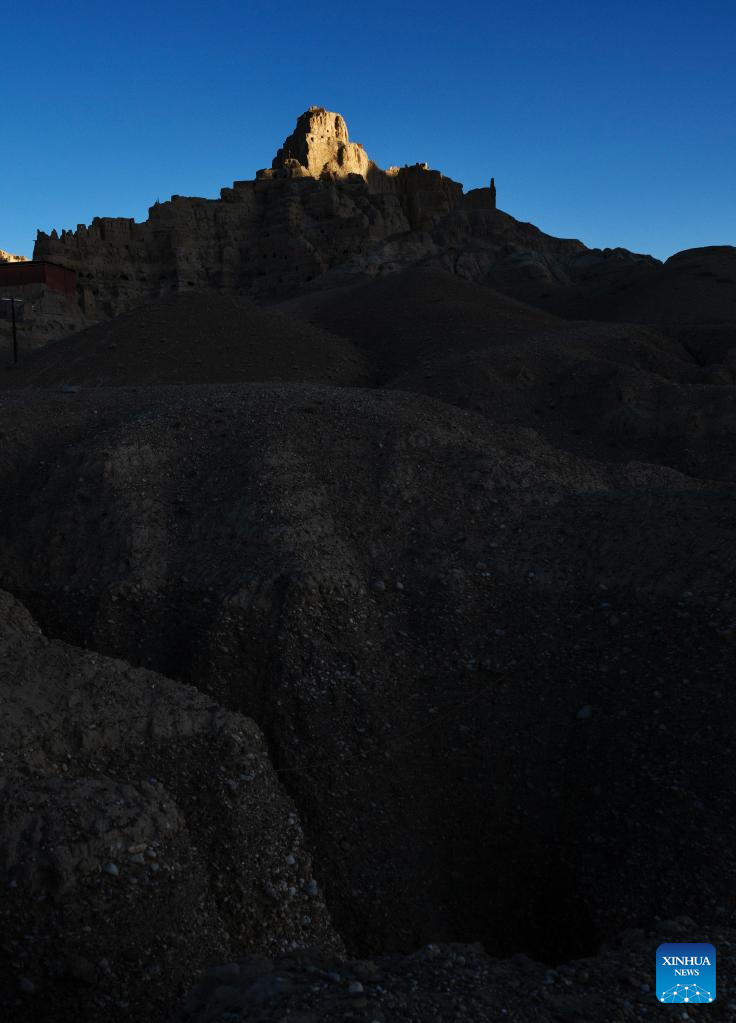
This photo taken on May 26, 2023 shows the scenery of the ruins of the Guge Kingdom at dusk in Zanda County of Ngari Prefecture, southwest China's Tibet Autonomous Region. The ancient Guge Kingdom was probably founded in the 10th century but it was abandoned by the end of the 17th century. Only the mud-and-rock structures remained, sheltering their relics and wall paintings from the elements.
The Guge Kingdom Ruins are among the first group of historical relics placed under state protection in China. Remains of the kingdom's main castle now lie atop a riverside mountain, covering 180,000 square meters. (Xinhua/Fei Maohua)
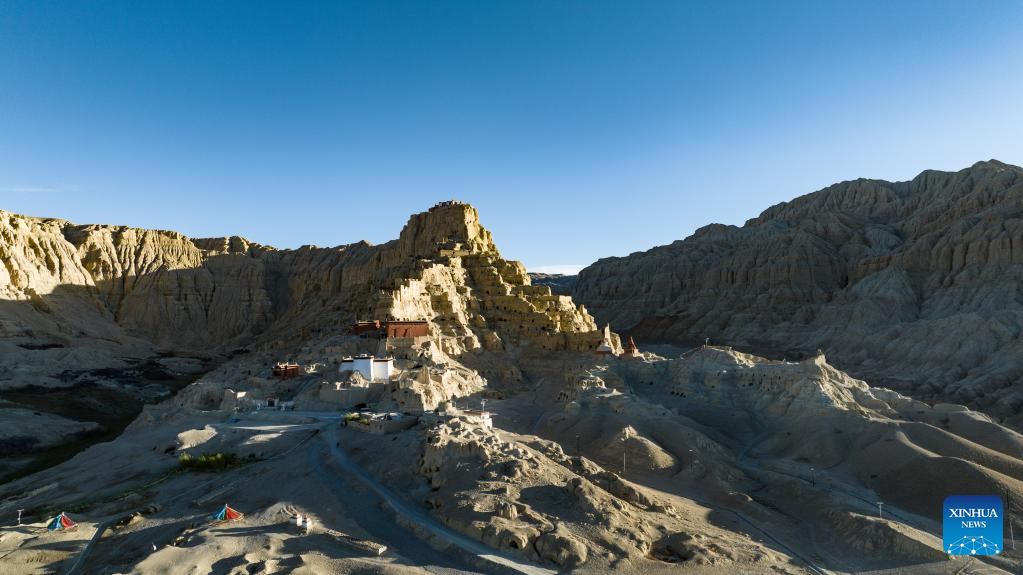
This aerial photo taken on May 26, 2023 shows the scenery of the ruins of the Guge Kingdom at dusk in Zanda County of Ngari Prefecture, southwest China's Tibet Autonomous Region. The ancient Guge Kingdom was probably founded in the 10th century but it was abandoned by the end of the 17th century. Only the mud-and-rock structures remained, sheltering their relics and wall paintings from the elements.
The Guge Kingdom Ruins are among the first group of historical relics placed under state protection in China. Remains of the kingdom's main castle now lie atop a riverside mountain, covering 180,000 square meters. (Xinhua/Jigme Dorje)
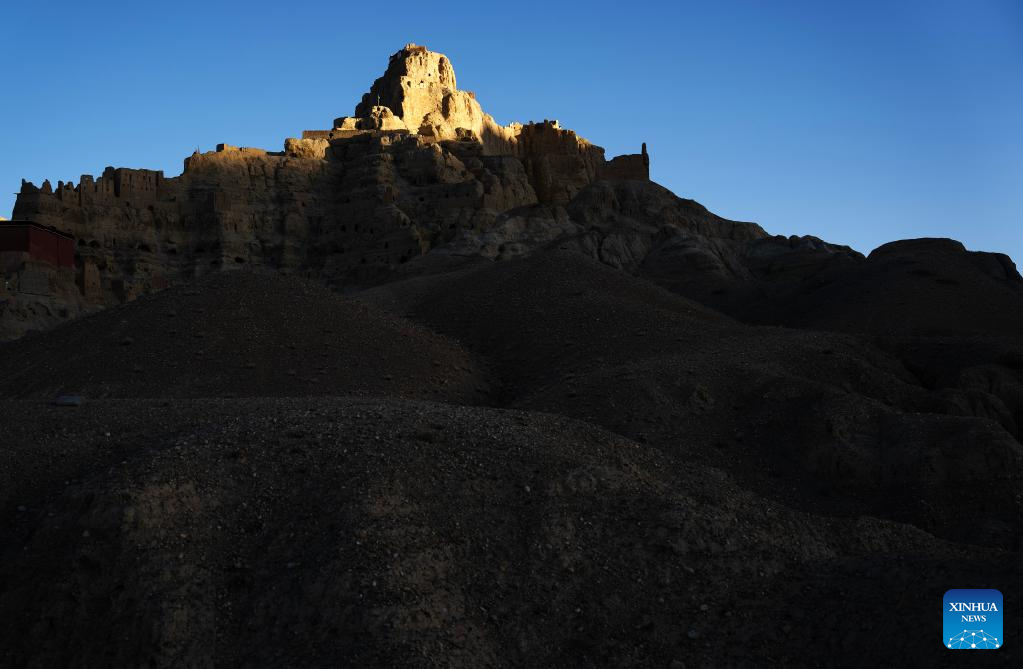
This photo taken on May 26, 2023 shows the scenery of the ruins of the Guge Kingdom at dusk in Zanda County of Ngari Prefecture, southwest China's Tibet Autonomous Region. The ancient Guge Kingdom was probably founded in the 10th century but it was abandoned by the end of the 17th century. Only the mud-and-rock structures remained, sheltering their relics and wall paintings from the elements.
The Guge Kingdom Ruins are among the first group of historical relics placed under state protection in China. Remains of the kingdom's main castle now lie atop a riverside mountain, covering 180,000 square meters. (Xinhua/Fei Maohua)
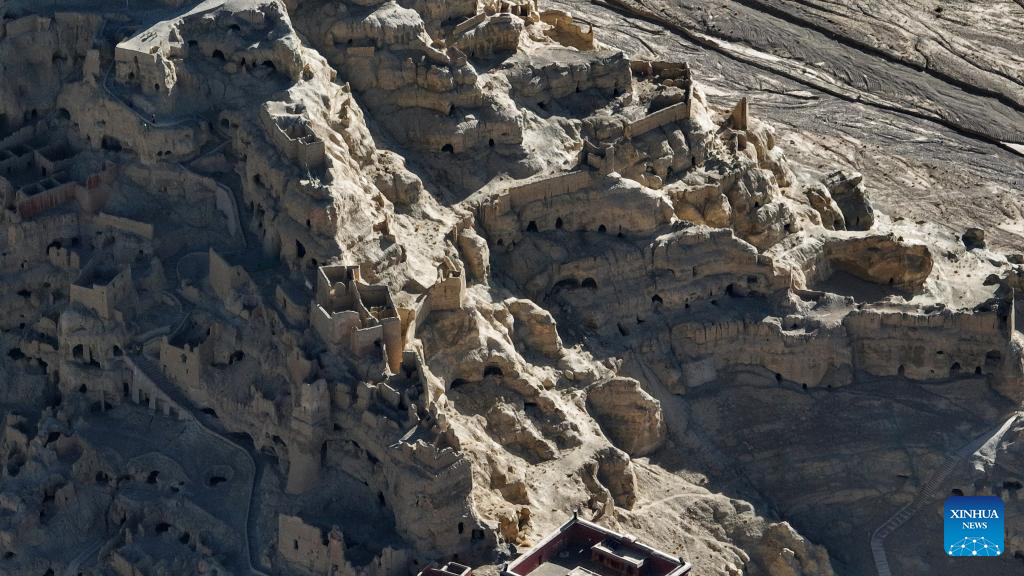
This aerial photo taken on May 26, 2023 shows the scenery of the ruins of the Guge Kingdom at dusk in Zanda County of Ngari Prefecture, southwest China's Tibet Autonomous Region. The ancient Guge Kingdom was probably founded in the 10th century but it was abandoned by the end of the 17th century. Only the mud-and-rock structures remained, sheltering their relics and wall paintings from the elements.
The Guge Kingdom Ruins are among the first group of historical relics placed under state protection in China. Remains of the kingdom's main castle now lie atop a riverside mountain, covering 180,000 square meters. (Xinhua/Jigme Dorje)
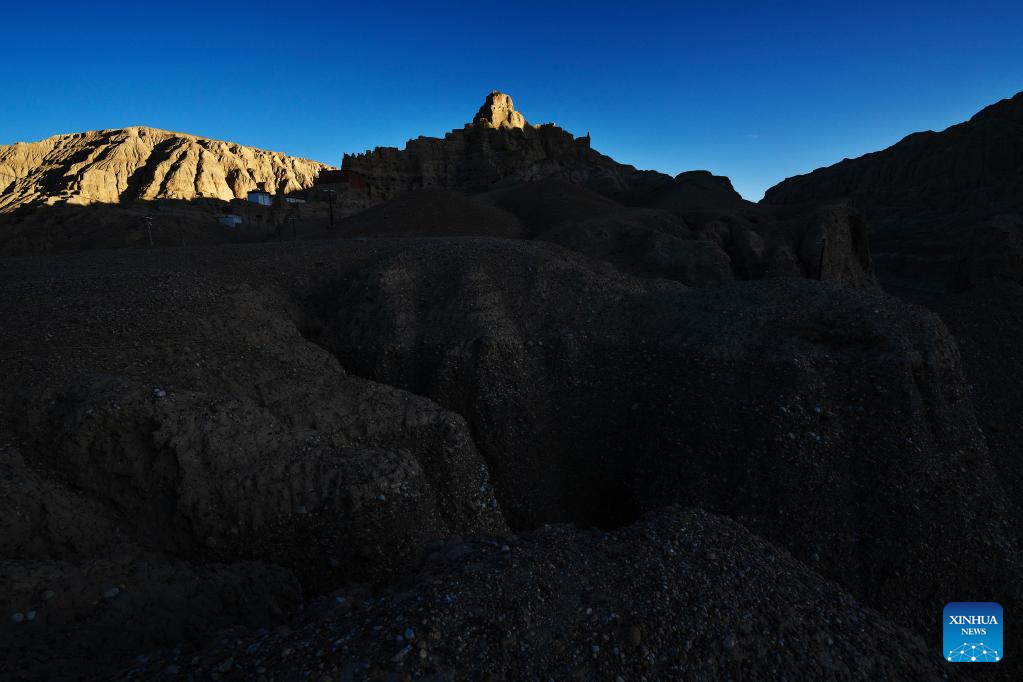
This photo taken on May 26, 2023 shows the scenery of the ruins of the Guge Kingdom at dusk in Zanda County of Ngari Prefecture, southwest China's Tibet Autonomous Region. The ancient Guge Kingdom was probably founded in the 10th century but it was abandoned by the end of the 17th century. Only the mud-and-rock structures remained, sheltering their relics and wall paintings from the elements.
The Guge Kingdom Ruins are among the first group of historical relics placed under state protection in China. Remains of the kingdom's main castle now lie atop a riverside mountain, covering 180,000 square meters. (Xinhua/Fei Maohua)
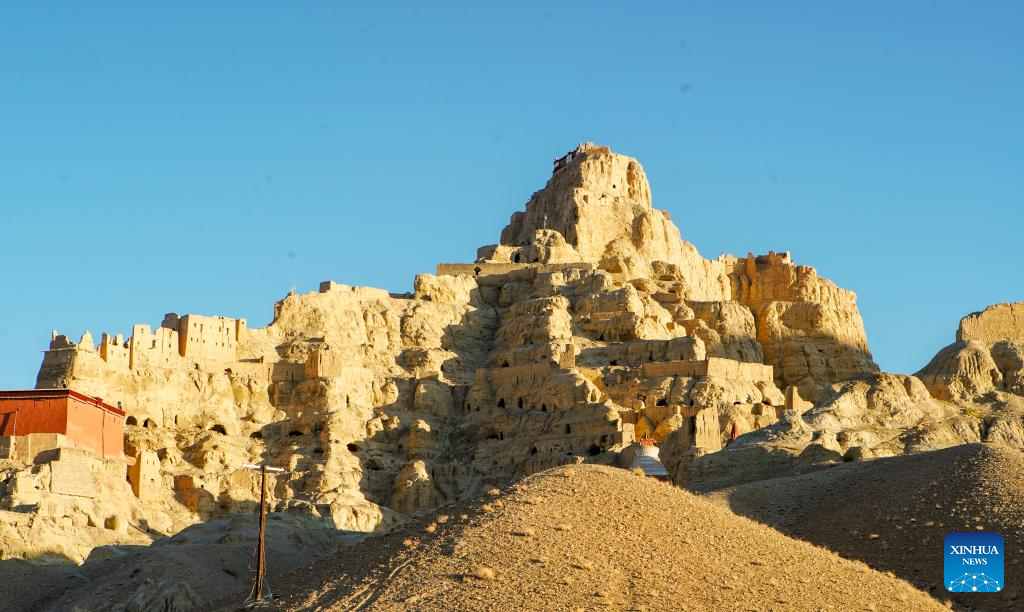
This photo taken on May 26, 2023 shows the scenery of the ruins of the Guge Kingdom at dusk in Zanda County of Ngari Prefecture, southwest China's Tibet Autonomous Region. The ancient Guge Kingdom was probably founded in the 10th century but it was abandoned by the end of the 17th century. Only the mud-and-rock structures remained, sheltering their relics and wall paintings from the elements.
The Guge Kingdom Ruins are among the first group of historical relics placed under state protection in China. Remains of the kingdom's main castle now lie atop a riverside mountain, covering 180,000 square meters. (Xinhua/Shao Zedong)
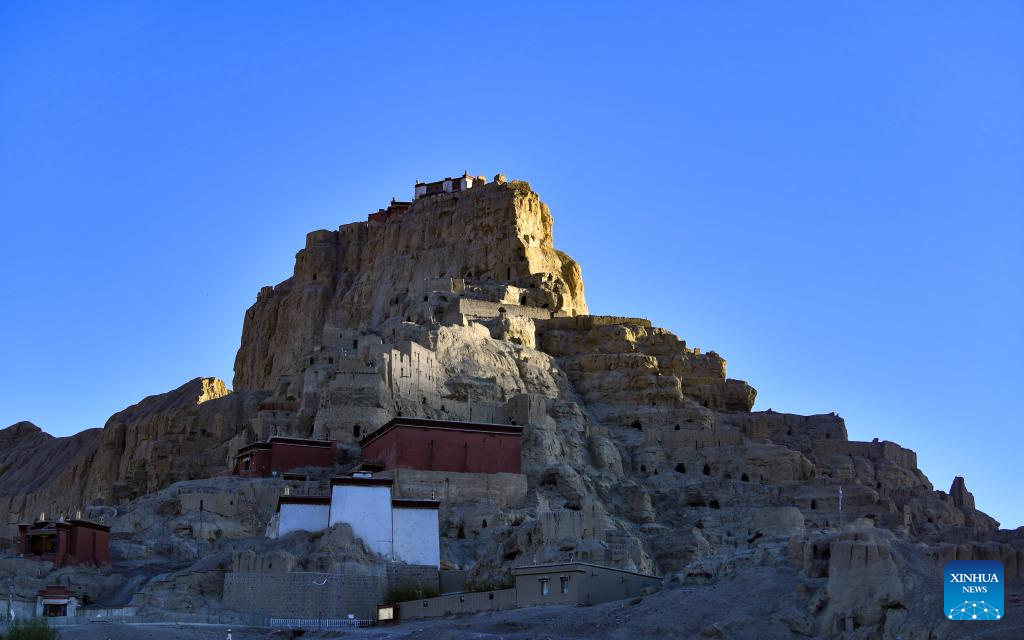
This photo taken on May 26, 2023 shows the scenery of the ruins of the Guge Kingdom at dusk in Zanda County of Ngari Prefecture, southwest China's Tibet Autonomous Region. The ancient Guge Kingdom was probably founded in the 10th century but it was abandoned by the end of the 17th century. Only the mud-and-rock structures remained, sheltering their relics and wall paintings from the elements.
The Guge Kingdom Ruins are among the first group of historical relics placed under state protection in China. Remains of the kingdom's main castle now lie atop a riverside mountain, covering 180,000 square meters. (Xinhua/Jigme Dorje)
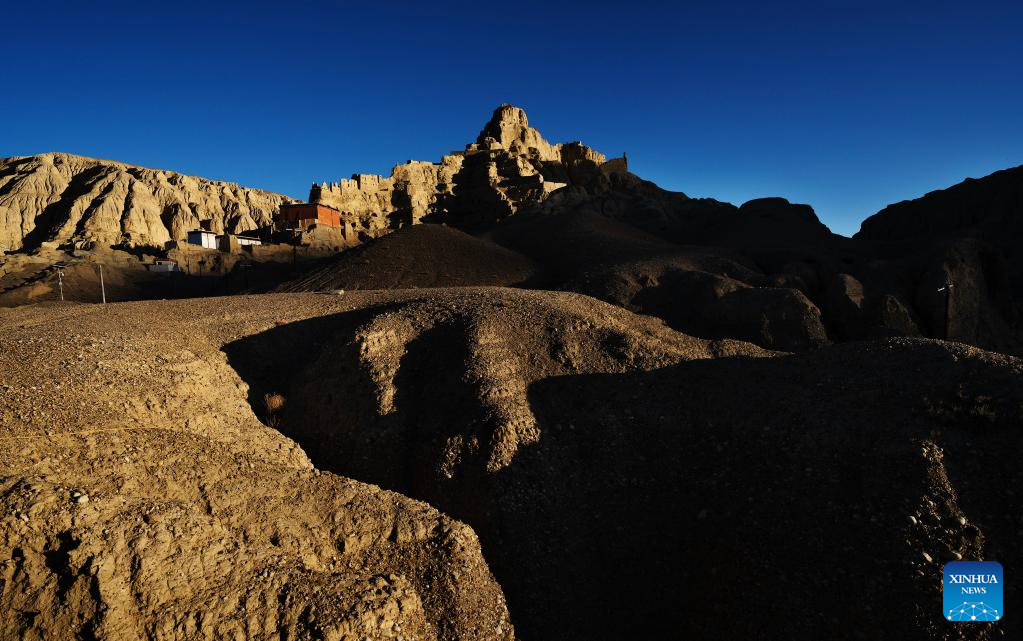
This photo taken on May 26, 2023 shows the scenery of the ruins of the Guge Kingdom at dusk in Zanda County of Ngari Prefecture, southwest China's Tibet Autonomous Region. The ancient Guge Kingdom was probably founded in the 10th century but it was abandoned by the end of the 17th century. Only the mud-and-rock structures remained, sheltering their relics and wall paintings from the elements.
The Guge Kingdom Ruins are among the first group of historical relics placed under state protection in China. Remains of the kingdom's main castle now lie atop a riverside mountain, covering 180,000 square meters. (Xinhua/Fei Maohua)
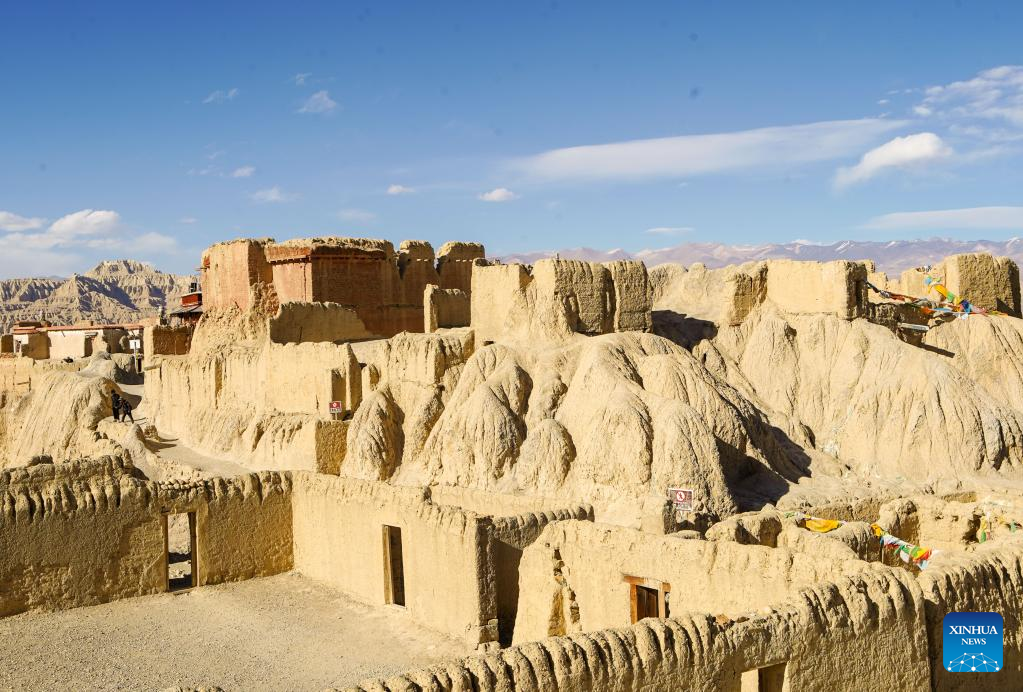
This photo taken on May 26, 2023 shows the scenery of the ruins of the Guge Kingdom at dusk in Zanda County of Ngari Prefecture, southwest China's Tibet Autonomous Region. The ancient Guge Kingdom was probably founded in the 10th century but it was abandoned by the end of the 17th century. Only the mud-and-rock structures remained, sheltering their relics and wall paintings from the elements.
The Guge Kingdom Ruins are among the first group of historical relics placed under state protection in China. Remains of the kingdom's main castle now lie atop a riverside mountain, covering 180,000 square meters. (Xinhua/Shao Zedong)
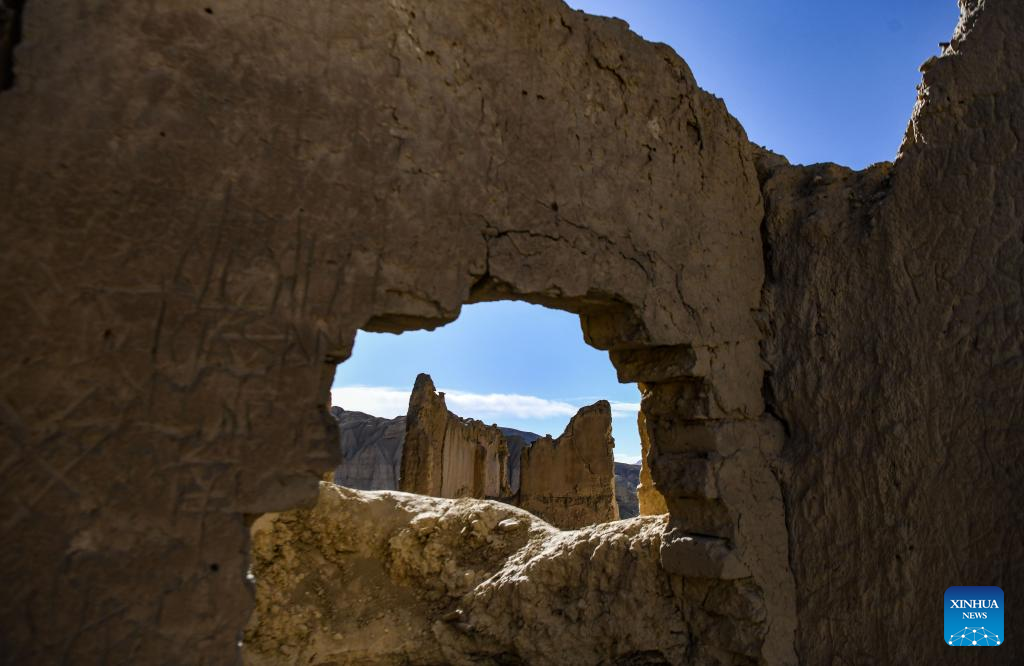
This photo taken on May 26, 2023 shows the scenery of the ruins of the Guge Kingdom at dusk in Zanda County of Ngari Prefecture, southwest China's Tibet Autonomous Region. The ancient Guge Kingdom was probably founded in the 10th century but it was abandoned by the end of the 17th century. Only the mud-and-rock structures remained, sheltering their relics and wall paintings from the elements.
The Guge Kingdom Ruins are among the first group of historical relics placed under state protection in China. Remains of the kingdom's main castle now lie atop a riverside mountain, covering 180,000 square meters. (Xinhua/Jigme Dorje)
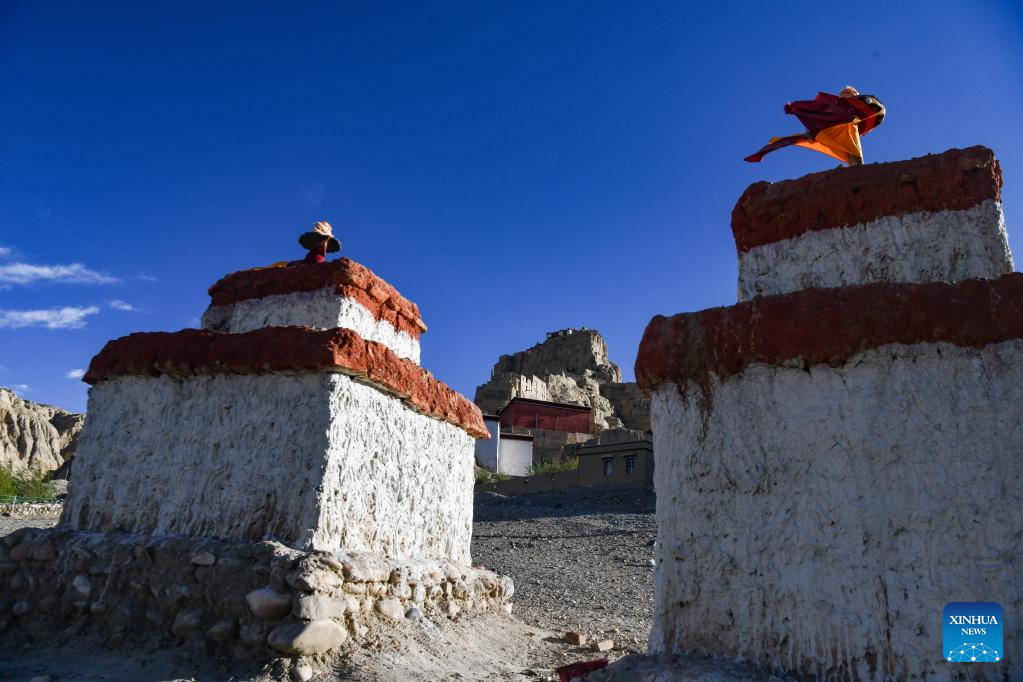
This photo taken on May 26, 2023 shows the scenery of the ruins of the Guge Kingdom at dusk in Zanda County of Ngari Prefecture, southwest China's Tibet Autonomous Region. The ancient Guge Kingdom was probably founded in the 10th century but it was abandoned by the end of the 17th century. Only the mud-and-rock structures remained, sheltering their relics and wall paintings from the elements.
The Guge Kingdom Ruins are among the first group of historical relics placed under state protection in China. Remains of the kingdom's main castle now lie atop a riverside mountain, covering 180,000 square meters. (Xinhua/Yang Zhisen)
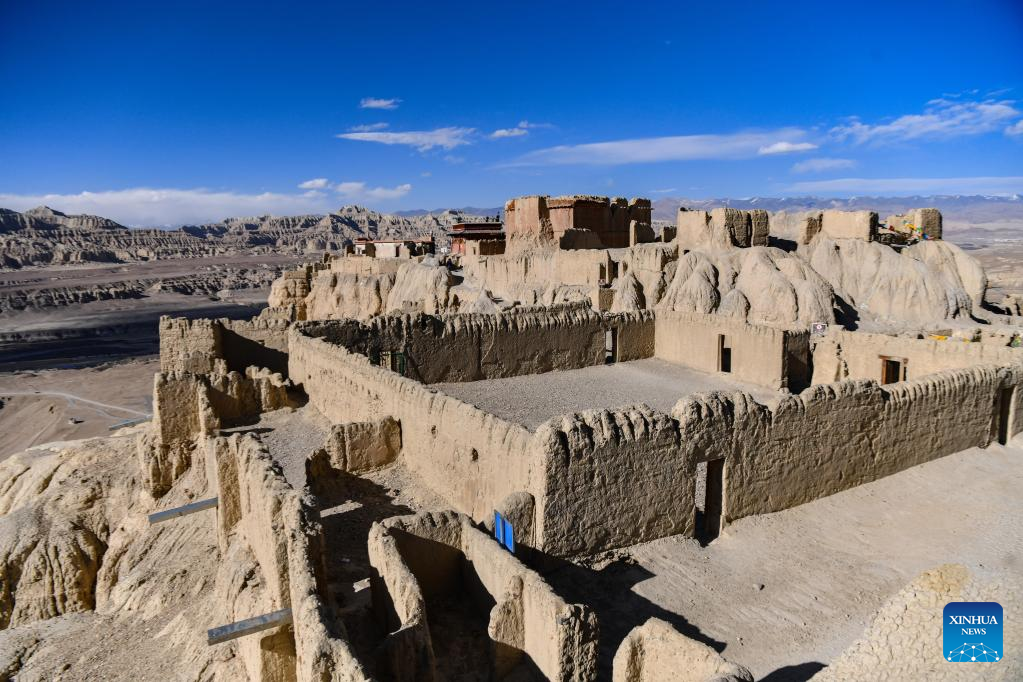
This photo taken on May 26, 2023 shows the scenery of the ruins of the Guge Kingdom at dusk in Zanda County of Ngari Prefecture, southwest China's Tibet Autonomous Region. The ancient Guge Kingdom was probably founded in the 10th century but it was abandoned by the end of the 17th century. Only the mud-and-rock structures remained, sheltering their relics and wall paintings from the elements.
The Guge Kingdom Ruins are among the first group of historical relics placed under state protection in China. Remains of the kingdom's main castle now lie atop a riverside mountain, covering 180,000 square meters. (Xinhua/Jigme Dorje)
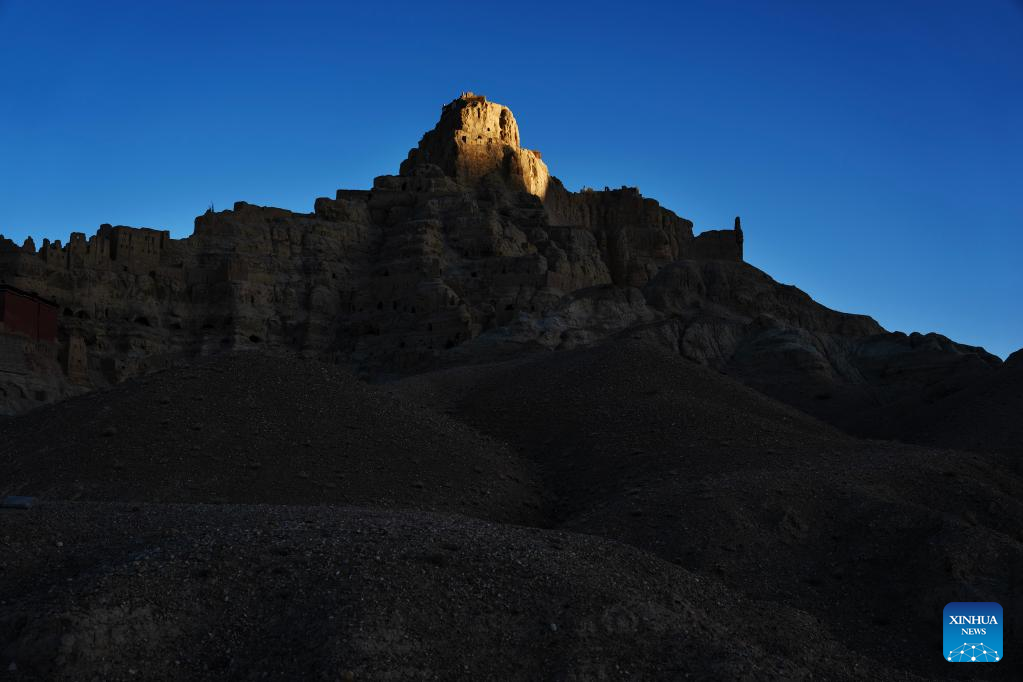
This photo taken on May 26, 2023 shows the scenery of the ruins of the Guge Kingdom at dusk in Zanda County of Ngari Prefecture, southwest China's Tibet Autonomous Region. The ancient Guge Kingdom was probably founded in the 10th century but it was abandoned by the end of the 17th century. Only the mud-and-rock structures remained, sheltering their relics and wall paintings from the elements.
The Guge Kingdom Ruins are among the first group of historical relics placed under state protection in China. Remains of the kingdom's main castle now lie atop a riverside mountain, covering 180,000 square meters. (Xinhua/Fei Maohua)
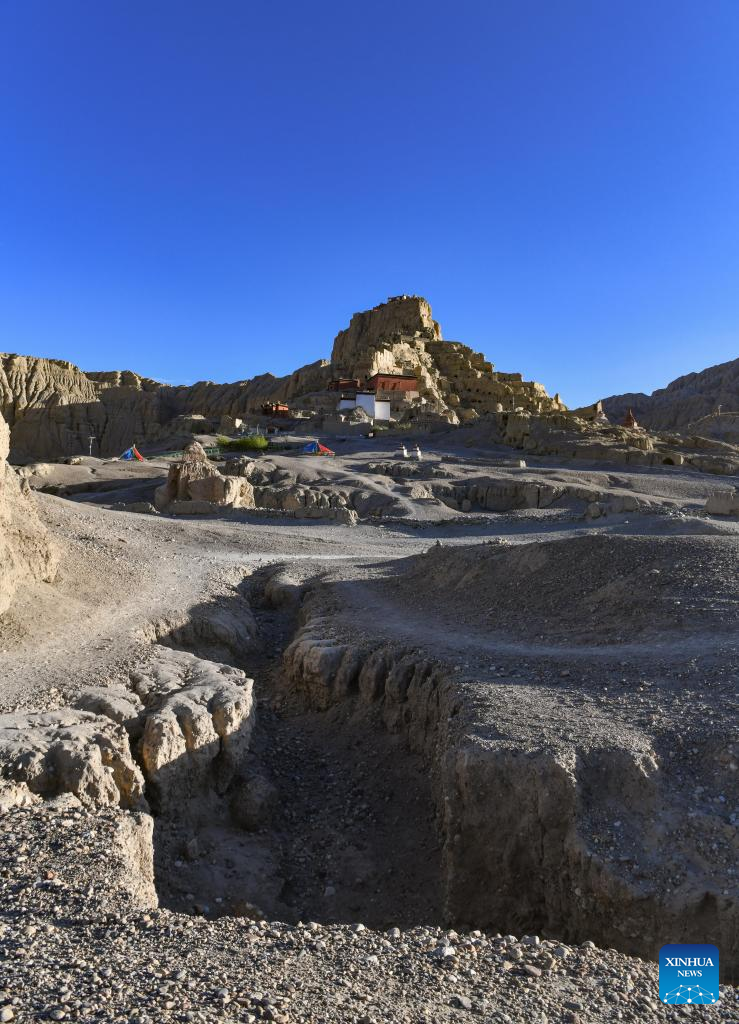
This photo taken on May 26, 2023 shows the scenery of the ruins of the Guge Kingdom at dusk in Zanda County of Ngari Prefecture, southwest China's Tibet Autonomous Region. The ancient Guge Kingdom was probably founded in the 10th century but it was abandoned by the end of the 17th century. Only the mud-and-rock structures remained, sheltering their relics and wall paintings from the elements.
The Guge Kingdom Ruins are among the first group of historical relics placed under state protection in China. Remains of the kingdom's main castle now lie atop a riverside mountain, covering 180,000 square meters. (Xinhua/Jigme Dorje)
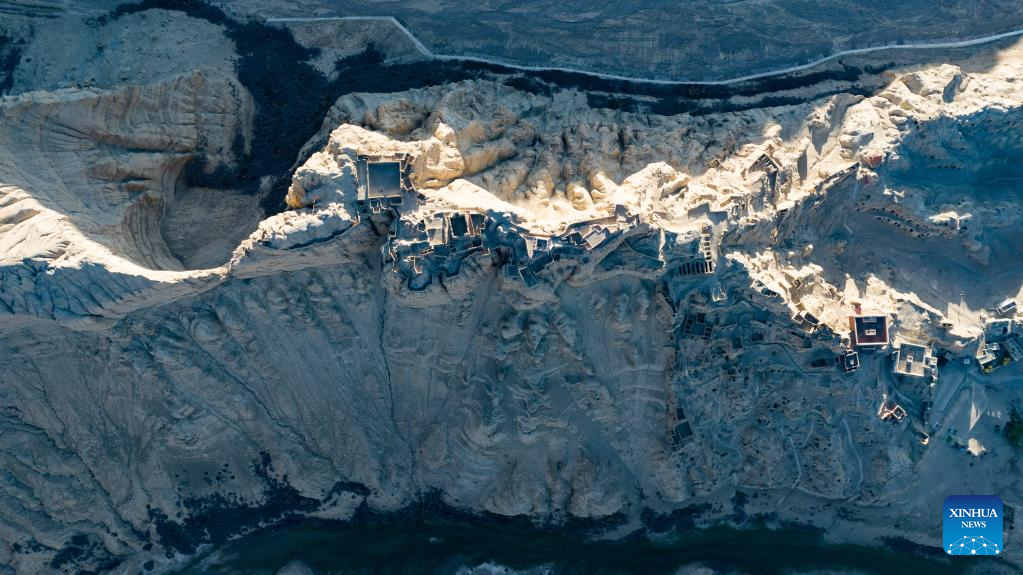
This aerial photo taken on May 26, 2023 shows the scenery of the ruins of the Guge Kingdom at dusk in Zanda County of Ngari Prefecture, southwest China's Tibet Autonomous Region. The ancient Guge Kingdom was probably founded in the 10th century but it was abandoned by the end of the 17th century. Only the mud-and-rock structures remained, sheltering their relics and wall paintings from the elements.
The Guge Kingdom Ruins are among the first group of historical relics placed under state protection in China. Remains of the kingdom's main castle now lie atop a riverside mountain, covering 180,000 square meters. (Xinhua/Jigme Dorje)
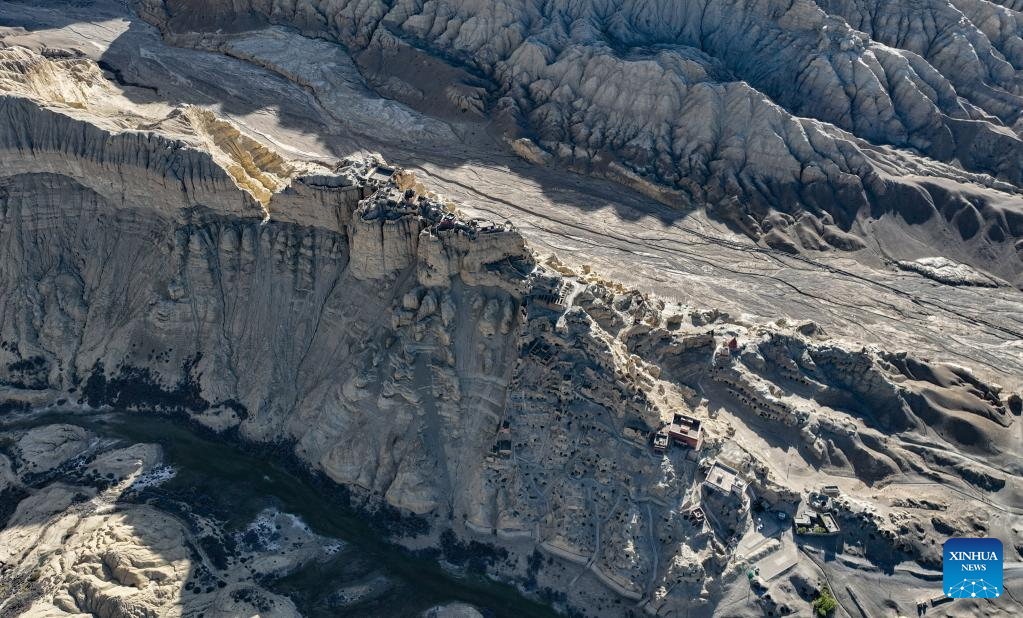
This aerial photo taken on May 26, 2023 shows the scenery of the ruins of the Guge Kingdom at dusk in Zanda County of Ngari Prefecture, southwest China's Tibet Autonomous Region. The ancient Guge Kingdom was probably founded in the 10th century but it was abandoned by the end of the 17th century. Only the mud-and-rock structures remained, sheltering their relics and wall paintings from the elements.
The Guge Kingdom Ruins are among the first group of historical relics placed under state protection in China. Remains of the kingdom's main castle now lie atop a riverside mountain, covering 180,000 square meters. (Xinhua/Yang Zhisen)
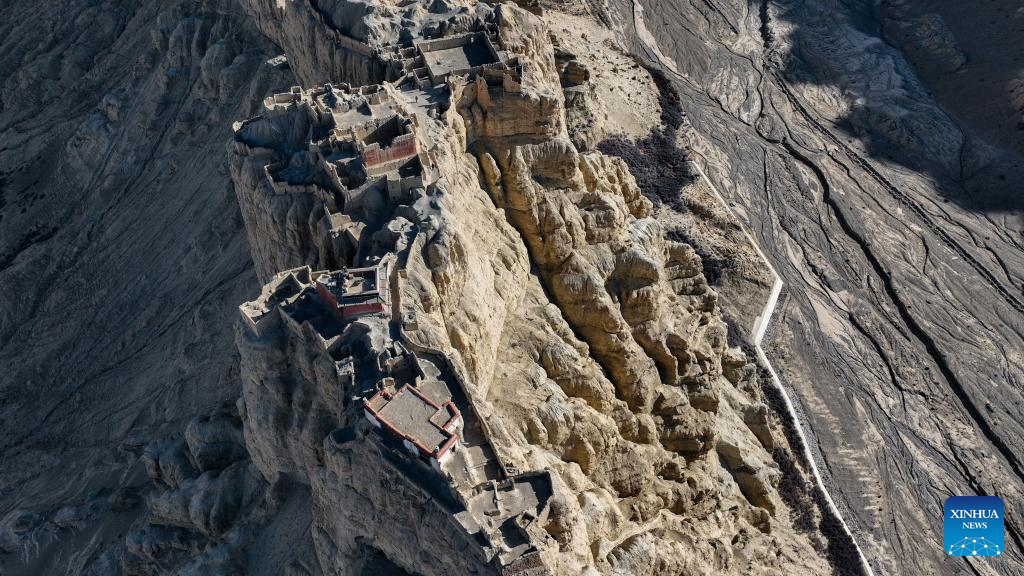
This aerial photo taken on May 26, 2023 shows the scenery of the ruins of the Guge Kingdom at dusk in Zanda County of Ngari Prefecture, southwest China's Tibet Autonomous Region. The ancient Guge Kingdom was probably founded in the 10th century but it was abandoned by the end of the 17th century. Only the mud-and-rock structures remained, sheltering their relics and wall paintings from the elements.
The Guge Kingdom Ruins are among the first group of historical relics placed under state protection in China. Remains of the kingdom's main castle now lie atop a riverside mountain, covering 180,000 square meters. (Xinhua/Jigme Dorje)
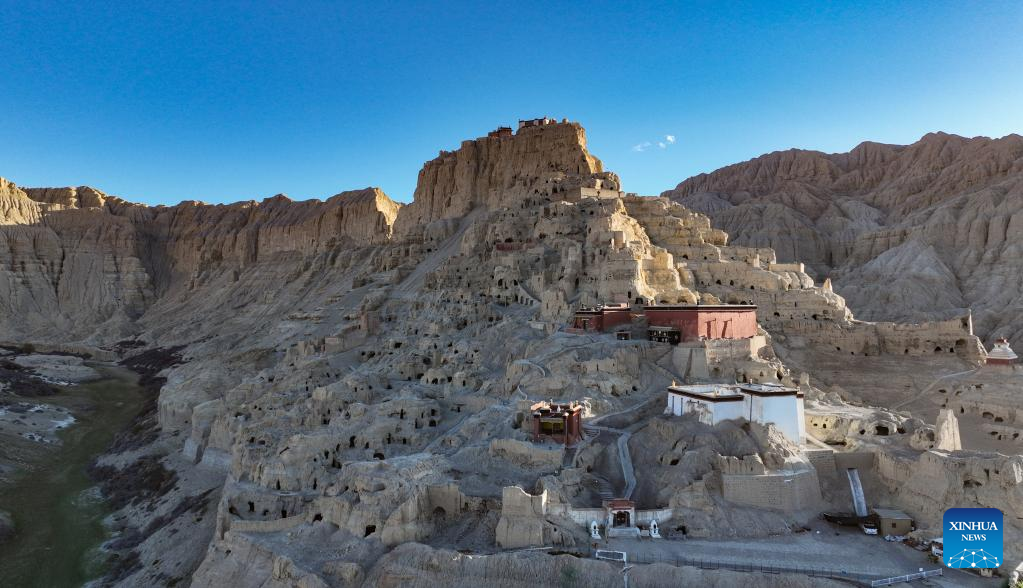
This aerial photo taken on May 26, 2023 shows the scenery of the ruins of the Guge Kingdom at dusk in Zanda County of Ngari Prefecture, southwest China's Tibet Autonomous Region. The ancient Guge Kingdom was probably founded in the 10th century but it was abandoned by the end of the 17th century. Only the mud-and-rock structures remained, sheltering their relics and wall paintings from the elements.
The Guge Kingdom Ruins are among the first group of historical relics placed under state protection in China. Remains of the kingdom's main castle now lie atop a riverside mountain, covering 180,000 square meters. (Xinhua/Jigme Dorje)
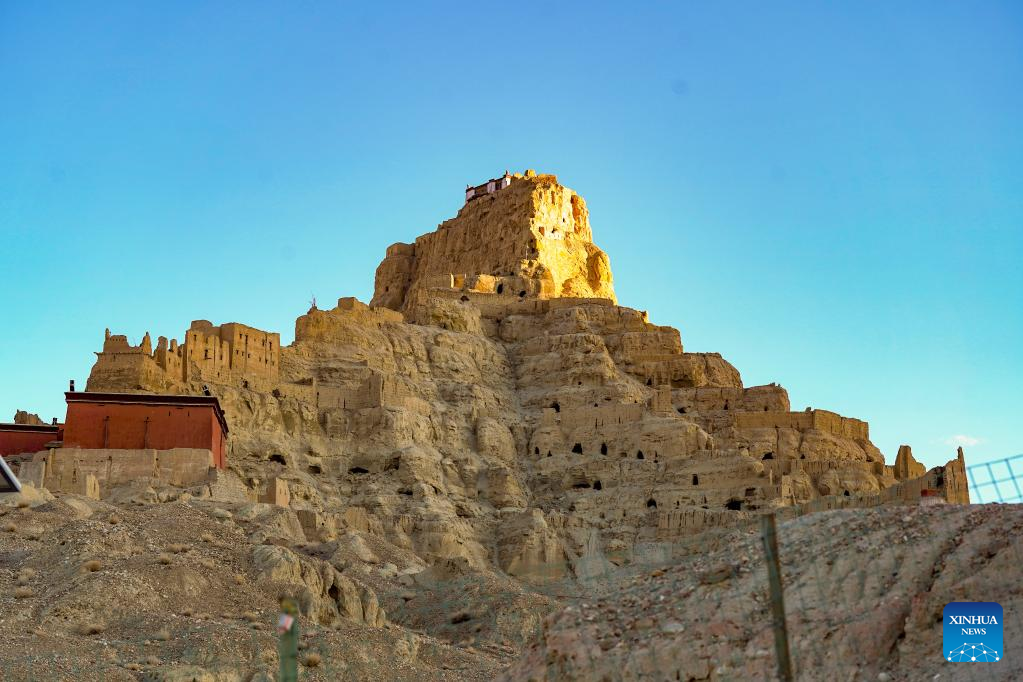
This photo taken on May 26, 2023 shows the scenery of the ruins of the Guge Kingdom at dusk in Zanda County of Ngari Prefecture, southwest China's Tibet Autonomous Region. The ancient Guge Kingdom was probably founded in the 10th century but it was abandoned by the end of the 17th century. Only the mud-and-rock structures remained, sheltering their relics and wall paintings from the elements.
The Guge Kingdom Ruins are among the first group of historical relics placed under state protection in China. Remains of the kingdom's main castle now lie atop a riverside mountain, covering 180,000 square meters. (Xinhua/Shao Zedong)
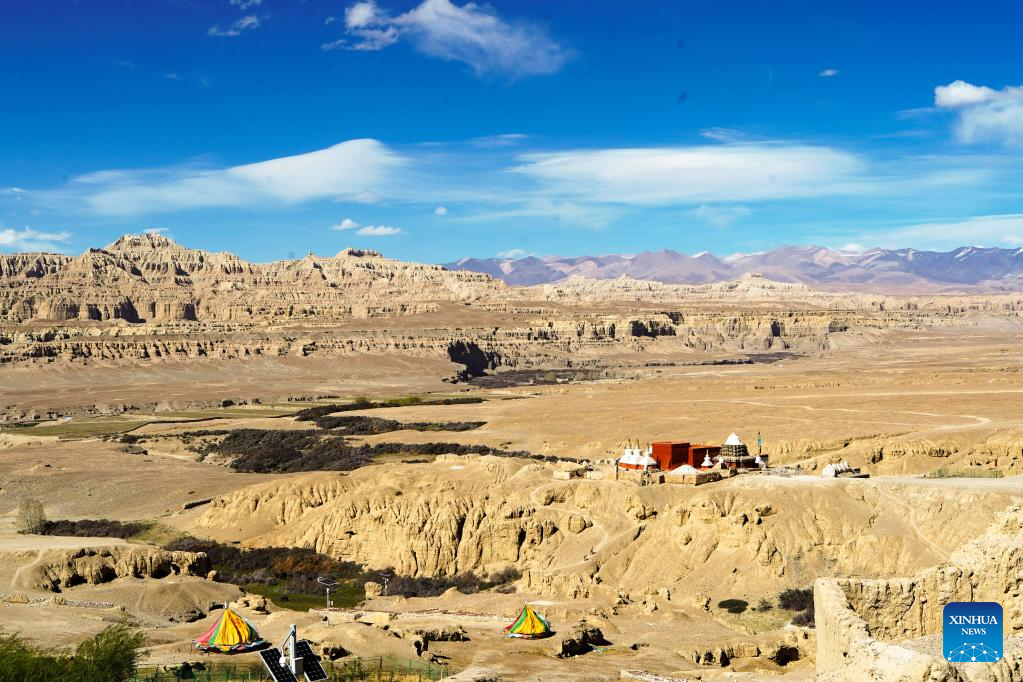
This photo taken on May 26, 2023 shows the scenery of the ruins of the Guge Kingdom at dusk in Zanda County of Ngari Prefecture, southwest China's Tibet Autonomous Region. The ancient Guge Kingdom was probably founded in the 10th century but it was abandoned by the end of the 17th century. Only the mud-and-rock structures remained, sheltering their relics and wall paintings from the elements.
The Guge Kingdom Ruins are among the first group of historical relics placed under state protection in China. Remains of the kingdom's main castle now lie atop a riverside mountain, covering 180,000 square meters. (Xinhua/Shao Zedong)
点击右上角 微信好友
微信好友
 朋友圈
朋友圈

请使用浏览器分享功能进行分享