


NANJING, June 12 (Xinhua) -- An international paleontological team led by Chinese scientists has discovered two new species of parasitic fungus, preserved in approximately 100-million-year-old Kachin amber from Myanmar, according to the Nanjing Institute of Geology and Palaeontology under the Chinese Academy of Sciences (NIGPAS).
This discovery provides important evidence for exploring the co-evolution of fungi and insects. Furthermore, the research pushes back the origin of Ophiocordyceps by about 30 million years compared to previous estimates.
Wang Bo, a researcher at NIGPAS who led the study, explained that Ophiocordyceps is a general term for a group of parasitic fungi. Since fungi lack hard structures and decay easily, fossil evidence of Ophiocordyceps has been scarce, resulting in a limited understanding of their origin and evolution.
The two newly discovered fossil species preserve the fungal structures completely, allowing direct comparison with living species. Using high-resolution analytical methods like micro-CT, researchers found their parasitic hosts.
Researchers also collected and analyzed genetic data from 120 extant Ophiocordyceps species. Using the new fossils as a reference, they reconstructed the phylogenetic relationships within Ophiocordyceps and revised its origin time.
"The results show the origin of Ophiocordyceps should be around 130 million years ago in the Early Cretaceous, pushing it back by about 30 million years compared to previous research," Wang said.
The research findings were published online Wednesday in the Proceedings of the Royal Society B: Biological Sciences.

White-lipped deer population increases in Xizang as ecological environment improves
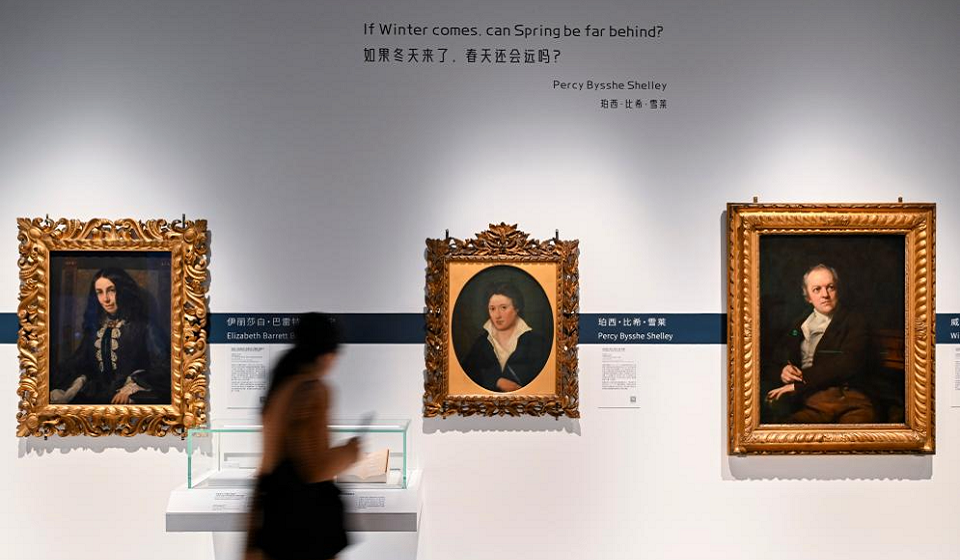
Exhibition featuring British writers held at Shanghai Museum

China's Shandong strengthens medical and health service system

World Insights: Ancient Chinese academies foster cross-cultural exchanges through Eastern wisdom

World Insights: Ancient Chinese academies foster cross-cultural exchanges through Eastern wisdom
点击右上角 微信好友
微信好友
 朋友圈
朋友圈

请使用浏览器分享功能进行分享