

By Guan Guoping, Guangming Daily (December 24, 2025, Page 01)
Japan has sent a profoundly dangerous signal.
Since ascending to power on a wave of populism this past October, Japanese Prime Minister Sanae Takaichi has wasted no time in manipulating the Taiwan question. On November 7, Takaichi delivered a series of erroneous statements before the Japanese Diet, openly hinting at the possibility of military intervention in the Taiwan Strait. This represents a calculated attempt to break free from the shackles of the “Peace Constitution” and the post-war international order, accelerating Japan’s rightward lurch. By provocatively challenging international law, repudiating legal obligations, and undermining global norms, Takaichi has violated the four political documents that serve as the bedrock of China-Japan relations. These reckless actions have sent shockwaves across the globe.
It is a matter of universal record that international legal instruments—most notably the Cairo Declaration, the Potsdam Proclamation, and the Japanese Instrument of Surrender—represent the restoration of human dignity after tens of millions of lives were lost and countless civilizations trampled. These are solemn covenants made by humanity to ensure its own survival and future. They are not merely “consensuses”; they are the rules of the game. They represent the moral baseline of human conscience and the absolute red line of the international order.
Those who play fast and loose with the law, and those who dare to cross these red lines, are destined for failure and will inevitably face the judgment of justice.
Challenging International Law and the Foundations of Peace
The year 2025 marks the 80th anniversary of the victory of the Chinese People’s War of Resistance Against Japanese Aggression and the World Anti-Fascist War. Eight decades ago, human civilization endured its darkest hour under the iron heel of fascism. Progressive forces worldwide made immense sacrifices to turn the tide and utterly defeat the Axis powers. This victory, written in blood, was codified into a series of landmark international legal documents that declared justice, guaranteed peace, and reshaped the global consensus.
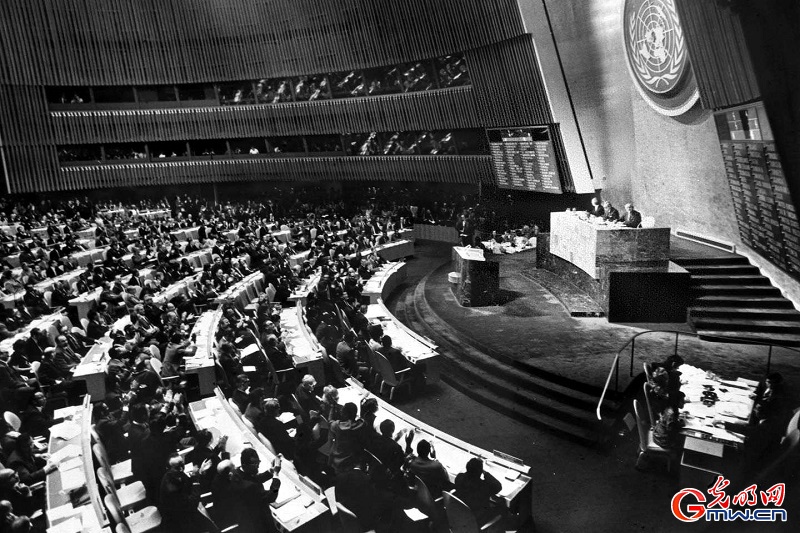
Photo provided to Guangming Online
If Prime Minister Takaichi remains so insistent on issues like the Taiwan Strait and the “right to self-defense,” let us re-examine these enduring documents:
· On December 1, 1943, the governments of China, the United States, and the United Kingdom jointly issued the Cairo Declaration. The declaration stated that the purpose of the three nations in waging war against Japan was “to restrain and punish the aggression of Japan.” It affirmed that “with these objects in view the three Allies, in harmony with those of the United Nations at war with Japan, will continue to persevere in the serious and prolonged operations necessary to procure the unconditional surrender of Japan.” The declaration further specified that Japan would be “stripped of all the islands in the Pacific which she has seized or occupied since the beginning of the first World War in 1914,” and that “all the territories Japan has stolen from the Chinese, such as Manchuria, Taiwan, and the Penghu Islands, shall be restored to China.” It also pledged that Korea would, in due course, become free and independent.
· On July 26, 1945, the United States, China, and the United Kingdom issued the Potsdam Proclamation. The proclamation expressed the Allies’ resolve to “prosecute the war against Japan until she ceases to resist,” urging Japan to surrender unconditionally or face “prompt and utter destruction” of its military and homeland. It explicitly stipulated that “the terms of the Cairo Declaration shall be carried out and Japanese sovereignty shall be limited to the islands of Honshu, Hokkaido, Kyushu, Shikoku and such minor islands as we determine.” It reiterated measures to eliminate militarism, including the stripping of plundered territories, the disarming of forces, the punishment of war criminals, and the implementation of an allied occupation. On August 8, the Soviet Union declared war on Japan and announced its adherence to the proclamation. On August 15, the Emperor of Japan, in a radio broadcast to the nation, announced the acceptance of the joint proclamation by the four powers, thereby accepting the Potsdam Proclamation as the legal foundation of the post-war order from the perspective of a defeated state.
· On September 2, 1945, Japan signed the Instrument of Surrender, formally declaring its unconditional surrender, fully acknowledging and pledging to fulfill the terms of the Potsdam Proclamation, and unconditionally returning the Chinese territories it had occupied to China. Consequently, these three pivotal documents—the Cairo Declaration, the Potsdam Proclamation, and the Japanese Instrument of Surrender—form a complete and cohesive legal chain. Together, they constitute the international legal norms for reconstructing the post-war order in East Asia and the world, providing the definitive international legal basis for the return of Northeast China, Taiwan, and the Penghu Islands to China.
These documents unequivocally establish the fact of Japanese aggression, Japan’s status as a defeated nation, and the specific punitive measures required. They possess unquestionable legal binding force.
What does the law signify here? It means that, both legally and factually, Taiwan has been returned to China; there is no such thing as “undetermined status.” It means that Japan’s constitutional revision is not merely a domestic matter, but an international one. Any attempt to abandon the “Peace Constitution” is a challenge to international law. This signifies that the total eradication of militarism is a binding treaty obligation that Japan, as a defeated nation, is duty-bound to uphold. For the Japanese government to “resurrect the ghost of militarism” is to dismantle the hard-won fruits of peace, flagrantly repudiate its foundational commitments, and attempt to subvert the very architecture of the post-war international order.”
Measured against the yardstick of international law, Sanae Takaichi’s record is a study in transgression. Throughout her career, she has lobbied to repeal the “renunciation of war” clause in the Peace Constitution and championed a revisionist history of WWII—both direct affronts to established legal norms. Her pilgrimages to the Yasukuni Shrine, which honors Class-A war criminals, and her push for military expansion further underscore her contempt for the post-war settlement.
In this landmark year for WWII commemorations, Tokyo should be reflecting on its history of colonial aggression in Taiwan and its militarist atrocities. It is a time for restraint and strict adherence to protocol. Instead, Takaichi has defied global consensus, becoming the first Japanese leader to explicitly conflate a “Taiwan contingency” with Japan’s “existential crisis.” To call her a violator of law and a betrayer of trust is literally an understament.
As American University professor Peter Kuznick noted, Takaichi’s remarks are “foolish, ignorant, and provocative,” ignoring the post-war order’s fundamental baselines and directly threatening regional stability.
Ultimately, the law is the world’s governing principle, and the wheels of history will not be halted by those who stand in their path.
On September 3, Beijing marked the 80th anniversary of the victory over fascism with a grand gathering in Tiananmen Square. The display of strength and symbols of peace aside, the message was unmistakable: history’s verdict is final, the fruits of peace are sacrosanct, and the red line of justice is non-negotiable.
Takaichi’s Constitutional Retreat: A Resurgence of Militarism
Sanae Takaichi’s rhetoric represents more than a provocation to international law; it is a brazen repudiation of the legal mandates enshrined in Japan’s own Constitution.
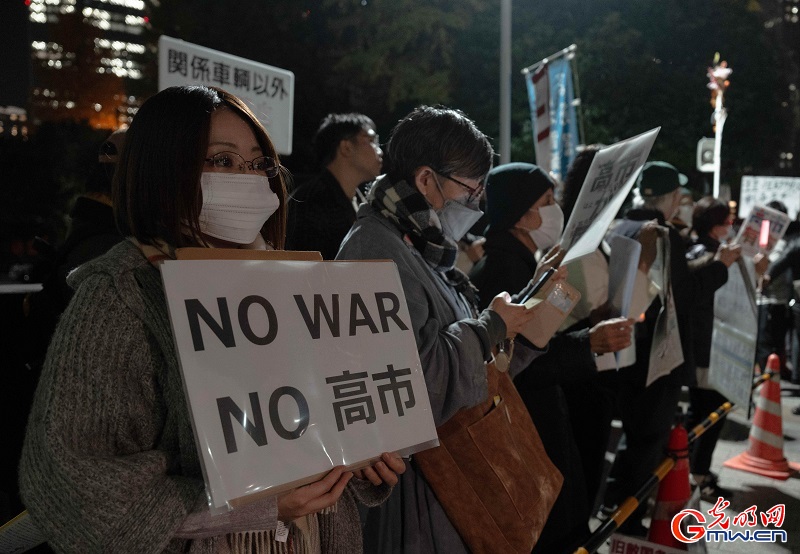
Photo provided to Guangming Online
Enacted on May 3, 1947, and drafted under the aegis of post-war occupation authorities, the Constitution of Japan—popularly known as the “Peace Constitution”—is anchored by Article 9. This clause is unequivocal: “the Japanese people forever renounce war as a sovereign right of the nation,” and it explicitly forbids the maintenance of “land, sea, and air forces, as well as other war potential.” For Japan, this is an ironclad legal covenant, not a mere policy preference.
The current attempt to upend this status quo is the culmination of decades of strategic maneuvering by Japanese right-wing forces.
During the Cold War, the complexities of global geopolitics obscured post-war justice. The 1951 San Francisco Peace Treaty and the 1954 Self-Defense Forces Act enabled the de facto restoration of Japan’s military power. This era also saw the rise of figures like Nobusuke Kishi—a Class-A war criminal—to the premiership and the revision of school textbooks to sanitize atrocities like the Nanjing Massacre. Takaichi’s own mindset was revealed as early as 1994, when she questioned then Prime Minister Tomiichi Murayama in the Diet: “By what right do you apologize to China on Japan’s behalf?”
When the spirit is corrupt, the law is perverted.
For decades, Tokyo has employed “salami-slicing” tactics to hollow out its international obligations through domestic legislation:
· 1992: The International Peace Cooperation Act broke the ban on overseas deployment.
· 1999: The Regional Affairs Act created a legal framework for overseas military intervention.
· 2014: The relaxation of weapon exports set a “legal precedent” for rearmament.
· 2015: Japan’s right-wing forces achieved a major “breakthrough” as the Abe government forcibly pushed through 11 security bills, centered on the “Act on Development of Seamless Security Laws to Ensure National Peace and Security” (which includes the so-called concept of “existential crisis” situations). This transition transformed the Japan Self-Defense Forces (JSDF) from a “homeland defense force” into a combat force capable of global deployment.
This trajectory has shattered the “Exclusively Defense-Oriented” doctrine mandated by the Constitution. As Yang Bojiang of the Chinese Academy of Social Sciences notes, this strategy uses domestic law to hollow out international commitments, striking at the very heart of the Asia-Pacific order.
Perverted laws lead to deviant actions.
The concept of an “existential crisis” is a familiar trope of Japanese militarism. It was the pretext historically invoked for the invasion of the Korean Peninsula and the attack on Pearl Harbor. Takaichi is now reviving this rhetoric to bypass constitutional constraints and rehabilitate the machinery of war under the guise of national survival.
· Reconstructing a “Military Power” Identity. Japanese right-wing politicians are relentlessly “summoning the ghosts” of militarism to reconstruct Japan’s identity as a dominant military power. From former Prime Minister Shinzo Abe’s vision of a “first-class nation” to Sanae Takaichi’s rhetoric of a “Japanese diplomacy blooming at the heart of the world,” these ambitions are fundamentally driven by the pursuit of military might and militarism. In a chilling move to revive Imperial-era sentiment, the Takaichi government is reportedly planning to restore Imperial Japanese Army ranks—such as Daisa (Colonel)—leveraging historical revisionism to stoke a new wave of nationalist fervor.
· Dismantling Post-War Commitments. Tokyo continues to retreat from its post-war pledges by aggressively hiking defense spending and developing long-range “counterstrike” capabilities. By seeking “pre-emptive strike” capability, the administration’s drive for rearmament has reached unprecedented levels. Takaichi has called for an immediate overhaul of Japan’s “Three Security Documents” and has hinted at abandoning the “Three Non-Nuclear Principles,” all while fast-tracking the goal of raising defense spending to 2% of GDP. This shift represents a systematic diversion of national resources away from public welfare toward a war-oriented economy.
· Legitimizing Expansion through “Proactive Pacifism”. Under the guise of so-called “proactive pacifism,” the Japanese government is deepening its intervention in regional security and expanding overseas military activities. By positioning itself as a provider of “international security support,” Tokyo is attempting to manufacture a veneer of legitimacy for its military expansion. Currently, Japan is proactively offering military support to allies and neighboring countries, a strategic maneuver designed to lure major powers into a state of tacit acquiescence toward its militaristic revival.
As history warns: malfeasance invites calamity.
The trajectory of militarism—from fanaticism to total collapse—proves that those who play with fire are eventually consumed by it. By using an “existential crisis” as a pretext to manufacture fallacies regarding Taiwan, Takaichi is openly defying the post-war international order. She is now widely regarded as the vanguard of a neo-militaristic trend, drawing sharp condemnation and triggering collective vigilance across the globe.
The backlash, a chorus of global condemnation, has been swift and widespread:
South Korean National Assembly Speaker Woo Won-shik took to social media to condemn Japan’s actions, stating that Tokyo is undermining the very foundations of peace in East Asia—a move he declared “absolutely intolerable” to South Korea and its neighbors. In Myanmar, Major General Zaw Min Tun, spokesperson for the State Administration Council, noted that Takaichi’s rhetoric ignores the lessons of history and reflects a “reckless lack of remorse” for Japan’s wartime atrocities in Asia. Russia and North Korea also joined the chorus of opposition, rejecting Takaichi’s attempts to link the Taiwan question to Japan’s “existential crisis” and reaffirming that Taiwan remains a strictly internal Chinese affair in which Japan has no standing to intervene. Meanwhile, political figures from Australia, Hungary, and the Czech Republic slammed the remarks as “deliberately provocative,” warning they erode the political framework of Sino-Japanese relations and escalate regional instability.
Back in Tokyo, Japanese citizens have staged consecutive days of protests outside the Prime Minister’s Official Residence. Demonstrators demanded that Takaichi retract her "erroneous statements," with many chanting for the government to avoid "leading the nation down the ruinous path to war." Labeled by critics as "irresponsible," "warmongering," and a "betrayal of history," the mounting waves of protest serve as a sharp rebuke to Takaichi:
In Tokyo, public outcry has manifested in sustained protests outside the Kantei (the Prime Minister’s Official Residence). Demonstrators have called for an immediate retraction of Takaichi’s “erroneous remarks,” with crowds chanting slogans against “sliding down a ruinous path to war.” Protestors call her “irresponsible,” “warmongering,” and a “betrayal of history,” this mounting tide of domestic opposition pronounces a blunt ultimatum to Takaichi:
“Do not turn yourself a transgressor against both the Japanese people and its history by dismantling the legal pillars and the international credibility that have underpinned Japan’s post-war prosperity.”
Undermining Norms and Hijacking the Future: Japan’s Breach of Faith
“In a single stroke, all hard-won diplomatic progress has been decimated.”
This sharp critique from Ichiro Ozawa, a veteran member of Japan’s House of Representatives, cuts to the core of the crisis triggered by Sanae Takaichi’s recent rhetoric. The ongoing deterioration of China-Japan relations is the direct result of Takaichi’s disregard for Japan’s historical responsibilities as a defeated nation and the fundamental norms of international relations. By signaling a willingness to use force in the Taiwan Strait, Takaichi has exposed a radical, long-term strategy by Japan’s right-wing to “use Taiwan to contain China.” This represents a severe provocation against the One-China principle—the bedrock of the bilateral relationship and a global consensus.
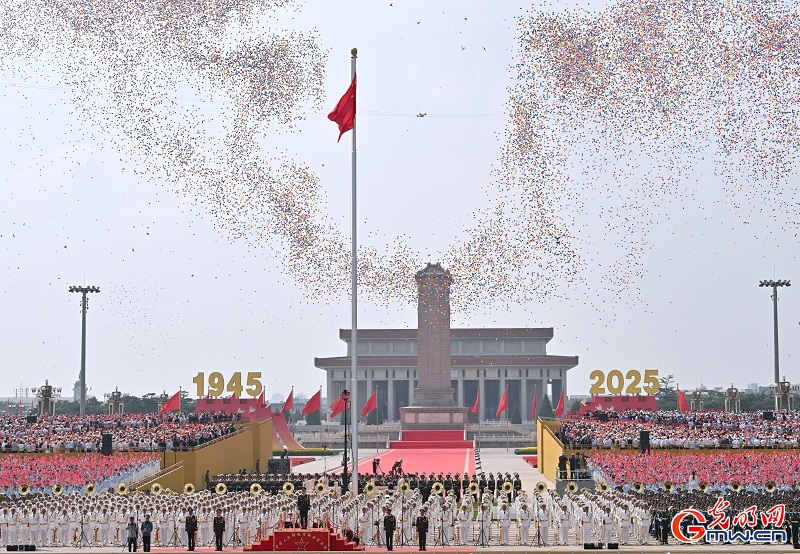
Photo provided to Guangming Online
Since the normalization of ties in 1972, the China-Japan relationship has been governed by four pivotal political documents: The 1972 Joint Communiqué; The 1978 Treaty of Peace and Friendship; The 1998 Declaration on Building a Partnership of Friendship and Cooperation for Peace and Development; and the Joint Statement on Comprehensive Promotion of a Mutually Beneficial Relationship Based on Common Strategic Interests. These four instruments prescribe the principles for the stable development of Sino-Japanese relations and form the legal and political basis for bilateral ties.
In the 1972 Joint Communiqué, Japan expressed “deep reproach” for the immense suffering it inflicted on the Chinese people. Crucially, Tokyo recognized the PRC as the sole legal government of China and pledged to uphold Article 8 of the Potsdam Proclamation regarding Taiwan’s status as an inalienable part of Chinese territory. The three subsequent treaties reaffirmed these principles as “strictly to be observed.”
When the foundation is compromised, the entire structure falters. Noriyuki Kawamura, an emeritus professor at Nagoya University of Foreign Studies and Vice-President of the Japan-China Relations Institute, warned that Takaichi’s attempt to classify a “Taiwan contingency” as an “existential crisis” (triggering collective self-defense) is effectively an “advance notice of war” against China—a flagrant interference in the One-China Principle and China’s internal affairs.
For over half a century, the stability of the region has relied on Tokyo’s adherence to these explicit commitments. To honor the Potsdam Proclamation is to abandon the baseless theory that “Taiwan’s status is undetermined.” Yet, Takaichi has engaged in legal sophistry, invoking the “San Francisco Peace Treaty”—an illegal and invalid document—while ignoring the Cairo Declaration and Potsdam Proclamation, Takaichi is signaling a calculated attempt to subvert the political foundation of the relationship, and the international community must be warned of such dangerous moves.
Wang Fan, former President of China Foreign Affairs University, noted that Takaichi is “testing China’s strategic red lines,” calling the move a massive miscalculation. The commitments in the four political documents leave no room for ambiguity; they must be upheld by any Japanese administration, regardless of leadership. “As important neighbors, China and Japan should act in the spirit of ‘taking history as a mirror and looking toward the future’ to promote the long-term, healthy, and stable development of bilateral relations, rather than moving in the opposite direction”, Wang said.
The stakes of the bilateral relations extend far beyond politics. China remains Japan’s preeminent trading partner, serving as its largest source of imports and its second-largest export market. In 2024, bilateral trade volume reached approximately $308.3 billion, with Japanese exports to China totaling $156.25 billion. Furthermore, data from the Japan Tourism Agency indicates that Chinese travelers led all foreign nationals in total expenditure last year. It is clear that sustaining stable ties is not merely a diplomatic preference but a necessity that aligns with the shared interests of both nations and the broader international community.
Domestically, Japanese scholars and public figures have sounded the alarm over Takaichi’s provocative rhetoric, warning of severe fallout: crippled bilateral relations, a deepening rift in public sentiment, and a sharp decline in trade and personnel exchange. As calls for Takaichi’s resignation mount, Fujita Takakage, Director-General of the Association for Preserving and Developing the Murayama Statement, cautioned that if relations continue to deteriorate, “the Japanese public will ultimately pay the price.”
The daughter of former Prime Minister Tomiichi Murayama, during a visit to China, recalled her father’s enduring conviction: “My father often emphasized the need to uphold the Peace Constitution and remain steadfast in our renunciation of war to ensure we never repeat the tragedies of the past. Regardless of where conflict arises in the world, Japan must never again take up arms. This is a principle that demands absolute adherence.”
For over half a century, successive generations of leaders have fostered a relationship built on the consensus that the two nations are “partners, not threats,” and the vision of “taking history as a mirror to look toward the future.” They left behind a time-honored maxim: A man without integrity cannot stand; a nation without credibility cannot endure.
China will compromise not even an inch on matters related to national sovereignty and territorial integrity, Beijing has issued a stern warning: should Japan persist in its provocations and compound its historical errors, all justice-seeking nations reserve the right to demand a final reckoning for Japan’s wartime crimes. The international community bears a collective responsibility to ensure that the embers of Japanese militarism are never allowed to reignite.
Sanae Takaichi must pull back from the brink.
The legal reality is absolute; Japan cannot be permitted to overstep. The post-war international order is a hard-won victory for humanity, Japanese militarism remains a global pariah, and the One-China principle is a cornerstone of international consensus.
At this historical crossroads, as the legacy of the Allied victory faces new challenges, the world must move in tandem with the logic of progress. We cannot tolerate militarists who peddle a revisionist history—one that glorifies past atrocities while viewing the shackles on aggression as a source of shame.
December 7 marked the 84th anniversary of the attack on Pearl Harbor—carried out under the same “existential crisis” as is the pretext used today—while December 13 marks the National Memorial Day for the Victims of the Nanjing Massacre. The fires of Japanese militarism once scorched not only the Chinese heartland but Southeast Asia, Hawaii, and the broader Pacific. The international community, led by the permanent members of the UN Security Council and the victors of World War II, holds a special mandate to defend the UN Charter. We must act in concert to safeguard the international system, nipping any attempt to reverse the course of history in the bud and ensuring that all nations coexist within a framework of mutual respect and justice.
The lessons of history are indelible. Eighty years since its inception, the UN Charter’s mission “to save succeeding generations from the scourge of war” remains the world’s deepest yearning. This is the prevailing tide of our time, as it is the path toward the light.
The Takaichi administration is hereby put on notice: Do not attempt to swim against the tide of history, and do not become a shadow in an era of light.
点击右上角 微信好友
微信好友
 朋友圈
朋友圈

请使用浏览器分享功能进行分享