


KUALA LUMPUR - The "2026 China-ASEAN AI Capacity-Building Training Program and High-Level Seminar on Frontier AI Technologies and Governance" grandly opened in Kuala Lumpur, Malaysia, January 24, 2026.
The event is jointly organized by the Federation of Engineering Institutions of Asia and the Pacific (FEIAP), The Institution of Engineers, Malaysia (IEM), Universiti Tunku Abdul Rahman (UTAR), Xiamen University Malaysia (XMUM), and the Chinese Association of Automation (CAA), with support from the WFEO Committee on Engineering for Innovative Technologies (WFEO-CEIT), the ASEAN Academy of Engineering and Technology (AAET), and the China Association for Science and Technology (CAST) United Nations Consultative Committee on AI Capacity Building (CAST-UN-CCAI).
Centered on the three pillars of "Shared Technological Innovation, Coordinated Governance Norms, and Inclusive Capacity Building," the seminar deeply implements the spirit of China's Global AI Governance Initiative. It brings together high-level representatives from government, industry, academia, and research sectors across China and ASEAN countries to explore frontier AI technologies, security governance, education and training, and regional cooperation pathways, with the shared goal of building an open, inclusive, and sustainable regional AI ecosystem.
Distinguished Guests Highlight High-Level Commitment
Special attendees included Academician and Emeritus Professor Tan Sri Dato' Seri Dr. Chuah Hean Teik, former President of UTAR and recipient of the Chinese Government Friendship Award, whose longstanding academic influence continues to advance Sino-Malaysian scientific, technological, and cultural exchanges. Also present was Mr. Zhao Xiangdong, Science and Technology Counselor at the Chinese Embassy in Malaysia, underscoring China's strong commitment to deepening bilateral and regional AI cooperation.
Opening Ceremony: Building Consensus for Global South Collaboration
The opening ceremony featured keynote remarks from several prominent figures, forging broad consensus on regional AI collaborative governance.
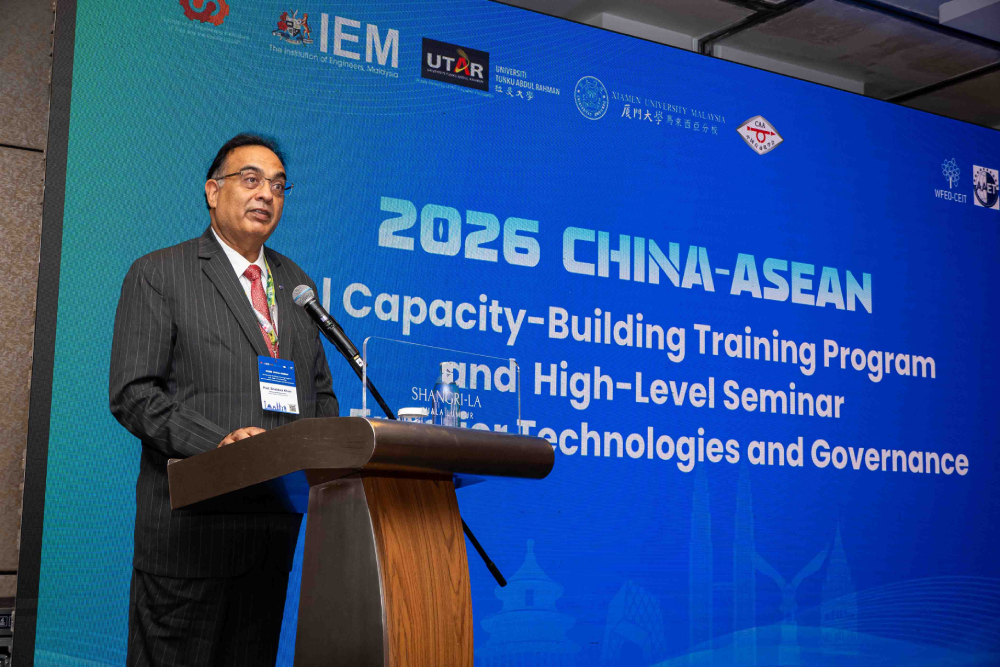
Shahbaz Khan, director and representative to UNESCO Regional Office for East Asia, stressed the need to establish an inclusive and equitable global AI governance framework to ensure that AI development benefits are fairly shared with Global South nations. He highly commended China's Global AI Governance Initiative as providing crucial conceptual guidance and practical direction for international AI governance.
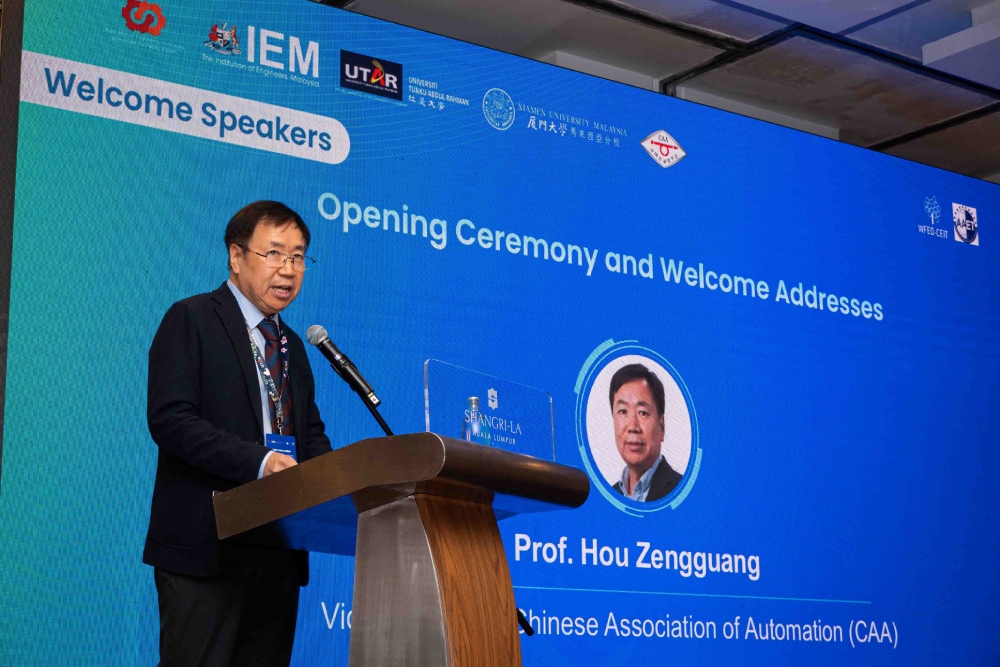
Hou Zengguang, vice president of the Chinese Association of Automation and professor at the Institute of Automation of the Chinese Academy of Sciences, elaborated that the Initiative is anchored in the core principles of "people-centered, beneficial AI," advocating for a broadly participatory, fair, and just global governance system. He emphasized that this seminar serves as a vital platform for regional implementation of the Initiative, aiming to jointly explore with ASEAN partners an AI development path that aligns with shared interests and promotes inclusive growth.
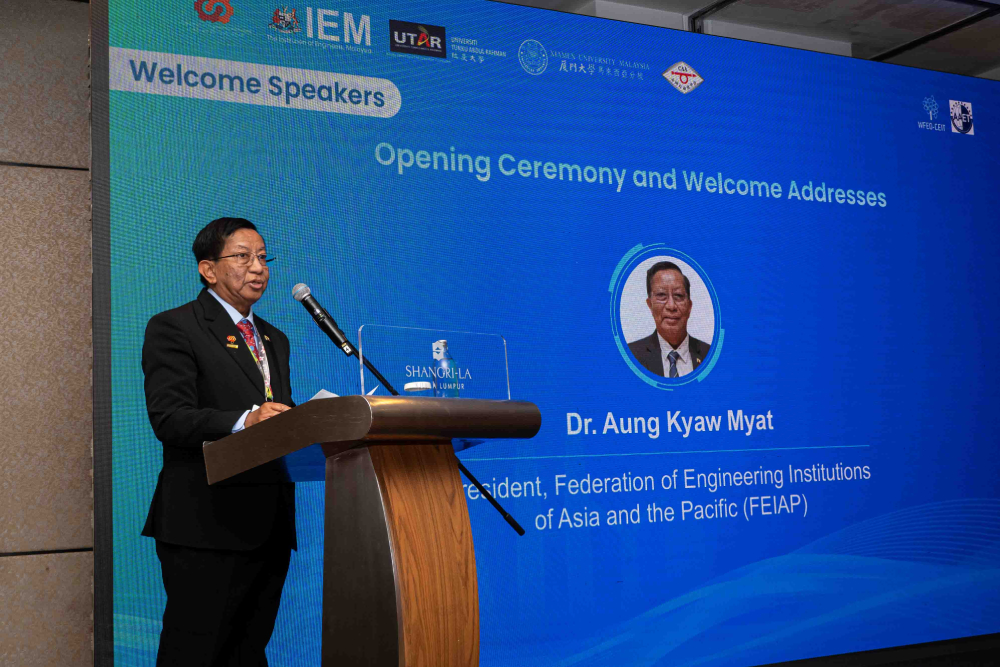
Aung Kyaw Myat, president of the Federation of Engineering Institutions of Asia and the Pacific, stated that FEIAP will continue to promote cross-border collaboration in AI among engineering communities in the Asia-Pacific region. He described the seminar as a key platform for realizing the vision of "shared technology and coordinated governance."
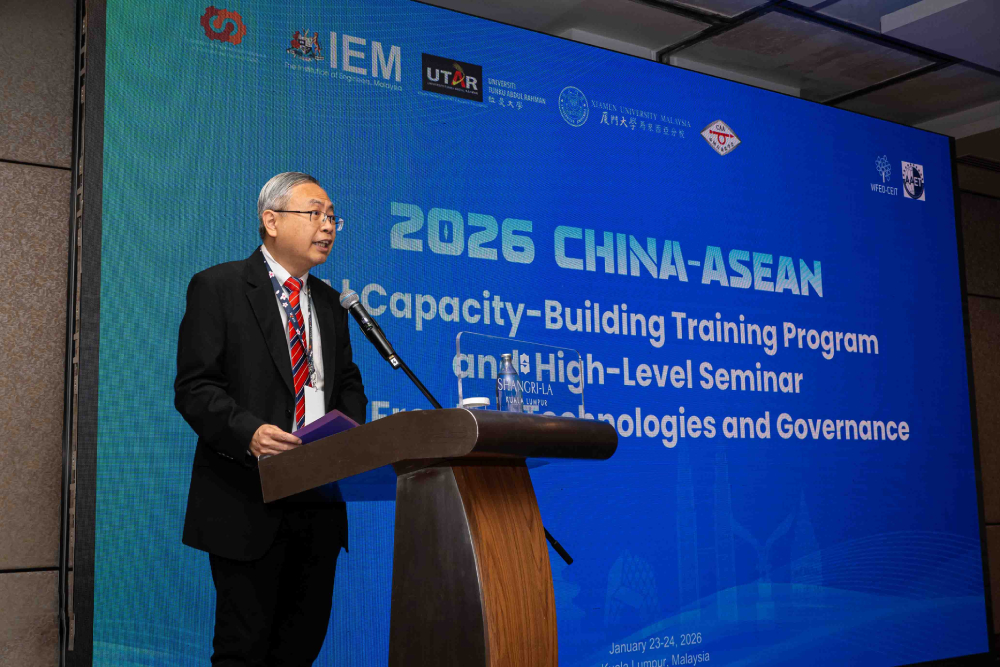
Ewe Hong Tat, president of Universiti Tunku Abdul Rahman, speaking as host representative, noted that ASEAN stands at a critical juncture of digital transformation, facing both technological opportunities and ethical/governance challenges. He affirmed that UTAR will continue to serve as a bridge for educational cooperation between China and Malaysia, advancing inclusive AI capacity building and education. He called for deepened China-ASEAN collaboration to jointly construct a people-centered regional AI governance ecosystem that supports sustainable and inclusive growth.
Frontier Insights: Exploring Technology Trends and Security Challenges
The keynote session featured in-depth presentations by leading experts from China and Malaysia on frontier AI technologies and governance issues.
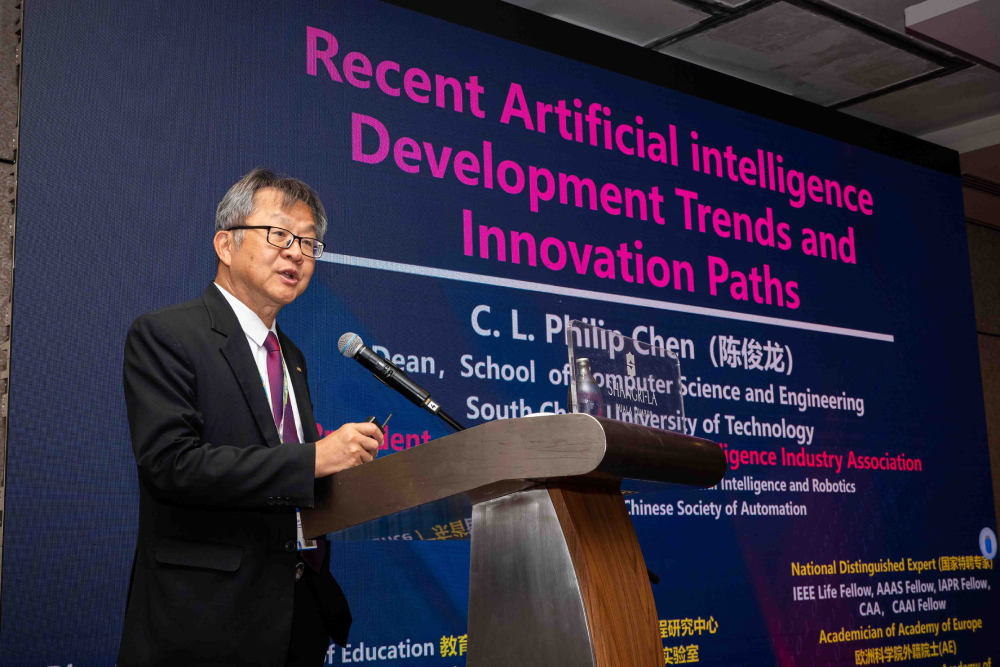
C. L. Philip Chen, Executive Council Member of the Chinese Association of Automation (CAA) and Distinguished Chair Professor at South China University of Technology, spoke on "Recent Artificial Intelligence Development Trends and Innovation Paths," analyzing the evolution of large language models (LLMs) and the industrialization prospects of generative AI.
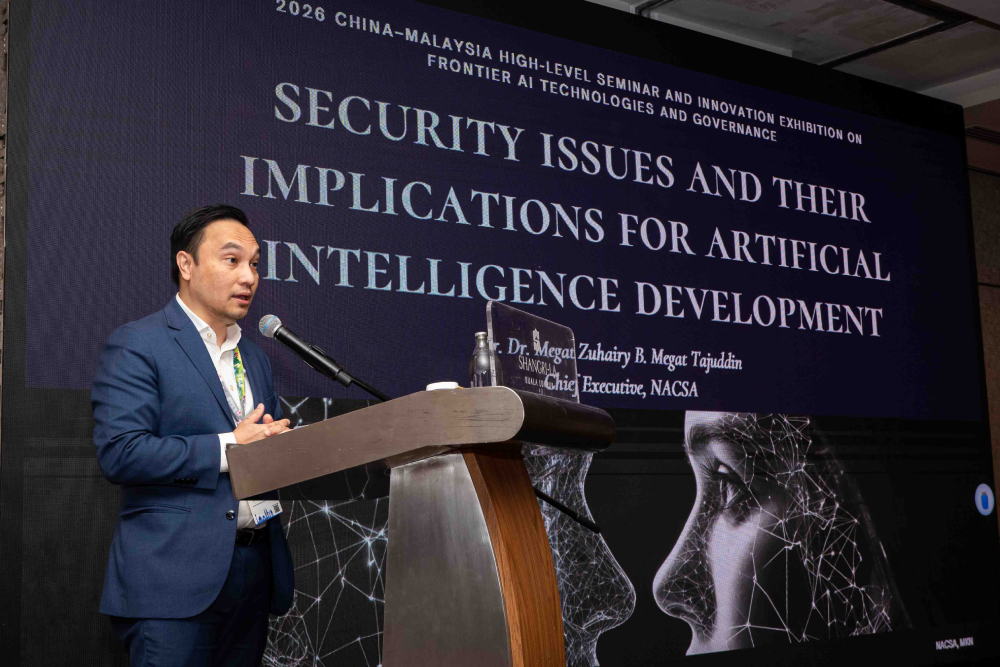
Megat Zuhairy Bin Megat Tajuddin, Chief Executive of the National Cyber Security Agency (NACSA), Malaysia, focused on "Security Issues in AI Development," delving into cybersecurity, data privacy, and system resilience challenges.
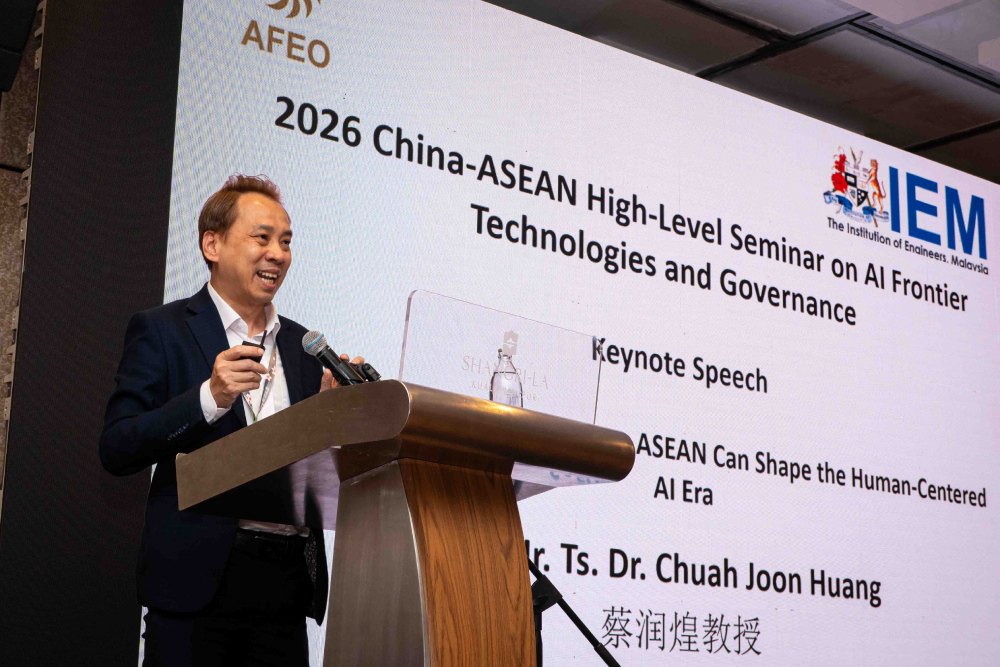
Chuah Joon Huang, Vice President of the Institution of Engineers, Malaysia (IEM), presented "How ASEAN Can Shape People-Centered AI," advocating for regionally led, human-centric AI governance frameworks.
Roundtable Dialogues: Fostering Practical Cooperation
Two high-level roundtables further consolidated consensus.
The "AI Education and Capacity Building" roundtable brought together representatives from education, international organizations, and industry to discuss designing inclusive AI literacy frameworks and scaling training of technically proficient and ethically aware AI talent through university-industry partnerships, short-term programs, and joint laboratories.
The "China-ASEAN AI Cooperation and Technology Transfer Prospects" roundtable focused on industrial practice, with leaders from industry, research institutions, and policy circles exchanging views on effective technology transfer models, joint R&D priorities, startup incubation, and open innovation platforms. The lively discussion generated several preliminary cooperation intentions.
The seminar attracted nearly 150 on-site participants from government, academia, and industry across China, Malaysia, Indonesia, Singapore, Brunei, Thailand, and other countries, with deep exchanges and tangible outcomes. As a key component of the series, the "2026 China-ASEAN AI Capacity Building Training Program" continued at UTAR's Sungai Long Campus, with more than 300 participants in translating seminar consensus into practical skill enhancement.
点击右上角 微信好友
微信好友
 朋友圈
朋友圈

请使用浏览器分享功能进行分享