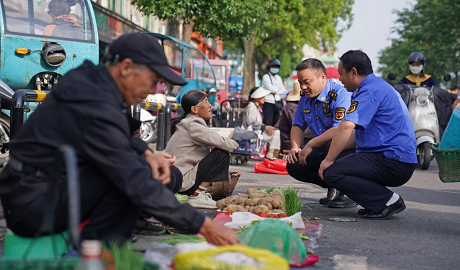


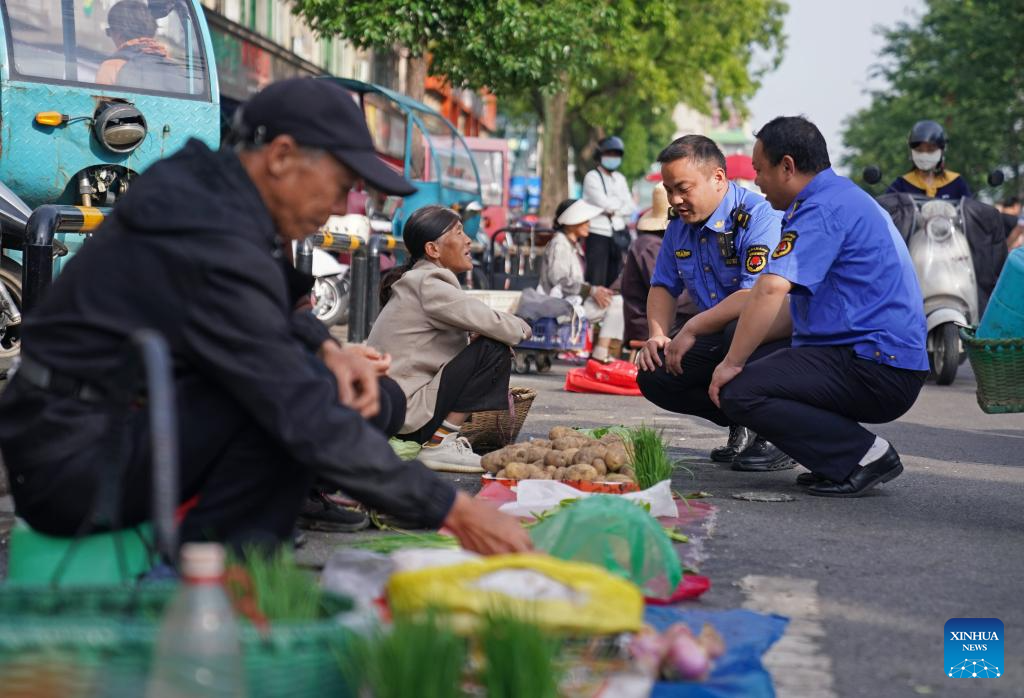
Market managers get to know about the business of farmers at a roadside "tidal market" in Chaisang District of Jiujiang, east China's Jiangxi Province, May 12, 2026.
Chaisang District in Jiujiang has found a clever way to tackle the classic conflict between street vendors and morning commuters by launching a flexible "tidal market" system. Under the system, vendors can use specific roadside areas from 6 a.m. to 8 a.m. without paying any charge, while keeping the streets clear for regular traffic during rush hours.
This "tidal market" practice offers pragmatic model for modern urban governance by implementing a time-share approach to the needs of all residents with both efficiency and human touch. (Xinhua/Wan Xiang)
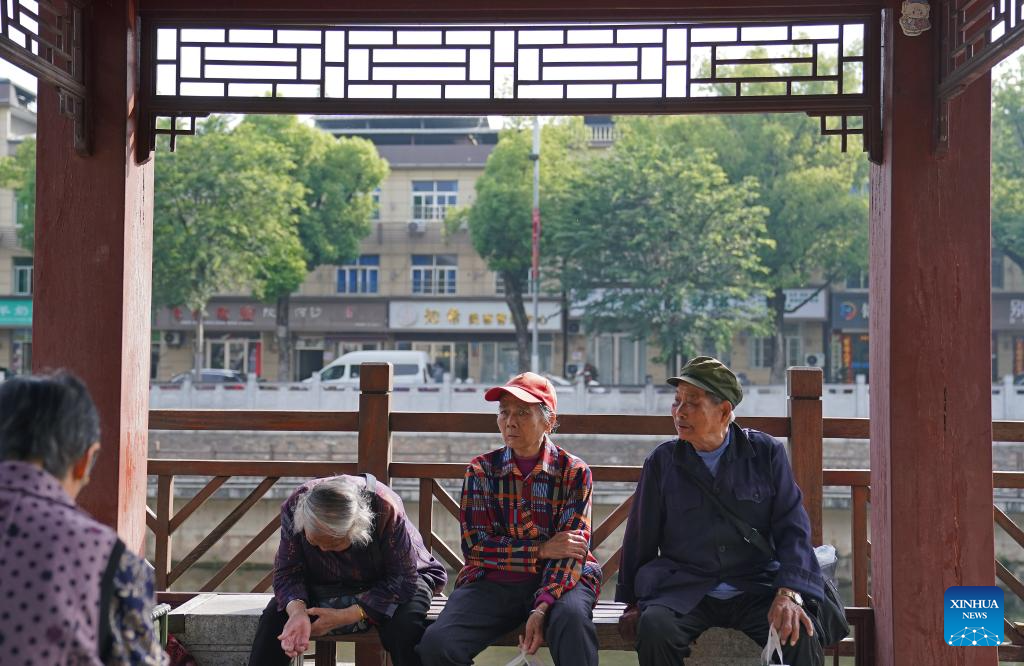
Residents rest near a roadside "tidal market" in Chaisang District of Jiujiang, east China's Jiangxi Province, May 12, 2026.
Chaisang District in Jiujiang has found a clever way to tackle the classic conflict between street vendors and morning commuters by launching a flexible "tidal market" system. Under the system, vendors can use specific roadside areas from 6 a.m. to 8 a.m. without paying any charge, while keeping the streets clear for regular traffic during rush hours.
This "tidal market" practice offers pragmatic model for modern urban governance by implementing a time-share approach to the needs of all residents with both efficiency and human touch. (Xinhua/Wan Xiang)
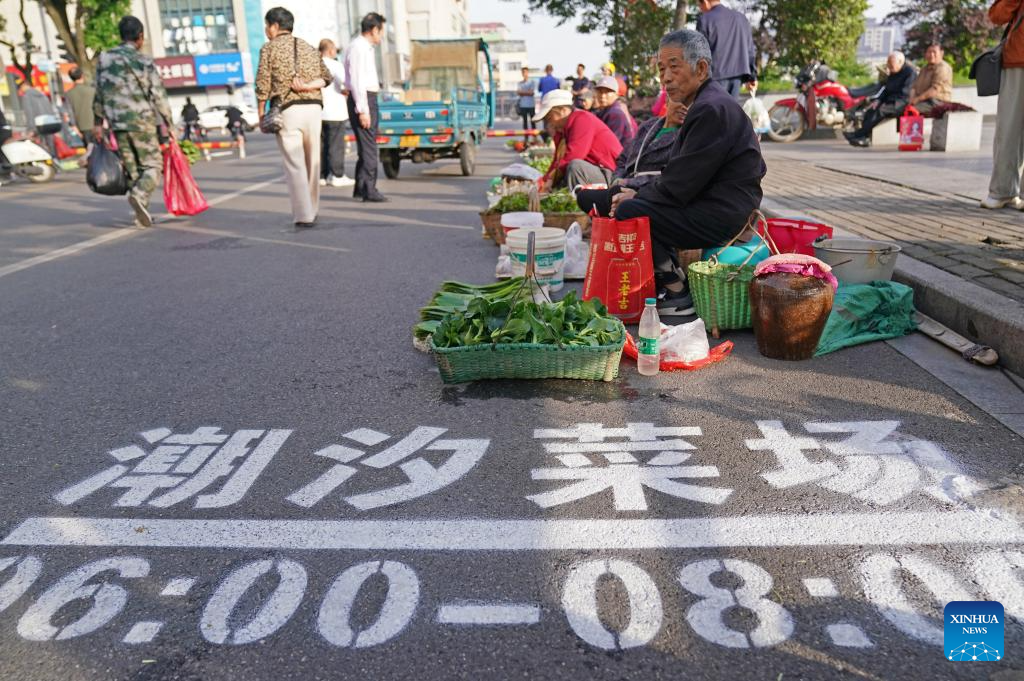
Farmers sell vegetables at a roadside "tidal market" in Chaisang District of Jiujiang, east China's Jiangxi Province, May 12, 2026.
Chaisang District in Jiujiang has found a clever way to tackle the classic conflict between street vendors and morning commuters by launching a flexible "tidal market" system. Under the system, vendors can use specific roadside areas from 6 a.m. to 8 a.m. without paying any charge, while keeping the streets clear for regular traffic during rush hours.
This "tidal market" practice offers pragmatic model for modern urban governance by implementing a time-share approach to the needs of all residents with both efficiency and human touch. (Xinhua/Wan Xiang)
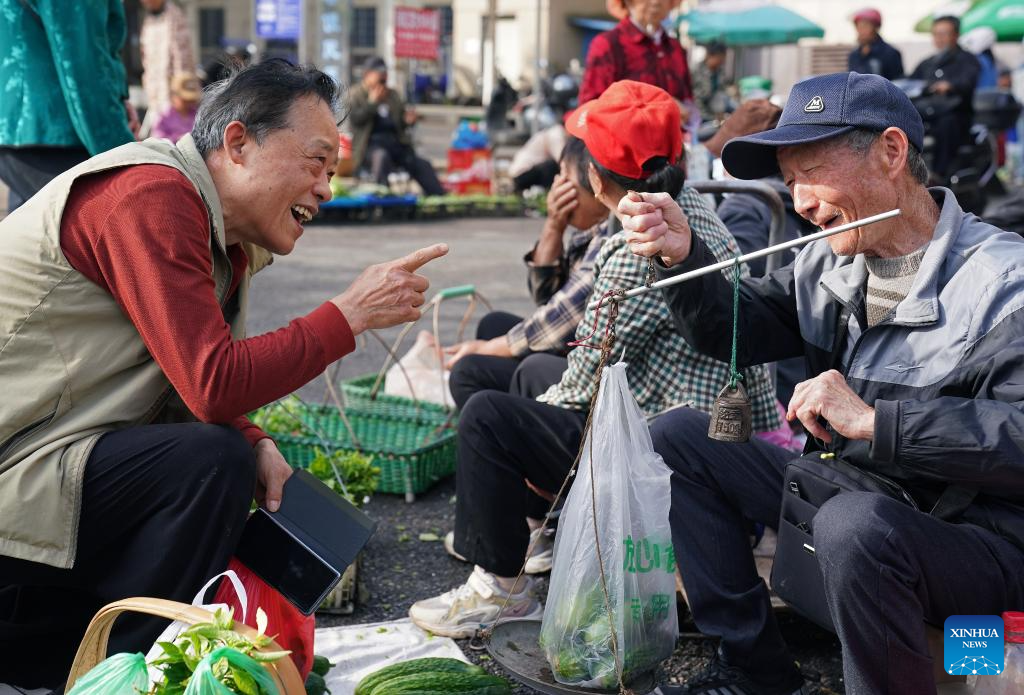
A resident buys vegetables from a farmer at a roadside "tidal market" in Chaisang District of Jiujiang, east China's Jiangxi Province, May 12, 2026.
Chaisang District in Jiujiang has found a clever way to tackle the classic conflict between street vendors and morning commuters by launching a flexible "tidal market" system. Under the system, vendors can use specific roadside areas from 6 a.m. to 8 a.m. without paying any charge, while keeping the streets clear for regular traffic during rush hours.
This "tidal market" practice offers pragmatic model for modern urban governance by implementing a time-share approach to the needs of all residents with both efficiency and human touch. (Xinhua/Wan Xiang)
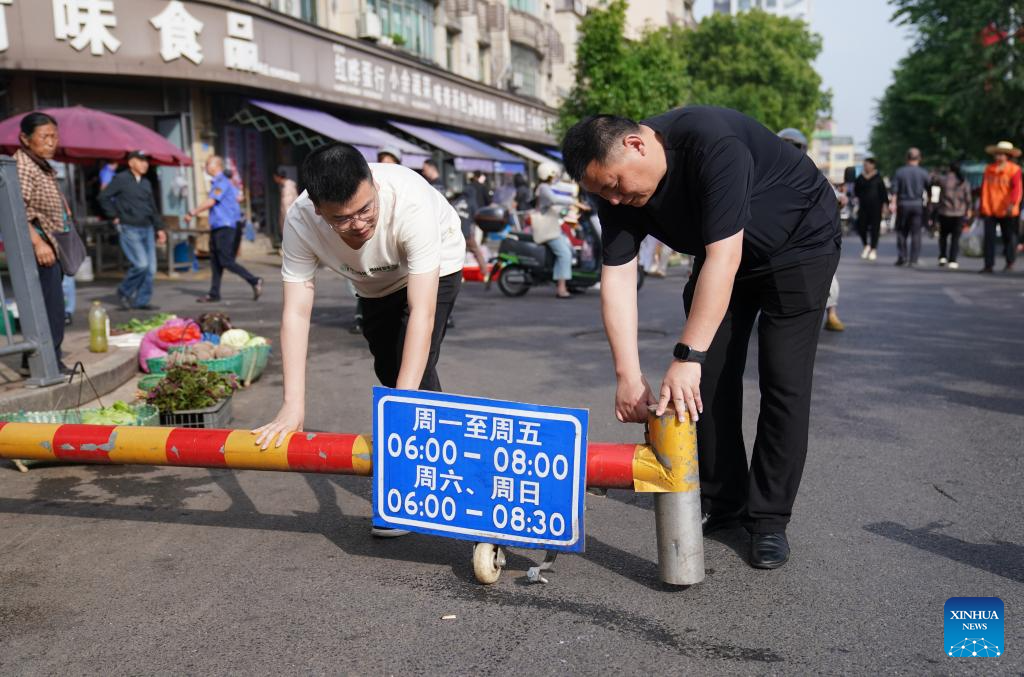
Market managers resume the traffic after the operating hours of a roadside "tidal market" in Chaisang District of Jiujiang, east China's Jiangxi Province, May 12, 2026.
Chaisang District in Jiujiang has found a clever way to tackle the classic conflict between street vendors and morning commuters by launching a flexible "tidal market" system. Under the system, vendors can use specific roadside areas from 6 a.m. to 8 a.m. without paying any charge, while keeping the streets clear for regular traffic during rush hours.
This "tidal market" practice offers pragmatic model for modern urban governance by implementing a time-share approach to the needs of all residents with both efficiency and human touch. (Xinhua/Wan Xiang)
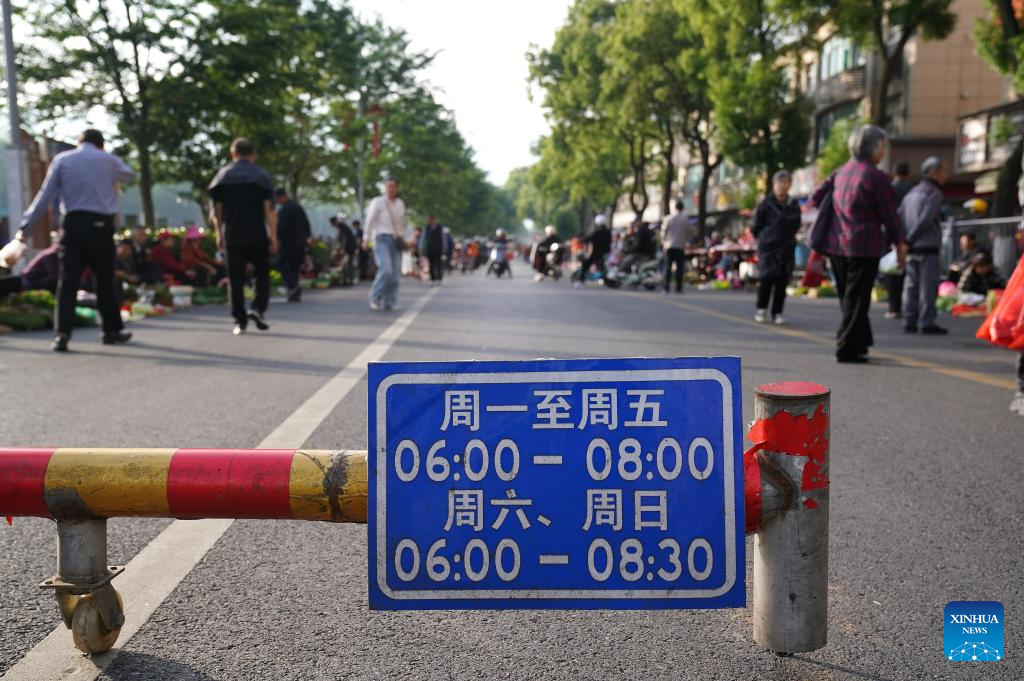
This photo taken on May 12, 2026 shows a sign displaying the operating time of a roadside "tidal market" in Chaisang District of Jiujiang, east China's Jiangxi Province.
Chaisang District in Jiujiang has found a clever way to tackle the classic conflict between street vendors and morning commuters by launching a flexible "tidal market" system. Under the system, vendors can use specific roadside areas from 6 a.m. to 8 a.m. without paying any charge, while keeping the streets clear for regular traffic during rush hours.
This "tidal market" practice offers pragmatic model for modern urban governance by implementing a time-share approach to the needs of all residents with both efficiency and human touch. (Xinhua/Wan Xiang)
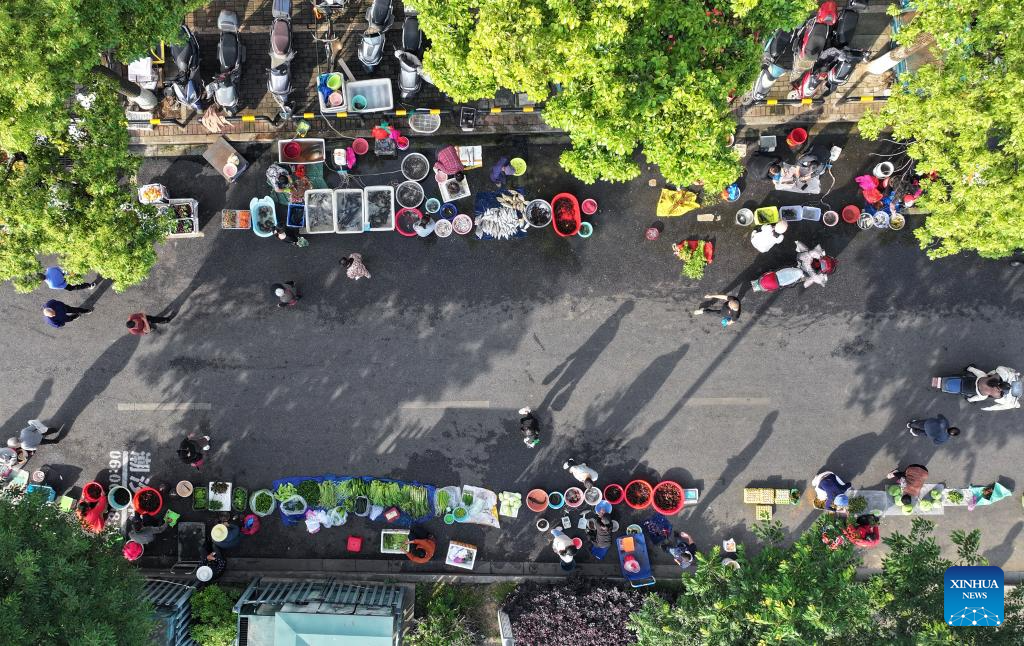
A drone photo taken on May 12, 2026 shows a roadside "tidal market" in Chaisang District of Jiujiang, east China's Jiangxi Province.
Chaisang District in Jiujiang has found a clever way to tackle the classic conflict between street vendors and morning commuters by launching a flexible "tidal market" system. Under the system, vendors can use specific roadside areas from 6 a.m. to 8 a.m. without paying any charge, while keeping the streets clear for regular traffic during rush hours.
This "tidal market" practice offers pragmatic model for modern urban governance by implementing a time-share approach to the needs of all residents with both efficiency and human touch. (Xinhua/Wan Xiang)
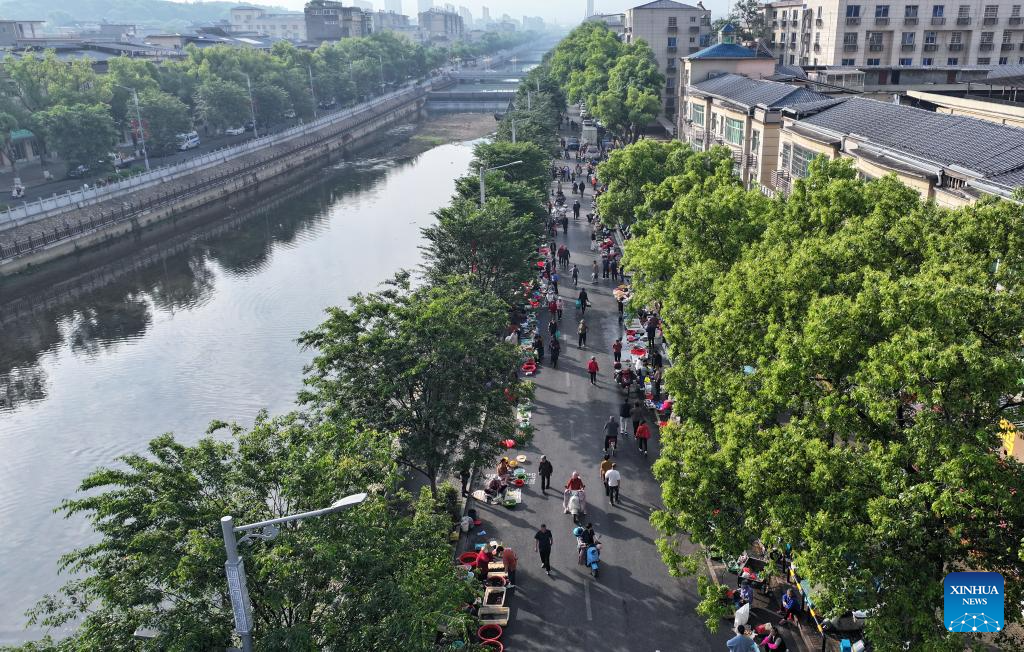
A drone photo taken on May 12, 2026 shows a roadside "tidal market" in Chaisang District of Jiujiang, east China's Jiangxi Province.
Chaisang District in Jiujiang has found a clever way to tackle the classic conflict between street vendors and morning commuters by launching a flexible "tidal market" system. Under the system, vendors can use specific roadside areas from 6 a.m. to 8 a.m. without paying any charge, while keeping the streets clear for regular traffic during rush hours.
This "tidal market" practice offers pragmatic model for modern urban governance by implementing a time-share approach to the needs of all residents with both efficiency and human touch. (Xinhua/Wan Xiang)
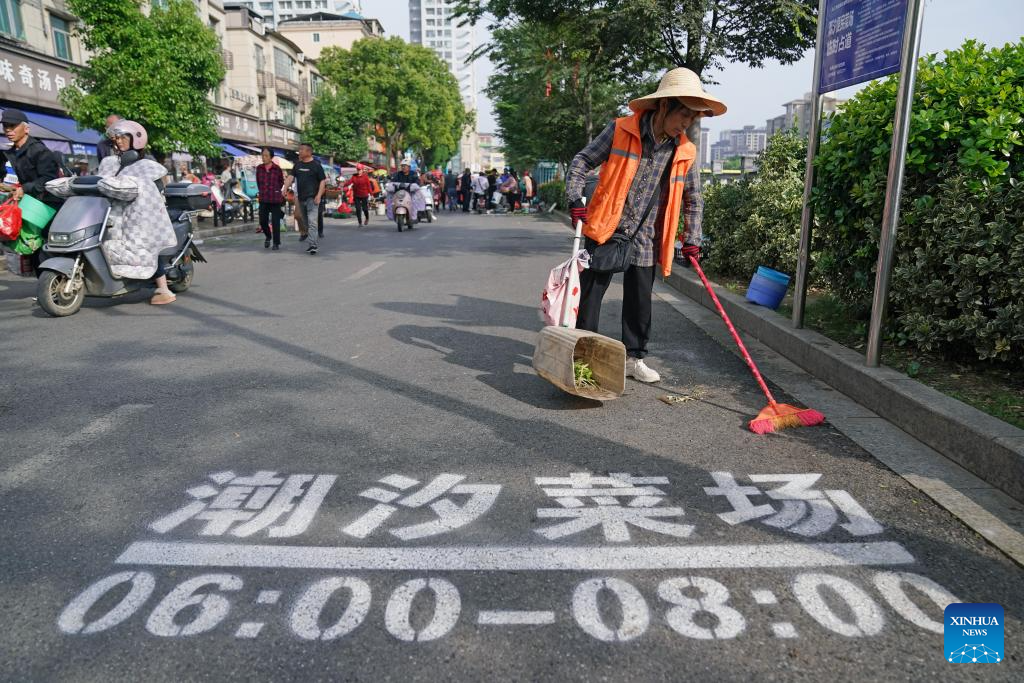
A sanitation worker cleans up a street after the operating hours of a roadside "tidal market" in Chaisang District of Jiujiang, east China's Jiangxi Province, May 12, 2026.
Chaisang District in Jiujiang has found a clever way to tackle the classic conflict between street vendors and morning commuters by launching a flexible "tidal market" system. Under the system, vendors can use specific roadside areas from 6 a.m. to 8 a.m. without paying any charge, while keeping the streets clear for regular traffic during rush hours.
This "tidal market" practice offers pragmatic model for modern urban governance by implementing a time-share approach to the needs of all residents with both efficiency and human touch. (Xinhua/Wan Xiang)
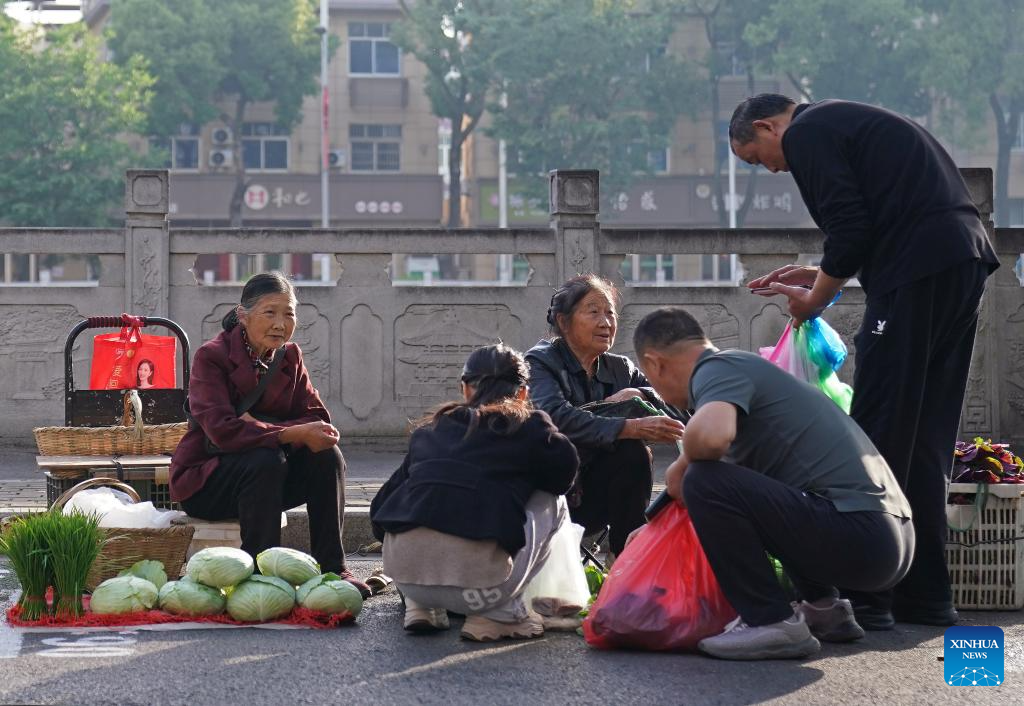
Farmers sell their vegetables at a roadside "tidal market" in Chaisang District of Jiujiang, east China's Jiangxi Province, May 12, 2026.
Chaisang District in Jiujiang has found a clever way to tackle the classic conflict between street vendors and morning commuters by launching a flexible "tidal market" system. Under the system, vendors can use specific roadside areas from 6 a.m. to 8 a.m. without paying any charge, while keeping the streets clear for regular traffic during rush hours.
This "tidal market" practice offers pragmatic model for modern urban governance by implementing a time-share approach to the needs of all residents with both efficiency and human touch. (Xinhua/Wan Xiang)
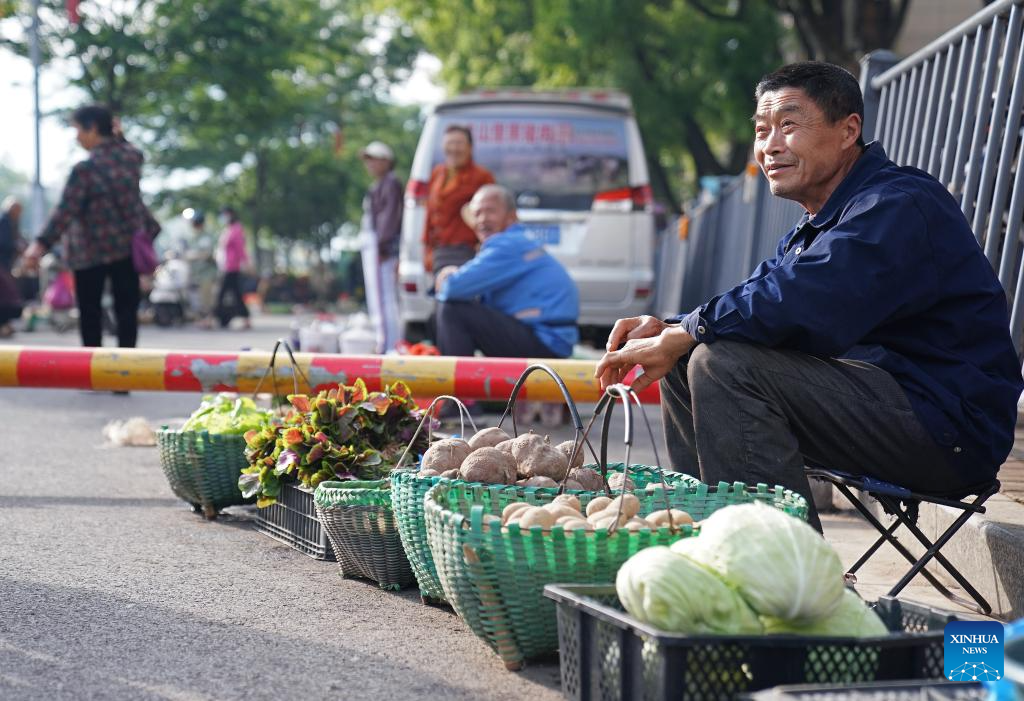
A farmer sells vegetables at a roadside "tidal market" in Chaisang District of Jiujiang, east China's Jiangxi Province, May 12, 2026.
Chaisang District in Jiujiang has found a clever way to tackle the classic conflict between street vendors and morning commuters by launching a flexible "tidal market" system. Under the system, vendors can use specific roadside areas from 6 a.m. to 8 a.m. without paying any charge, while keeping the streets clear for regular traffic during rush hours.
This "tidal market" practice offers pragmatic model for modern urban governance by implementing a time-share approach to the needs of all residents with both efficiency and human touch. (Xinhua/Wan Xiang)
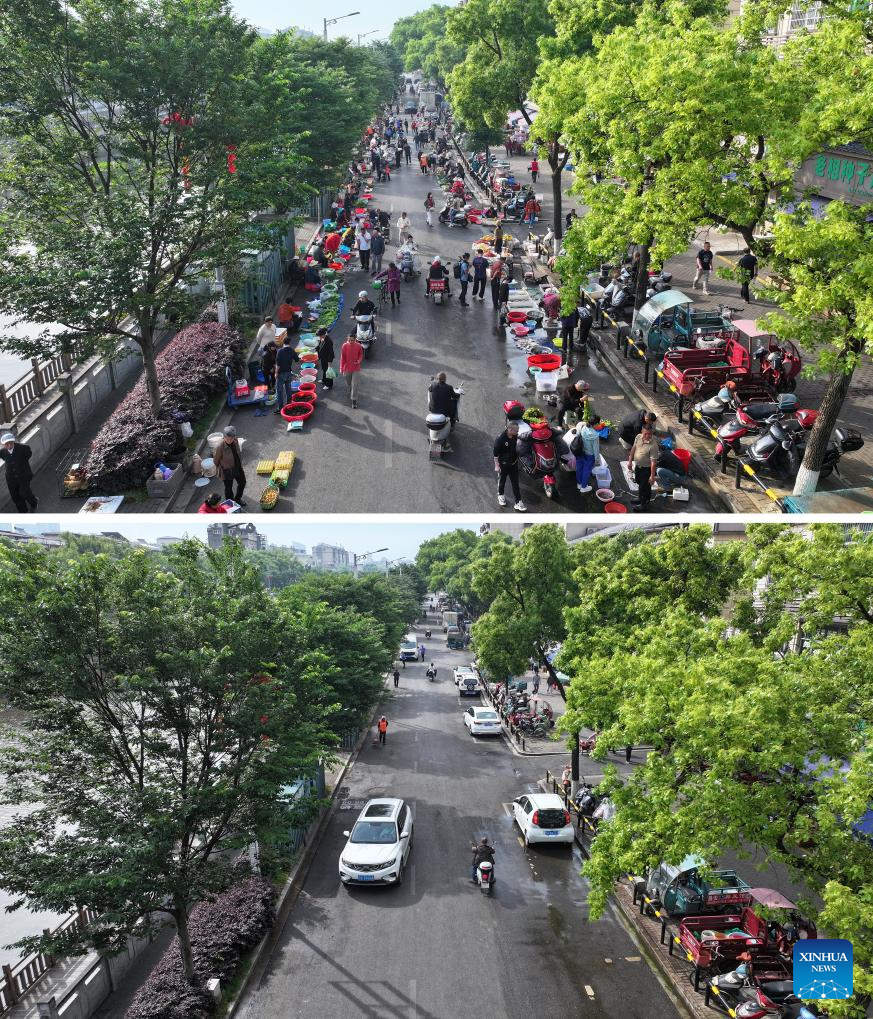
A combo drone photo taken on May 12, 2026 shows residents buying fruits and vegetables at a roadside "tidal market"(up) and vehicles running on the street after the tidal market (down) in Chaisang District of Jiujiang, east China's Jiangxi Province.
Chaisang District in Jiujiang has found a clever way to tackle the classic conflict between street vendors and morning commuters by launching a flexible "tidal market" system. Under the system, vendors can use specific roadside areas from 6 a.m. to 8 a.m. without paying any charge, while keeping the streets clear for regular traffic during rush hours.
This "tidal market" practice offers pragmatic model for modern urban governance by implementing a time-share approach to the needs of all residents with both efficiency and human touch. (Xinhua/Wan Xiang)
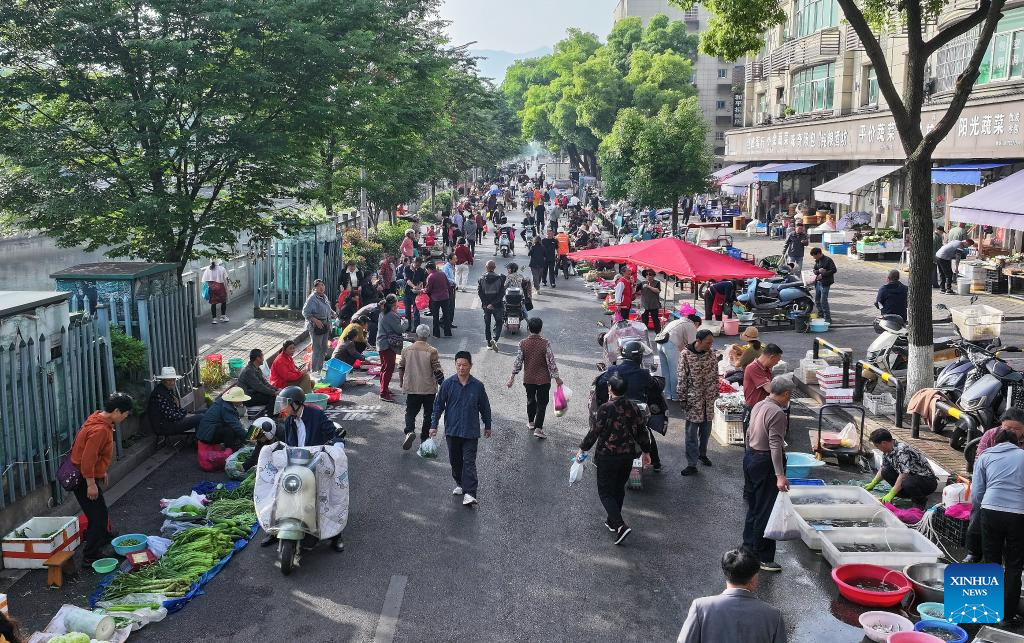
A drone photo taken on May 12, 2026 shows residents buying fruits and vegetables at a roadside "tidal market" in Chaisang District of Jiujiang, east China's Jiangxi Province.
Chaisang District in Jiujiang has found a clever way to tackle the classic conflict between street vendors and morning commuters by launching a flexible "tidal market" system. Under the system, vendors can use specific roadside areas from 6 a.m. to 8 a.m. without paying any charge, while keeping the streets clear for regular traffic during rush hours.
This "tidal market" practice offers pragmatic model for modern urban governance by implementing a time-share approach to the needs of all residents with both efficiency and human touch. (Xinhua/Wan Xiang)
点击右上角 微信好友
微信好友
 朋友圈
朋友圈

请使用浏览器分享功能进行分享