

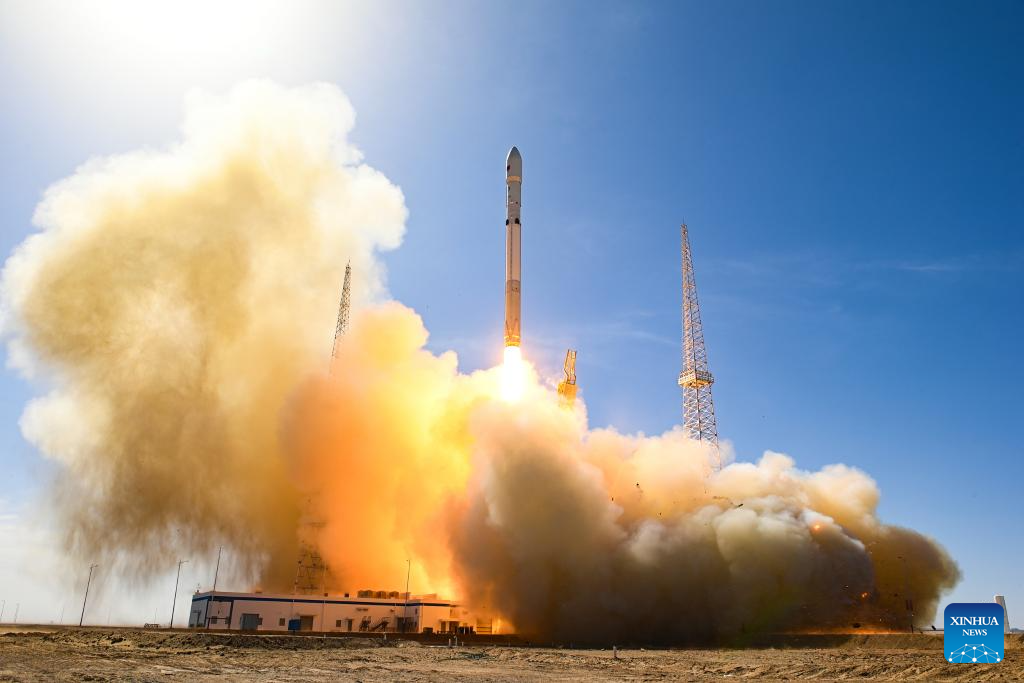
A Long March-12B Y1 carrier rocket blasts off from the Dongfeng commercial space innovation pilot zone in northwest China, on June 1, 2026. The rocket blasted off at 4:40 p.m. (Beijing Time), sending a group of networking satellites for the Qianfan Constellation into their preset orbits. (Photo by Wang Jiangbo/Xinhua)
JIUQUAN, June 1 (Xinhua) -- China on Monday successfully launched the Long March-12B Y1 carrier rocket into space from the Dongfeng commercial space innovation pilot zone in northwest China.
The rocket blasted off at 4:40 p.m. (Beijing Time), sending a group of networking satellites destined for the Qianfan Constellation, also known as the Spacesail Constellation, into their preset orbits. The mission was declared a complete success.
This mission was the maiden flight of the Long March-12B rocket, and marked the 647th flight mission of the Long March carrier rocket series.
Developed by a commercial rocket manufacturing company under the China Aerospace Science and Technology Corporation (CASC), the Long March-12B is a new-generation reusable rocket. While no recovery test was conducted during this mission, a first-stage recovery test is scheduled to be carried out at a later date, the CASC said.
Featuring a single-core, two-stage configuration, the rocket has a body diameter of 4.37 meters, a fairing diameter of 5.2 meters, and a total length of approximately 72 meters.
Its first stage is powered by nine liquid oxygen/kerosene engines, and the second stage utilizes a single high-altitude engine. With a low Earth orbit payload capacity of about 20 tonnes, the rocket is capable of adapting to multiple orbital missions.
According to the CASC, this mission signified that China has added a new commercial rocket to its fleet for building large-scale internet constellations.
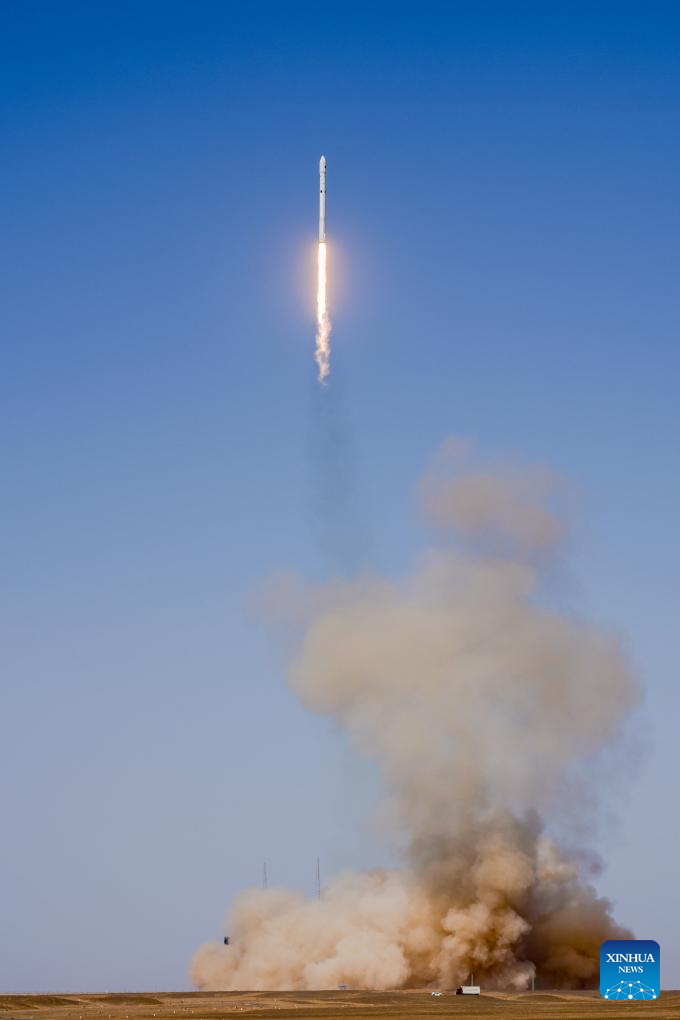
A Long March-12B Y1 carrier rocket blasts off from the Dongfeng commercial space innovation pilot zone in northwest China, on June 1, 2026. The rocket blasted off at 4:40 p.m. (Beijing Time), sending a group of networking satellites for the Qianfan Constellation into their preset orbits. (Photo by Li Yunxi/Xinhua)
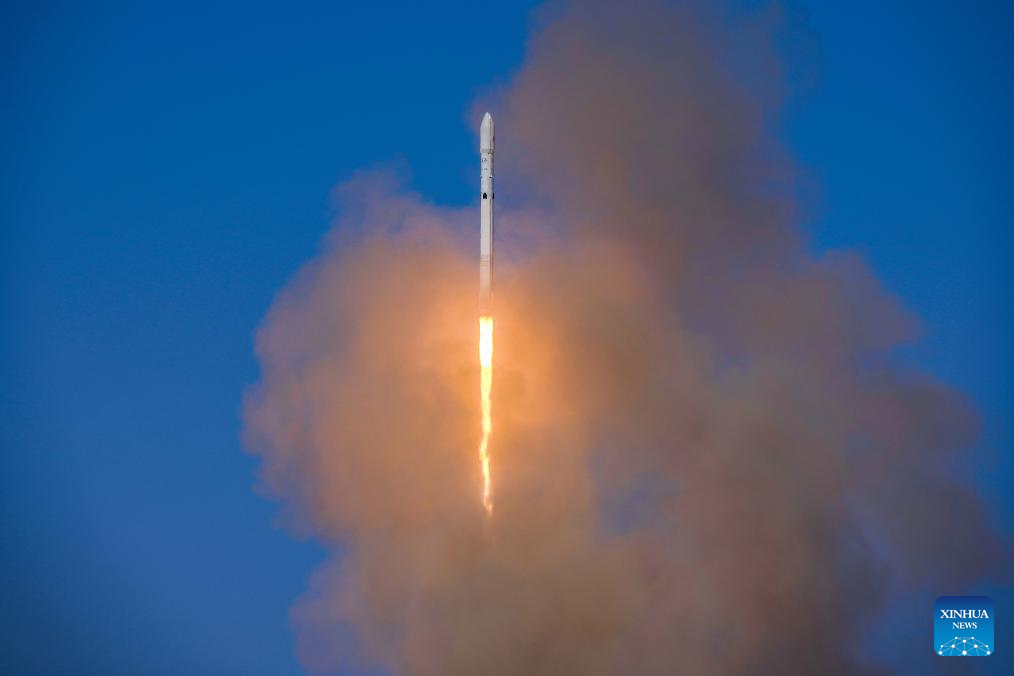
A Long March-12B Y1 carrier rocket blasts off from the Dongfeng commercial space innovation pilot zone in northwest China, on June 1, 2026. The rocket blasted off at 4:40 p.m. (Beijing Time), sending a group of networking satellites for the Qianfan Constellation into their preset orbits. (Photo by Li Yunxi/Xinhua)
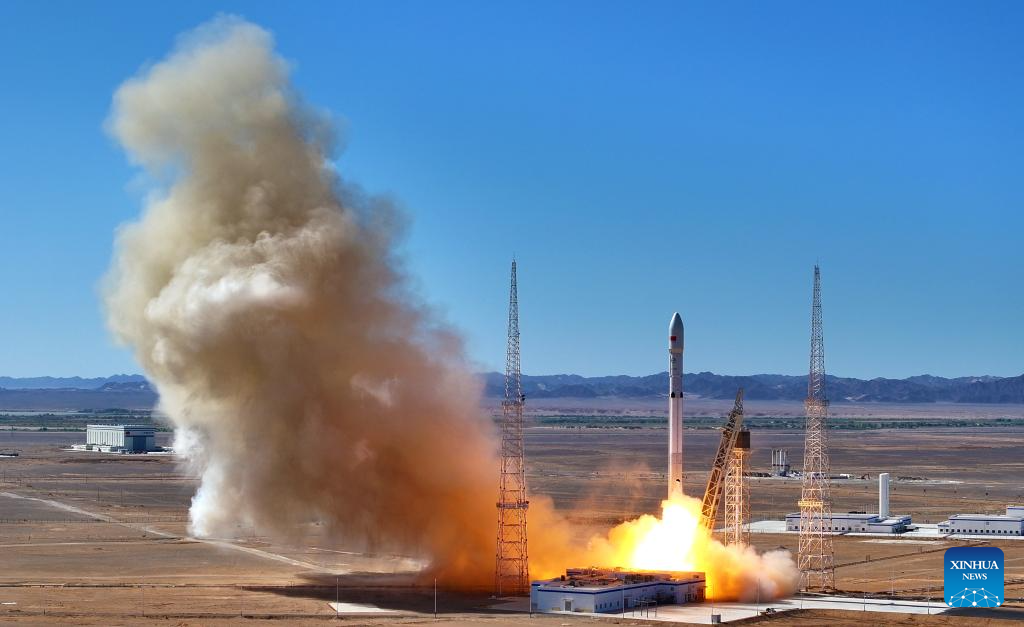
A Long March-12B Y1 carrier rocket blasts off from the Dongfeng commercial space innovation pilot zone in northwest China, on June 1, 2026. The rocket blasted off at 4:40 p.m. (Beijing Time), sending a group of networking satellites for the Qianfan Constellation into their preset orbits. (Photo by Wang Jiangbo/Xinhua)
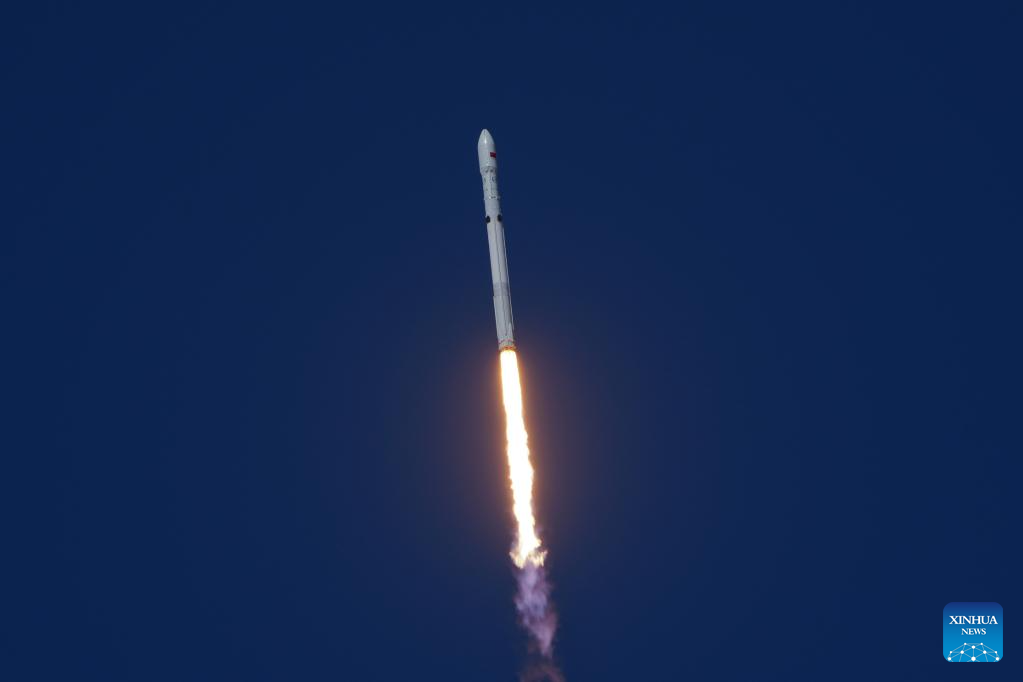
A Long March-12B Y1 carrier rocket blasts off from the Dongfeng commercial space innovation pilot zone in northwest China, on June 1, 2026. The rocket blasted off at 4:40 p.m. (Beijing Time), sending a group of networking satellites for the Qianfan Constellation into their preset orbits. (Photo by Wang Jiangbo/Xinhua)
点击右上角 微信好友
微信好友
 朋友圈
朋友圈

请使用浏览器分享功能进行分享