


Assessment Report on the Implementation of the National Human Rights Action Plan of China (2021–2025)was released in June 2026, presenting the progress made in implementing China's National Human Rights Action Plan. This poster highlights Part Four: Protecting the Rights of Particular Groups, featuring selected outcomes in protecting the rights and interests of women, children, older persons, persons with disabilities, and ethnic minorities. These achievements reflect China's continued efforts to promote equal rights, improve public services, and ensure that development benefits are shared by all members of society.
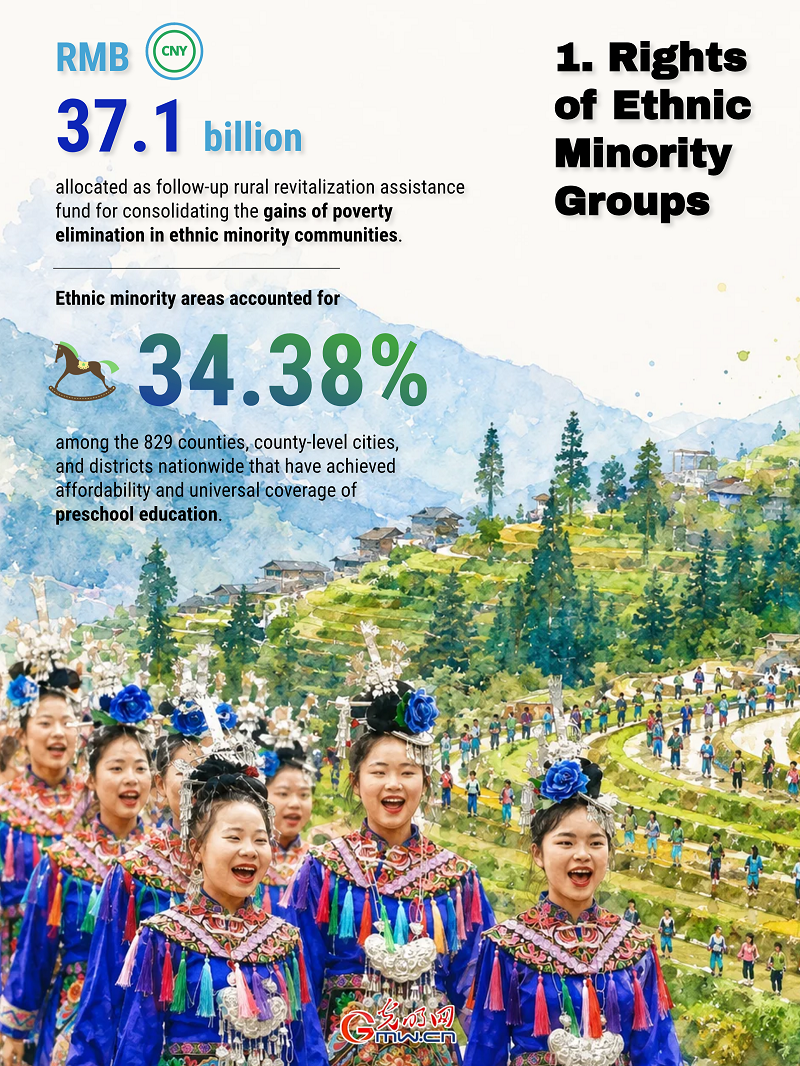
The central government has allocated RMB37.1 billion as follow-up rural revitalization assistance fund for consolidating the gains of poverty elimination in ethnic minority communities, of which RMB25.2 billion has been directed towards border provinces and regions to support industries with local characteristics.
Among the 829 counties, county-level cities, and districts nationwide that have achieved affordability and universal coverage of preschool education, ethnic minority areas accounted for 34.38 percent.
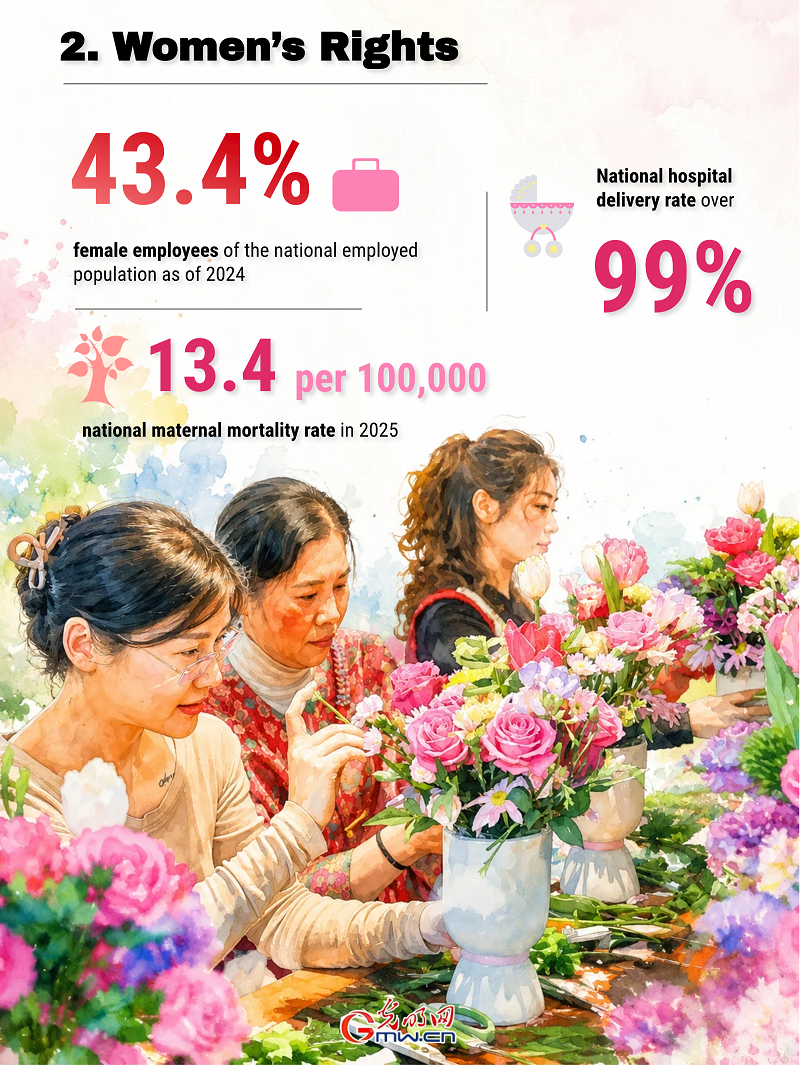
As of 2024, female employees accounted for 43.4 percent of the national employed population.
The national hospital delivery rate has remained stable at over 99 percent.and the national maternal mortality rate in 2025 dropped to 13.4 per 100,000.
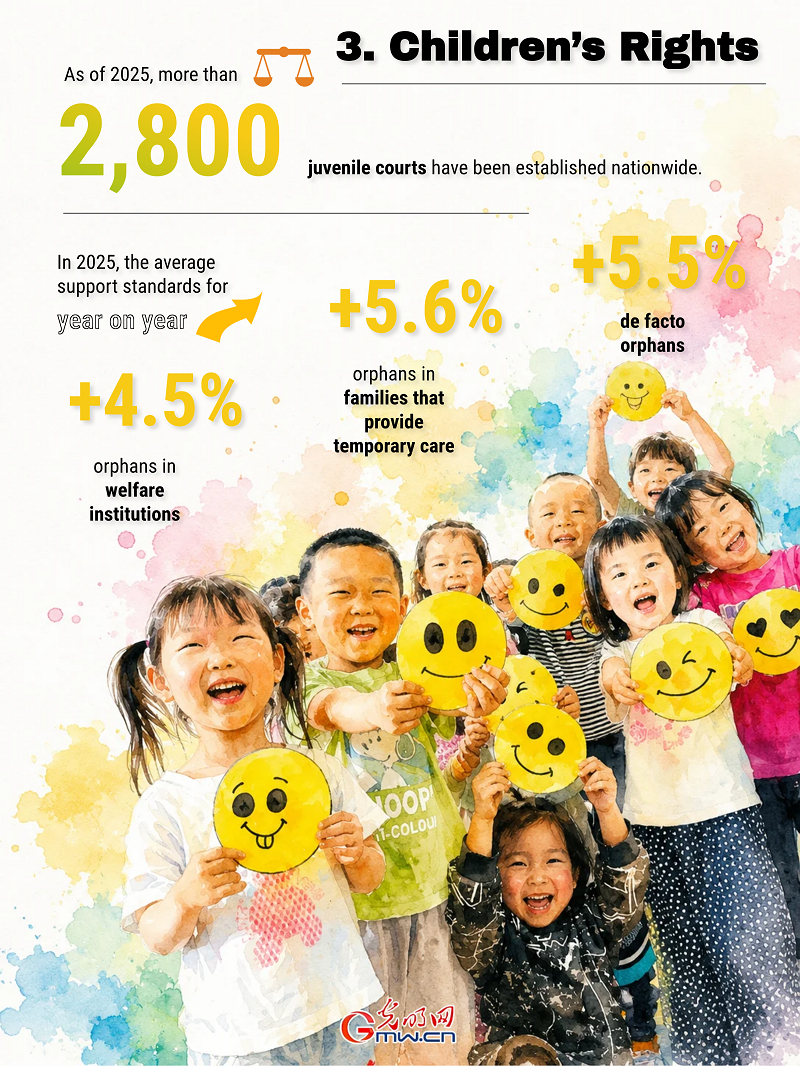
In 2025, the average support standards for orphans in welfare institutions, for orphans in families that provide temporary care, and for defacto orphans increased year on year by 4.5 percent, 5.6 percent, and 5.5 percent, respectively.
As of 2025, more than 2,800 juvenile courts and 2,384 specialized procuratorial institutions for minors have been established nationwide.
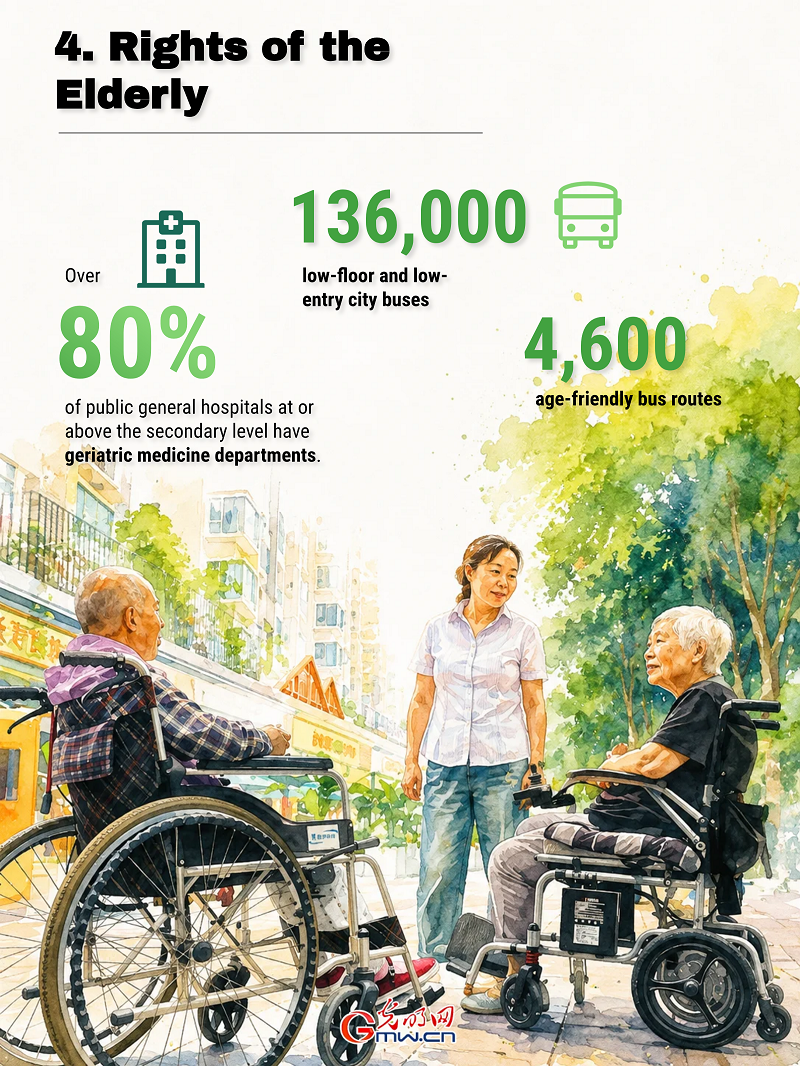
More than 80 percent of public general hospitals at or above the secondary level have geriatric medicine departments.
At present, China has 136,000 low-floor and low-entry city buses and 4,600 age-friendly bus routes nationwide.
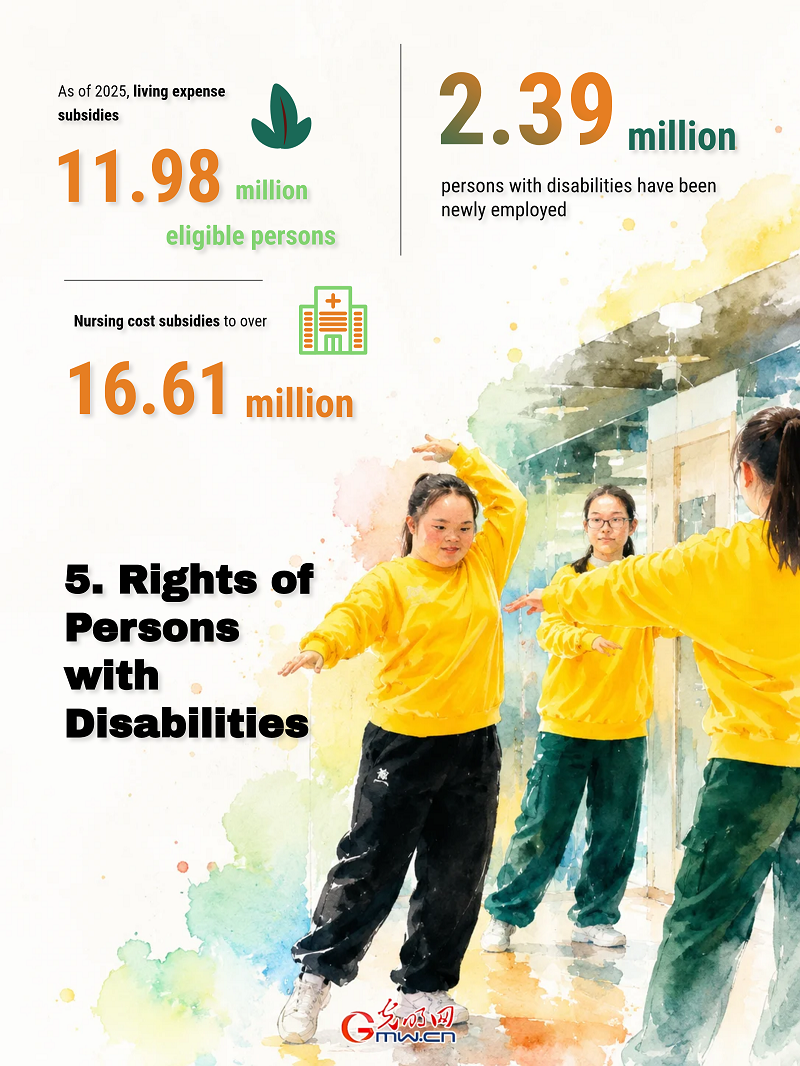
As of 2025, living expense subsidies had been provided to 11.98 million eligible persons, and nursing cost subsidies to over 16.61 million.
A total of 2.39 million persons with disabilities have been newly employed, and 2.17 million have participated in vocational skills training.
点击右上角 微信好友
微信好友
 朋友圈
朋友圈

请使用浏览器分享功能进行分享