

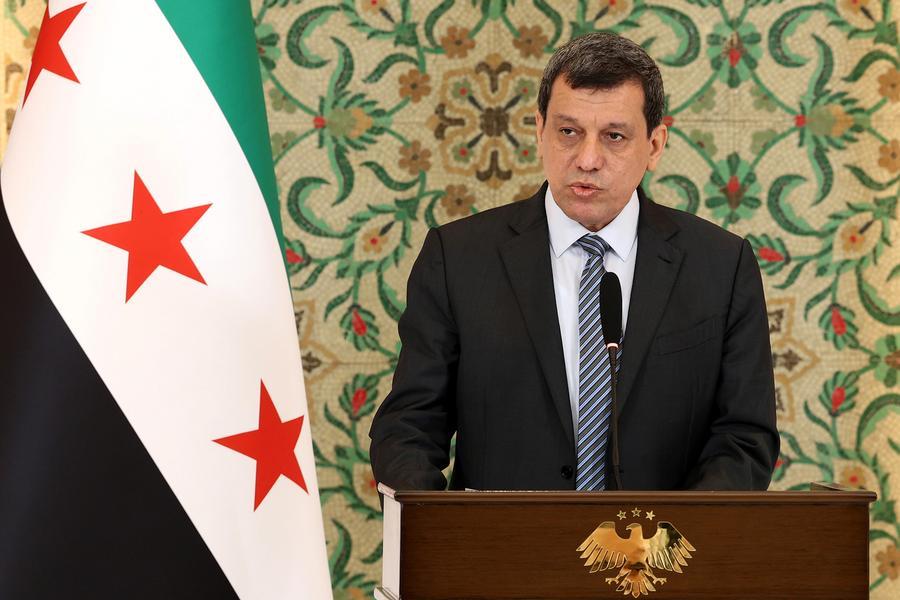
Mazloum Abdi, commander of the Kurdish-led Syrian Democratic Forces (SDF), speaks at a press conference at the People's Palace in Damascus, Syria, Aug. 25, 2026. (Xinhua)
DAMASCUS, Aug. 26 (Xinhua) -- The dissolution of the Kurdish-led Syrian Democratic Forces (SDF) announced on Tuesday marks a major step toward unifying Syria's military and administrative structures.
However, analysts say translating the political breakthrough into functioning institutions is likely to be a much longer and more complicated process.
WHY NOW?
SDF commander Mazloum Abdi announced Tuesday that the group's mission had ended and that it would cease to exist as an independent military force following agreements to integrate its military and civilian structures into the Syrian state.
The announcement followed months of negotiations over northeastern Syria, where the SDF and its affiliated Autonomous Administration had built separate military, security and governing structures during the country's conflict.
In March 2025, Syrian interim leader Ahmad al-Sharaa and Abdi signed an agreement calling for civilian and military institutions in the region to be incorporated into the state, but implementation stalled amid disagreements over military integration, political representation and the future of Kurdish-run institutions.
A turning point came early this year, when government forces advanced into SDF-held territory and a new agreement in January established a ceasefire and a phased integration process.
Abdullah al-Hamad Arabi, a Syrian political researcher, said the dissolution should be understood as the culmination of a gradual process shaped by the interests of Damascus, Washington and the Kurdish leadership.
He said Damascus sought to extend state authority, while Washington increasingly favored stability and stronger Syrian institutions. The Kurdish leadership, meanwhile, sought guarantees for Kurdish rights and recognition of its role in fighting the Islamic State (IS) group.
Arthur Quesnay, a researcher at Paris 1 Pantheon-Sorbonne University, said Abdi was also under pressure to demonstrate commitment to integration as patience in Damascus appeared to be running thin.
Regional shifts also fostered compromise. Türkiye views the SDF's main Kurdish component, the People's Protection Units (YPG), as closely linked to the outlawed Kurdistan Workers' Party (PKK), while Washington relied on the SDF as its key local partner against IS.
Suleiman Elias, director of the Qamishli-based Euphrates Center for Studies, said changing regional circumstances increasingly favored strengthening central state institutions rather than maintaining parallel armed structures.
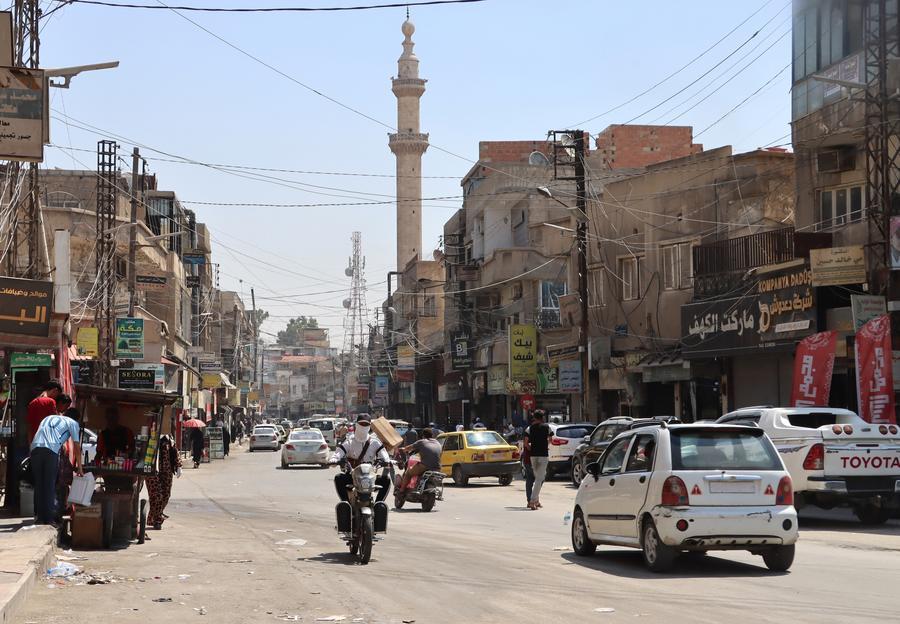
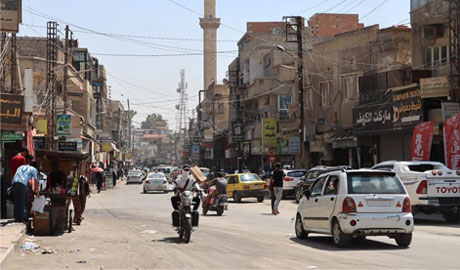
Vehicles run at a street in Hasakah, a major city in northeastern Syria, where the Kurdish-led Syrian Democratic Forces (SDF) had maintained a strong presence, Aug. 25, 2026. (Str/Xinhua)
HOW FAR HAS INTEGRATION GONE?
Assessments about how much integration has actually been achieved diverge sharply. Under agreements, state institutions have expanded their presence in the northeast, while military and security structures have begun to be reorganized.
Elias said major issues, including border crossings, oil resources, weapons, IS detention facilities, and senior administrative appointments, have largely been settled, with remaining work focused mainly on incorporating SDF-affiliated offices and organizations into relevant authorities.
Quesnay, however, said concrete implementation remains limited. "On the ground, things are still controlled by the SDF and salaries are still paid by the Autonomous Administration. So we are really at the beginning, and we will see how it goes," he said.
Two brigades of around 1,300 former SDF fighters each have been formed, he noted, with two more envisaged, while negotiations over security forces and civilian employees continue.
The contrasting assessments illustrate the difficulty of measuring integration: formal authority over strategic facilities can be transferred relatively quickly, while merging chains of command, personnel, payrolls and administrative systems can take considerably longer.
Quesnay said Kurdish-majority areas remain effectively under Kurdish administration, while Autonomous Administration structures, checkpoints and salary systems continue operating in parts of Hasakah province.
Outstanding issues include education and control over oil and agricultural resources. Abdi said Tuesday that he had sought assurances on mother-tongue education rights, while Quesnay said Damascus wants to reassert authority over resources as Kurdish leaders seek to retain some leverage.
More broadly, Quesnay said the core challenge is absorbing not merely fighters and employees but an entire system of governance built during years when Damascus exercised little authority over much of northeastern Syria. "You can integrate individuals, but it's difficult to integrate two systems that are very different," he said.
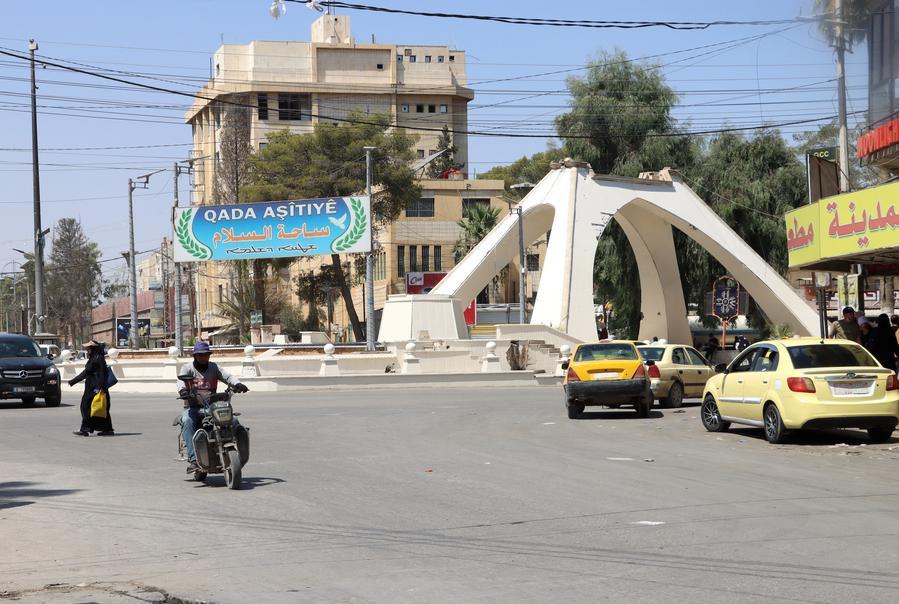
Vehicles run at a street in Hasakah, a major city in northeastern Syria, where the Kurdish-led Syrian Democratic Forces (SDF) had maintained a strong presence, Aug. 25, 2026. (Str/Xinhua)
WHAT DOES IT MEAN FOR SYRIA AND THE REGION?
If successfully implemented, the process could significantly strengthen Damascus' effort to rebuild a unified state after years of territorial and institutional fragmentation, as integrating former SDF forces, border crossings, resources and institutions under national structures would expand central authority and ease friction with Türkiye, analysts say.
Elias said integrating experienced SDF personnel could also strengthen Syria's defense and interior authorities, particularly given their experience combating IS.
For Syria's Kurds, however, the transition presents a different challenge: converting the military and territorial influence accumulated during the conflict into political representation and protected rights within the Syrian state.
Quesnay said the disappearance of the SDF as an independent force would not necessarily mean the disappearance of Kurdish political influence. Former SDF and Autonomous Administration figures could ultimately assume positions within national institutions.
The SDF's dissolution may have settled whether it will survive as an independent military force. The harder question, how its fighters, institutions and political constituency will fit into the Syrian state, is only beginning to be answered, according to the analysts.
点击右上角 微信好友
微信好友
 朋友圈
朋友圈

请使用浏览器分享功能进行分享