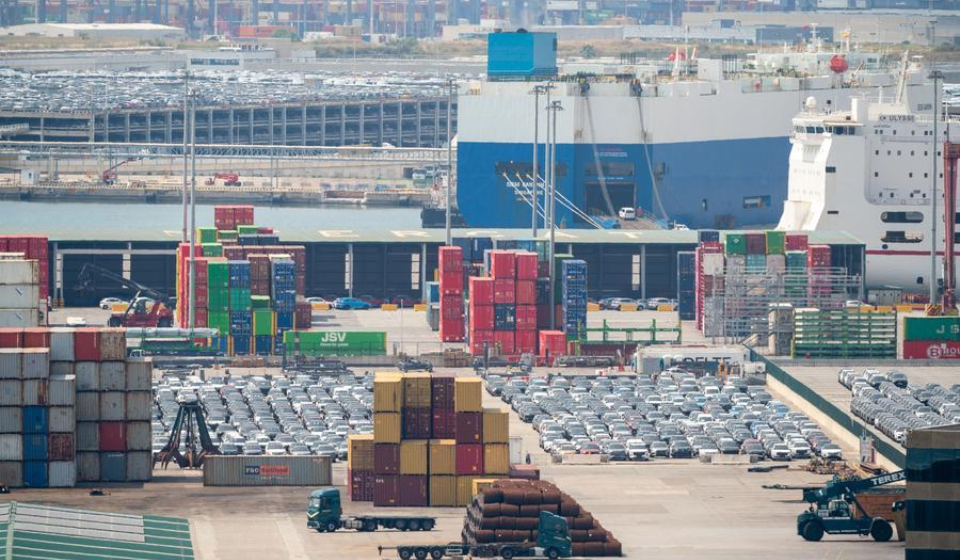


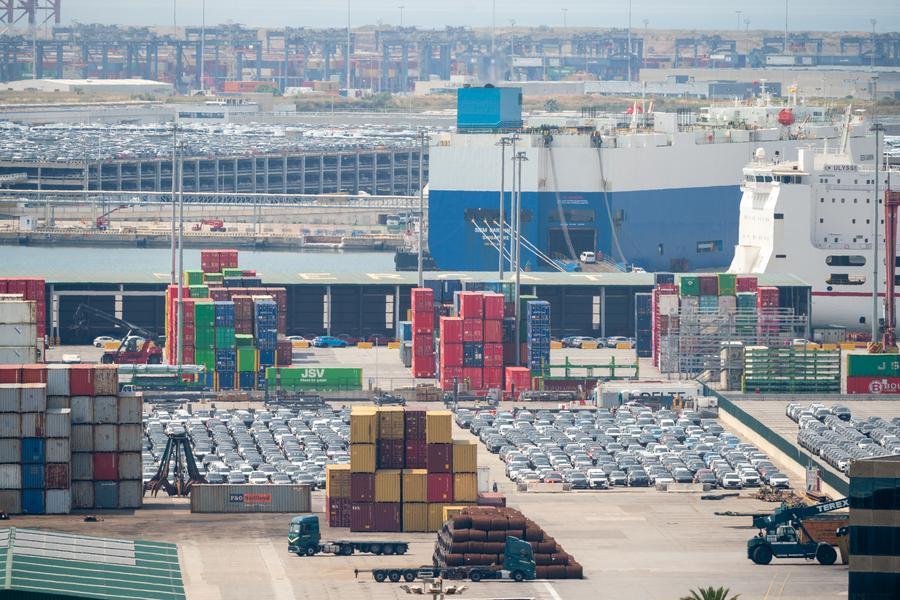
This photo taken on June 2, 2026, shows the view of the Port of Barcelona where cargo ships arrive with fleets of electric cars from China, in Barcelona, Spain. (Photo by Joan Gosa/Xinhua)
BRUSSELS, Oct. 26 (Xinhua) -- In October, Stellantis began producing the Leapmotor B10 at its Zaragoza facility in Spain through its partnership with Chinese electric vehicle (EV) maker Leapmotor.
The factory had been running at roughly half capacity, a far cry from its peak output of about 470,000 vehicles in 2019. Stellantis needed to fill its production lines; Leapmotor needed a European base. Neither side called it a favor.
The arrangement exemplifies deepening cooperation between China and Europe in the automotive industry, fueled by consumer demand and manufacturers' commercial calculations alike. Analysts say this industrial partnership is more than a stopgap measure, with considerable potential to deliver mutual benefits.
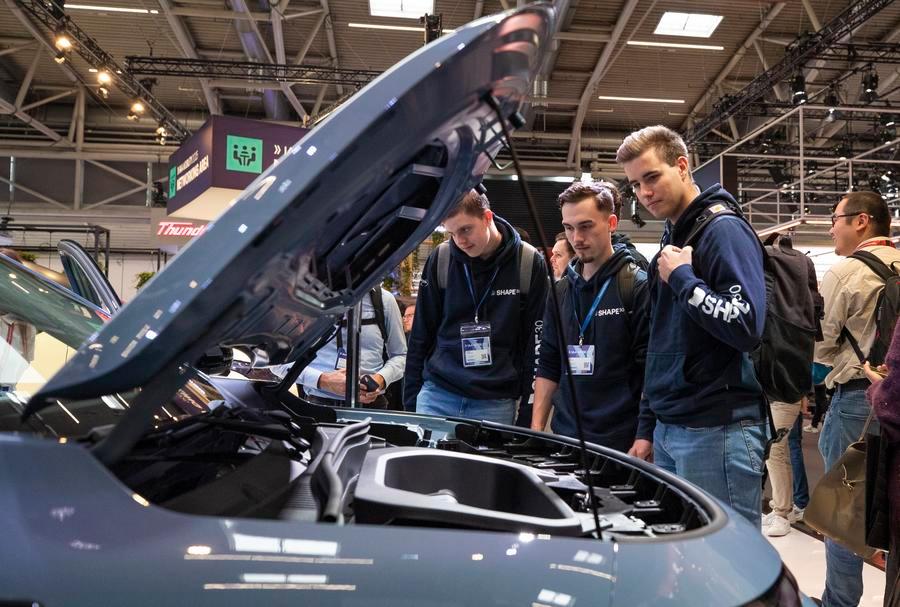
People visit the exhibition zone of Leapmotor at the 2025 IAA Mobility in Munich, Germany, Sept. 10, 2025. (Xinhua/Zhang Fan)
CONSUMER VERDICT
Chinese cars are gaining popularity across Europe, offering competitive specifications at attractive prices. Chinese brands have targeted a segment that legacy automakers have been slow to serve: drivers who previously owned BMWs, Mercedes-Benzes or Range Rovers. According to one dealership in West London, about three in five buyers of Chinese cars previously owned a luxury brand.
Luis Murias, general manager of Spanish automotive data platform DAT, attributes the success of Chinese cars to multiple factors, including "industrial restructuring, commitment, overall quality improvement, competitive features and warranty, and progress in safety standards."
A May survey of young Italian consumers by consulting and market research firm Arete Methodos found that 53 percent of respondents are most attracted by the combination of technological features and product quality of Chinese cars -- outnumbering the 43 percent who cite their competitive prices as decisive.
In recent years, Chinese car makers have accelerated localization. Ten European production plans have been announced since September 2023, advisory company AutoMotion reported, including BYD's first European plant in Szeged, Hungary and SAIC's 200 million-euro (222.7 million U.S. dollars) factory in Spain's Galicia.
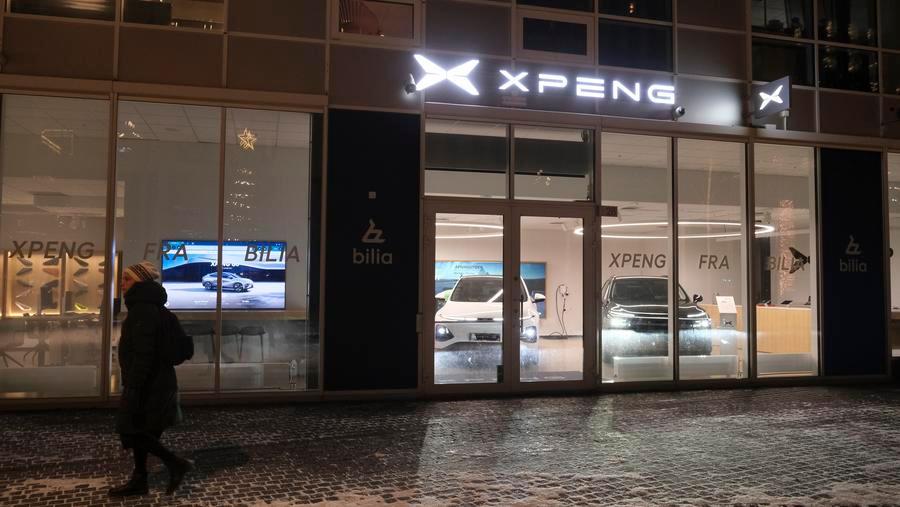
This photo taken on Jan. 2, 2025 shows a showroom of Chinese electric vehicle maker XPeng in Oslo, capital of Norway. (Xinhua/Zhang Yuliang)
SUPPLY-SIDE LOGIC
Lithium iron phosphate (LFP) -- a cheaper, longer-lasting battery chemistry that underpins most affordable EVs -- is forecast to rise from around 10 percent of the European battery market today to between 40 and 60 percent by 2030, yet Europe has no operational plants to make it.
In September, Gotion High-tech, a Chinese battery manufacturer, agreed to invest around 1.1 billion euros (about 1.23 billion dollars) for a 49 percent stake in Volkswagen's battery-cell plant in Sagunto, Spain.
The partnership reflects a complementary division of role. Gotion contributes LFP technology, manufacturing processes and raw material supply chains. PowerCo, Volkswagen's battery subsidiary, brings its European industrial footprint, logistics and regulatory expertise.
Javier Rivera, chief financial officer of PowerCo Battery Spain, described the relationship as having evolved "from supplier to technology partner and now to industrial partner."
Michael Schumann, chairman of the Board of the German Federal Association for Economic Development and Foreign Trade, told Xinhua that German companies remain active in China. A May 2026 flash survey by the German Chamber of Commerce in China found that the share of companies planning to increase their investments in China over the next two years reached its highest level since 2023.
He also pointed to a remarkable shift: German headquarters are increasingly learning from their Chinese operations, not the other way around. "Today, the transformation of the automotive industry, particularly the shift towards electric mobility and software-defined vehicles, is creating new forms of competition and cooperation between German and Chinese companies," Schumann added.
"No single country has ever been able to dominate or capture the entire market. As a leading technology company, BYD will bring relevant technologies to Europe," said BYD Executive Vice President Li Ke. "We will grow here and help the local supply chain transition to next-generation suppliers, making important contributions to the local economy."
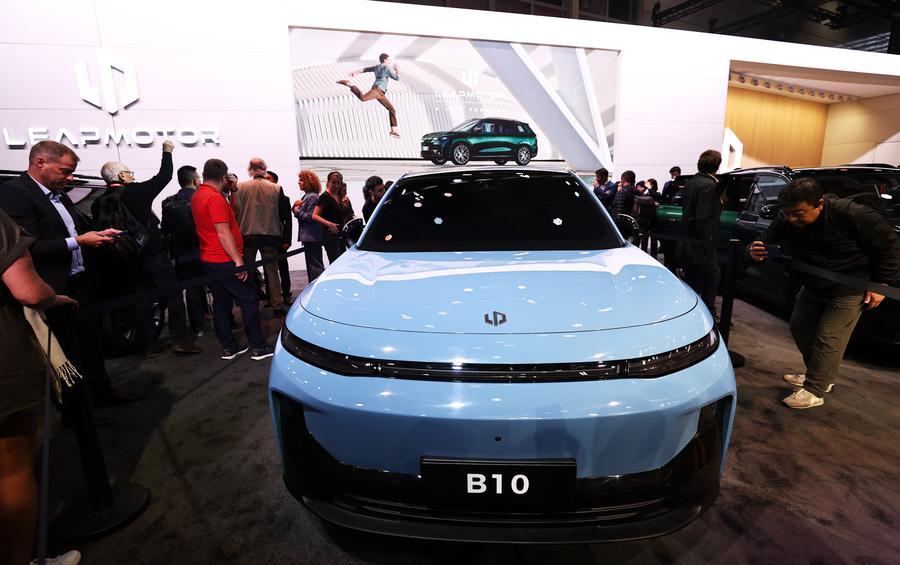
People visit the pavilion of Chinese carmaker Leapmotor at the 2024 Paris Motor Show during the media day in Paris, France, Oct. 14, 2024. (Xinhua/Gao Jing)
REBALANCING THROUGH COMPLEMENTARITY
The automotive sector attracted more Chinese Foreign Direct Investment in 2025 than any other industry in Europe. Investments in the sector totaled 7.6 billion euros (8.5 billion dollars), with 93 percent of them focused on the EV supply chain, according to a report by Rhodium Group and MERICS.
"Europe has a great tradition in design," Andrea Levy, president of the Turin Auto Show, told Xinhua, adding that cooperation can combine different strengths and contribute to better vehicles.
Industry insiders believe that the pairing is no temporary arrangement.
"China Speed is not a cultural phenomenon, but the result of clear decisions regarding product design, portfolio complexity, and the supplier base," said Oliver Knapp, a partner at global management consultancy Roland Berger. "And that is precisely why parts of it can also be implemented in Europe."
Alexandre Marian, a partner at AlixPartners, depicted the Stellantis-Leapmotor deal as a "reverse joint venture," in which European manufacturers seek alliances to learn Chinese EV know-how.
"If our (Stellantis and Leapmotor) partnership is the strategy, Zaragoza is the proof that we can combine global technology, competitiveness and European industrial capabilities," said Stellantis representative Silvia Vernetti.
点击右上角 微信好友
 朋友圈

请使用浏览器分享功能进行分享