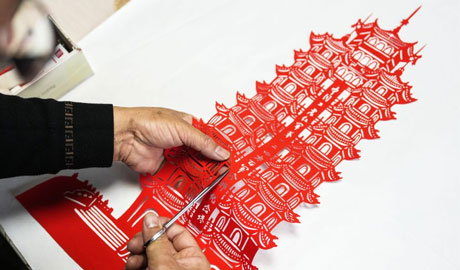


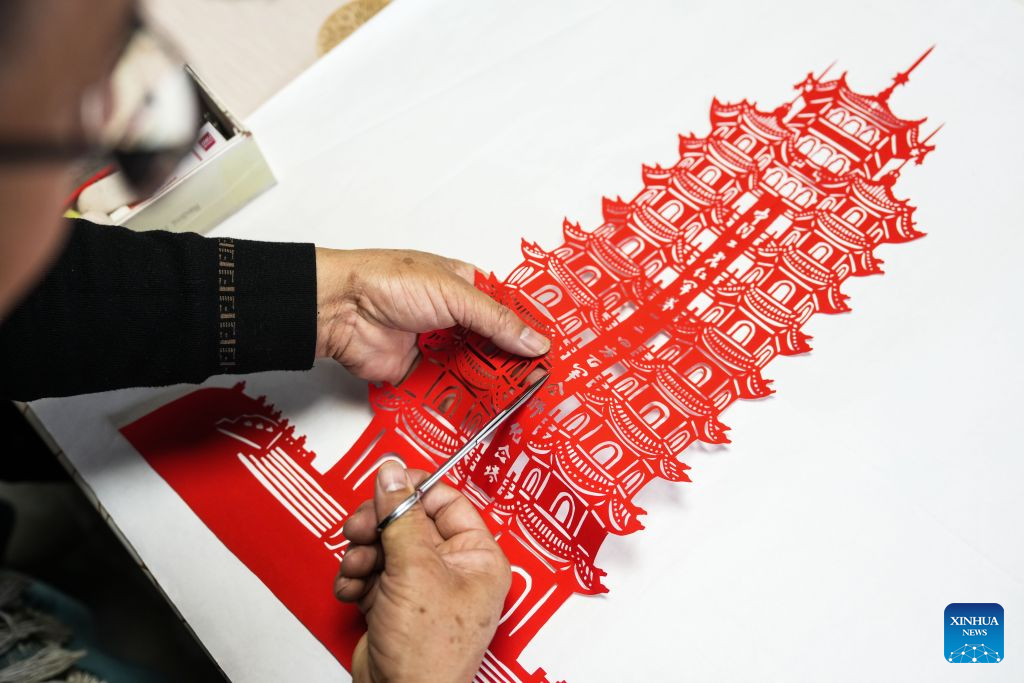
Wang Xinsheng makes a Long March-themed paper-cutting work in Huining County, northwest China's Gansu Province, Oct. 17, 2026. Wang Xinsheng, 56, a representative inheritor of Huining paper-cutting, has spent years using the traditional art form to tell stories of the Long March. Known for its vivid designs and diverse themes, Huining paper-cutting was listed as a national intangible cultural heritage in 2011.
Wang learned paper-cutting from his mother at an early age, developing his skills through works featuring flowers, animals and traditional opera characters. After he began working, he gradually shifted his focus from traditional subjects to real-life themes, particularly stories of the Long March associated with Huining.
In 2025, Wang spent several months creating a 15-meter-long paper-cutting scroll titled "The Long March." The artwork combines major events of the historic journey with poetry and traditional floral and bird patterns. It is now in the collection of the cultural center of Huining County, and has been exhibited to mark the 90th anniversary of the victory of the Red Army's Long March.
Today, Wang is passing the craft to his children and grandchildren. "As paper-cutting artisans, we have a responsibility to keep this tradition alive," he said. (Xinhua/Lang Bingbing)
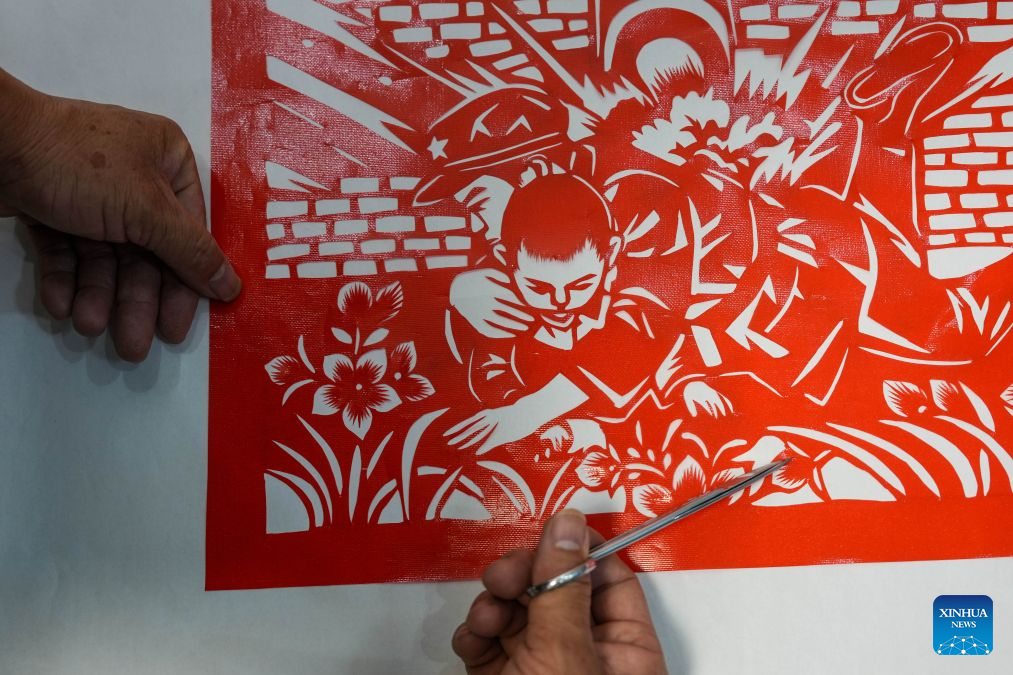
Wang Xinsheng makes a Long March-themed paper-cutting work in Huining County, northwest China's Gansu Province, Oct. 16, 2026. Wang Xinsheng, 56, a representative inheritor of Huining paper-cutting, has spent years using the traditional art form to tell stories of the Long March. Known for its vivid designs and diverse themes, Huining paper-cutting was listed as a national intangible cultural heritage in 2011.
Wang learned paper-cutting from his mother at an early age, developing his skills through works featuring flowers, animals and traditional opera characters. After he began working, he gradually shifted his focus from traditional subjects to real-life themes, particularly stories of the Long March associated with Huining.
In 2025, Wang spent several months creating a 15-meter-long paper-cutting scroll titled "The Long March." The artwork combines major events of the historic journey with poetry and traditional floral and bird patterns. It is now in the collection of the cultural center of Huining County, and has been exhibited to mark the 90th anniversary of the victory of the Red Army's Long March.
Today, Wang is passing the craft to his children and grandchildren. "As paper-cutting artisans, we have a responsibility to keep this tradition alive," he said. (Xinhua/Lang Bingbing)
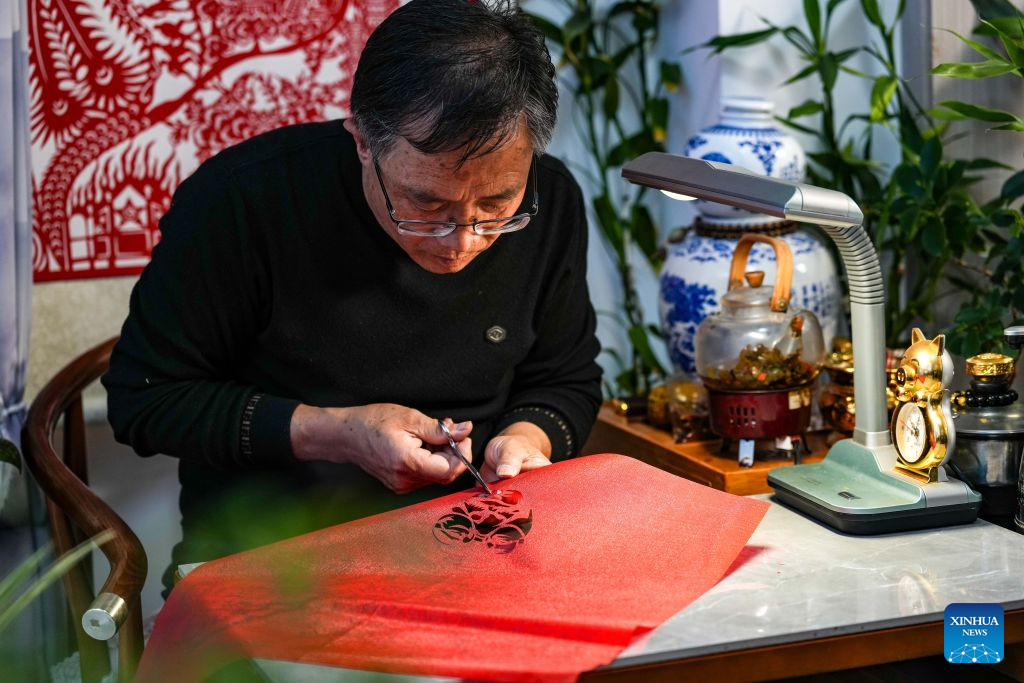
Wang Xinsheng makes a paper-cutting work in Huining County, northwest China's Gansu Province, Oct. 16, 2026. Wang Xinsheng, 56, a representative inheritor of Huining paper-cutting, has spent years using the traditional art form to tell stories of the Long March. Known for its vivid designs and diverse themes, Huining paper-cutting was listed as a national intangible cultural heritage in 2011.
Wang learned paper-cutting from his mother at an early age, developing his skills through works featuring flowers, animals and traditional opera characters. After he began working, he gradually shifted his focus from traditional subjects to real-life themes, particularly stories of the Long March associated with Huining.
In 2025, Wang spent several months creating a 15-meter-long paper-cutting scroll titled "The Long March." The artwork combines major events of the historic journey with poetry and traditional floral and bird patterns. It is now in the collection of the cultural center of Huining County, and has been exhibited to mark the 90th anniversary of the victory of the Red Army's Long March.
Today, Wang is passing the craft to his children and grandchildren. "As paper-cutting artisans, we have a responsibility to keep this tradition alive," he said. (Xinhua/Lang Bingbing)
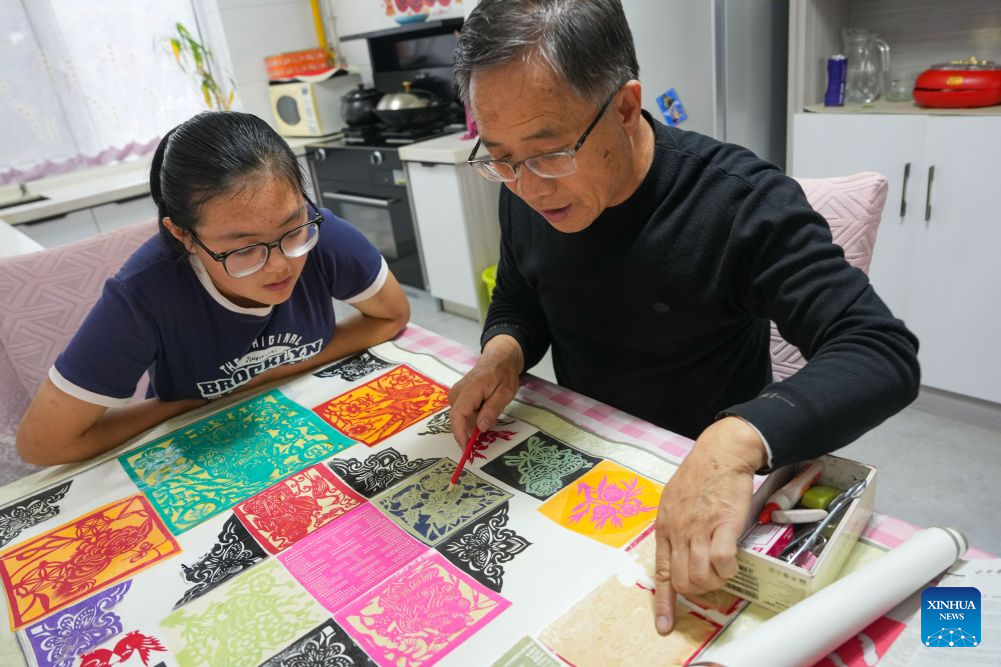
Wang Xinsheng shows his grandniece the paper-cutting works created by his late mother in Huining County, northwest China's Gansu Province, Oct. 17, 2026. Wang Xinsheng, 56, a representative inheritor of Huining paper-cutting, has spent years using the traditional art form to tell stories of the Long March. Known for its vivid designs and diverse themes, Huining paper-cutting was listed as a national intangible cultural heritage in 2011.
Wang learned paper-cutting from his mother at an early age, developing his skills through works featuring flowers, animals and traditional opera characters. After he began working, he gradually shifted his focus from traditional subjects to real-life themes, particularly stories of the Long March associated with Huining.
In 2025, Wang spent several months creating a 15-meter-long paper-cutting scroll titled "The Long March." The artwork combines major events of the historic journey with poetry and traditional floral and bird patterns. It is now in the collection of the cultural center of Huining County, and has been exhibited to mark the 90th anniversary of the victory of the Red Army's Long March.
Today, Wang is passing the craft to his children and grandchildren. "As paper-cutting artisans, we have a responsibility to keep this tradition alive," he said. (Xinhua/Lang Bingbing)
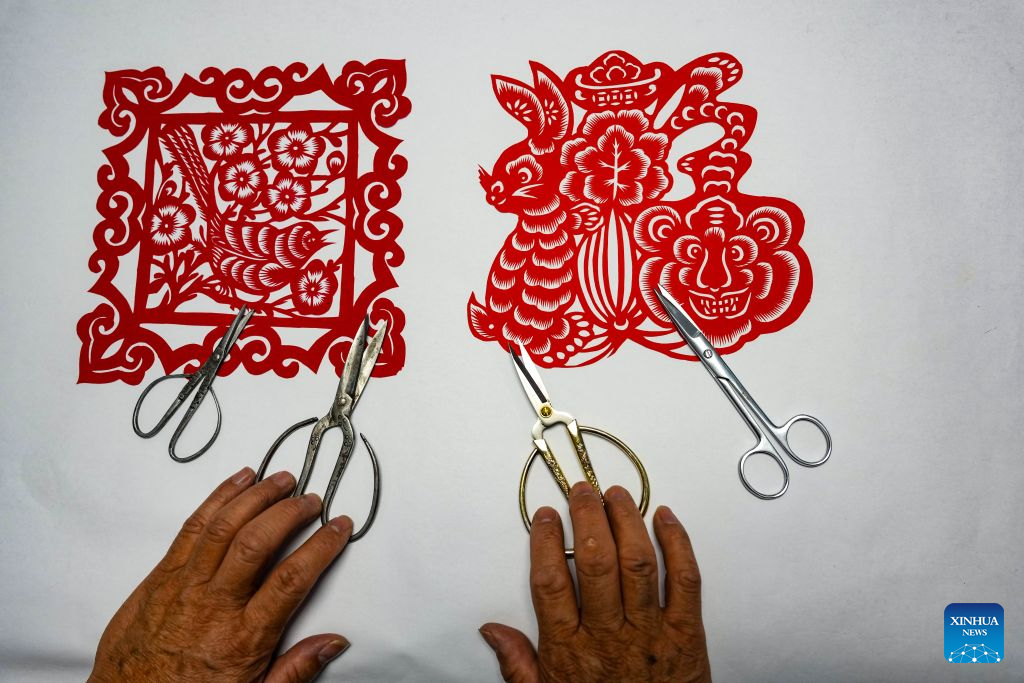
Wang Xinsheng displays his mother's scissors and paper-cutting works (L) alongside his own (R) in Huining County, northwest China's Gansu Province, Oct. 16, 2026. Wang Xinsheng, 56, a representative inheritor of Huining paper-cutting, has spent years using the traditional art form to tell stories of the Long March. Known for its vivid designs and diverse themes, Huining paper-cutting was listed as a national intangible cultural heritage in 2011.
Wang learned paper-cutting from his mother at an early age, developing his skills through works featuring flowers, animals and traditional opera characters. After he began working, he gradually shifted his focus from traditional subjects to real-life themes, particularly stories of the Long March associated with Huining.
In 2025, Wang spent several months creating a 15-meter-long paper-cutting scroll titled "The Long March." The artwork combines major events of the historic journey with poetry and traditional floral and bird patterns. It is now in the collection of the cultural center of Huining County, and has been exhibited to mark the 90th anniversary of the victory of the Red Army's Long March.
Today, Wang is passing the craft to his children and grandchildren. "As paper-cutting artisans, we have a responsibility to keep this tradition alive," he said. (Xinhua/Lang Bingbing)
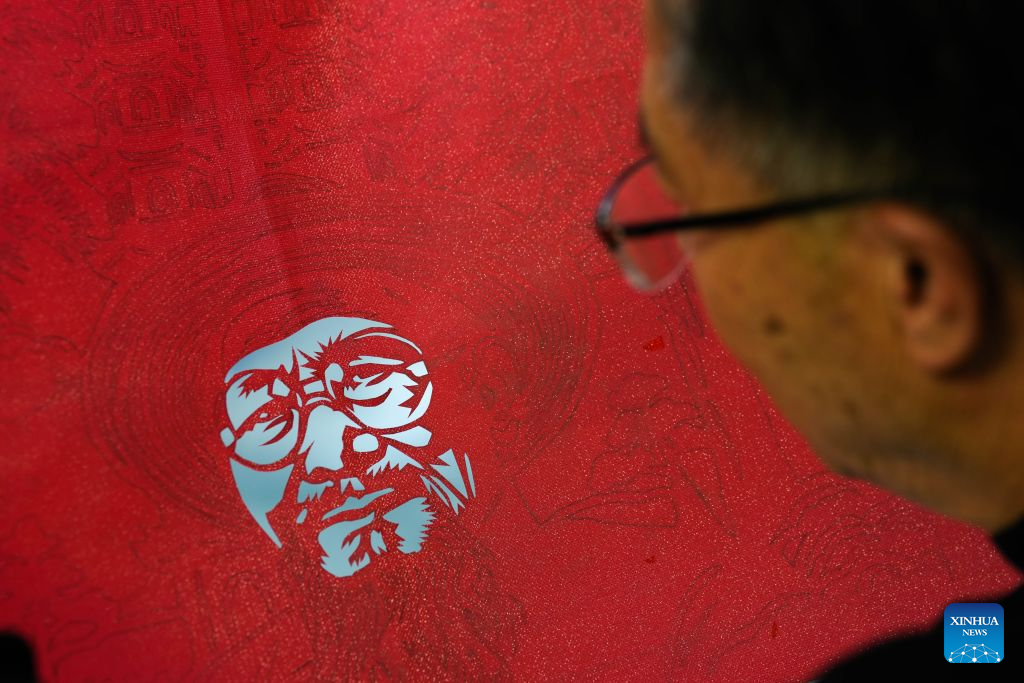
Wang Xinsheng checks the details of a Red Army veteran's face in his paper-cutting work in Huining County, northwest China's Gansu Province, Oct. 16, 2026. Wang Xinsheng, 56, a representative inheritor of Huining paper-cutting, has spent years using the traditional art form to tell stories of the Long March. Known for its vivid designs and diverse themes, Huining paper-cutting was listed as a national intangible cultural heritage in 2011.
Wang learned paper-cutting from his mother at an early age, developing his skills through works featuring flowers, animals and traditional opera characters. After he began working, he gradually shifted his focus from traditional subjects to real-life themes, particularly stories of the Long March associated with Huining.
In 2025, Wang spent several months creating a 15-meter-long paper-cutting scroll titled "The Long March." The artwork combines major events of the historic journey with poetry and traditional floral and bird patterns. It is now in the collection of the cultural center of Huining County, and has been exhibited to mark the 90th anniversary of the victory of the Red Army's Long March.
Today, Wang is passing the craft to his children and grandchildren. "As paper-cutting artisans, we have a responsibility to keep this tradition alive," he said. (Xinhua/Lang Bingbing)
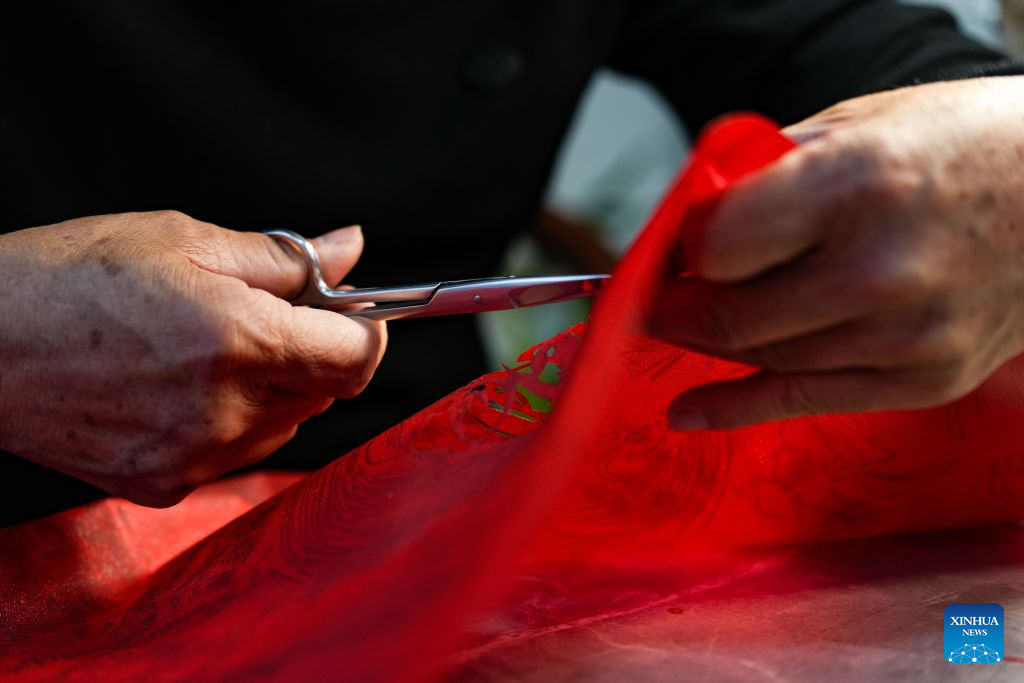
Wang Xinsheng makes a paper-cutting work in Huining County, northwest China's Gansu Province, Oct. 16, 2026. Wang Xinsheng, 56, a representative inheritor of Huining paper-cutting, has spent years using the traditional art form to tell stories of the Long March. Known for its vivid designs and diverse themes, Huining paper-cutting was listed as a national intangible cultural heritage in 2011.
Wang learned paper-cutting from his mother at an early age, developing his skills through works featuring flowers, animals and traditional opera characters. After he began working, he gradually shifted his focus from traditional subjects to real-life themes, particularly stories of the Long March associated with Huining.
In 2025, Wang spent several months creating a 15-meter-long paper-cutting scroll titled "The Long March." The artwork combines major events of the historic journey with poetry and traditional floral and bird patterns. It is now in the collection of the cultural center of Huining County, and has been exhibited to mark the 90th anniversary of the victory of the Red Army's Long March.
Today, Wang is passing the craft to his children and grandchildren. "As paper-cutting artisans, we have a responsibility to keep this tradition alive," he said. (Xinhua/Lang Bingbing)
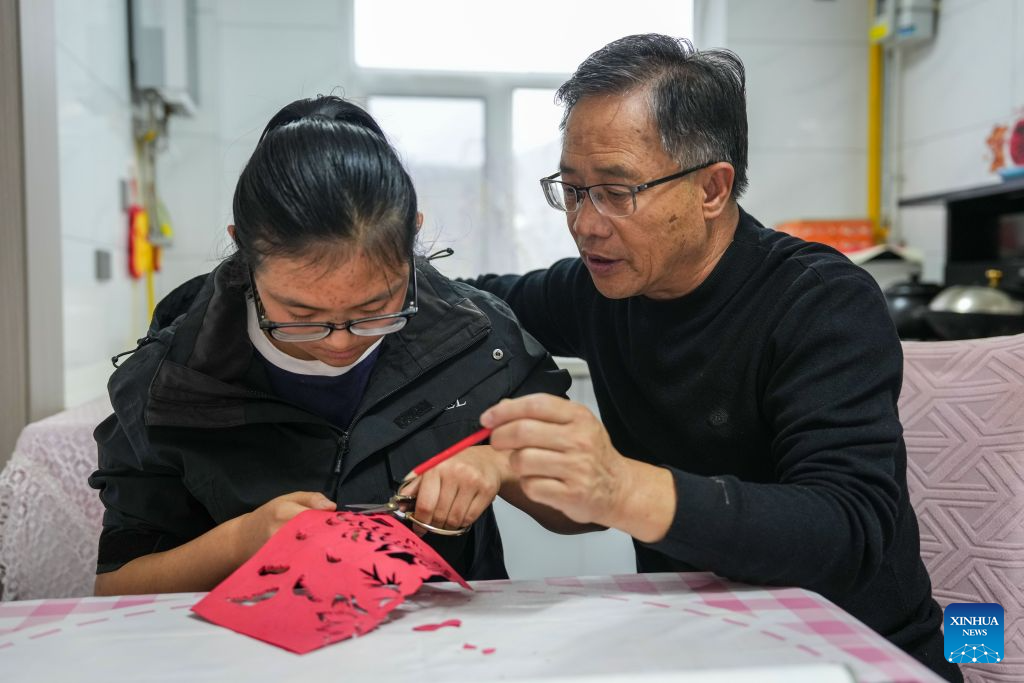
Wang Xinsheng guides his grandniece in paper-cutting in Huining County, northwest China's Gansu Province, Oct. 17, 2026. Wang Xinsheng, 56, a representative inheritor of Huining paper-cutting, has spent years using the traditional art form to tell stories of the Long March. Known for its vivid designs and diverse themes, Huining paper-cutting was listed as a national intangible cultural heritage in 2011.
Wang learned paper-cutting from his mother at an early age, developing his skills through works featuring flowers, animals and traditional opera characters. After he began working, he gradually shifted his focus from traditional subjects to real-life themes, particularly stories of the Long March associated with Huining.
In 2025, Wang spent several months creating a 15-meter-long paper-cutting scroll titled "The Long March." The artwork combines major events of the historic journey with poetry and traditional floral and bird patterns. It is now in the collection of the cultural center of Huining County, and has been exhibited to mark the 90th anniversary of the victory of the Red Army's Long March.
Today, Wang is passing the craft to his children and grandchildren. "As paper-cutting artisans, we have a responsibility to keep this tradition alive," he said. (Xinhua/Lang Bingbing)
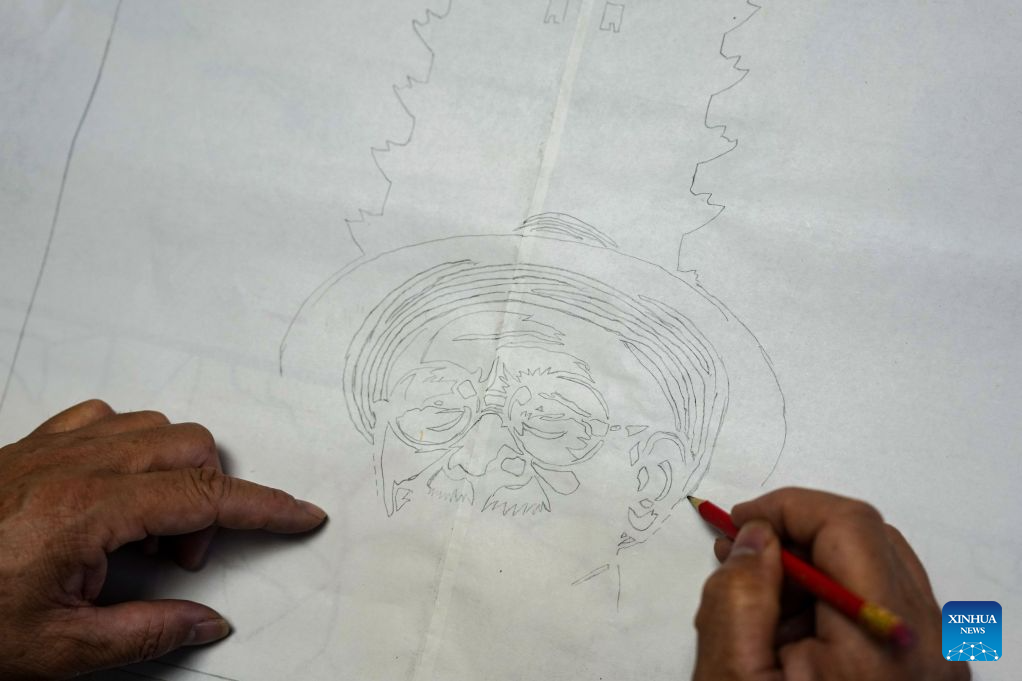
Wang Xinsheng sketches a Long March-themed paper-cutting design in Huining County, northwest China's Gansu Province, Oct. 17, 2026. Wang Xinsheng, 56, a representative inheritor of Huining paper-cutting, has spent years using the traditional art form to tell stories of the Long March. Known for its vivid designs and diverse themes, Huining paper-cutting was listed as a national intangible cultural heritage in 2011.
Wang learned paper-cutting from his mother at an early age, developing his skills through works featuring flowers, animals and traditional opera characters. After he began working, he gradually shifted his focus from traditional subjects to real-life themes, particularly stories of the Long March associated with Huining.
In 2025, Wang spent several months creating a 15-meter-long paper-cutting scroll titled "The Long March." The artwork combines major events of the historic journey with poetry and traditional floral and bird patterns. It is now in the collection of the cultural center of Huining County, and has been exhibited to mark the 90th anniversary of the victory of the Red Army's Long March.
Today, Wang is passing the craft to his children and grandchildren. "As paper-cutting artisans, we have a responsibility to keep this tradition alive," he said. (Xinhua/Lang Bingbing)
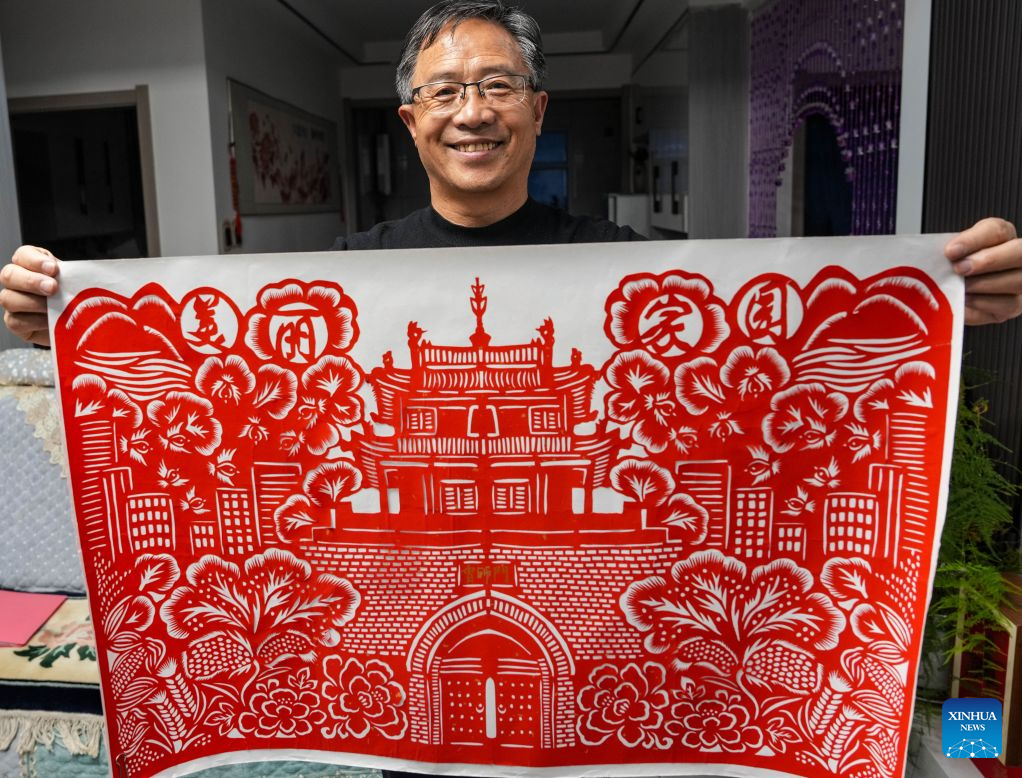
Wang Xinsheng shows his Long March-themed paper-cutting work in Huining County, northwest China's Gansu Province, Oct. 16, 2026. Wang Xinsheng, 56, a representative inheritor of Huining paper-cutting, has spent years using the traditional art form to tell stories of the Long March. Known for its vivid designs and diverse themes, Huining paper-cutting was listed as a national intangible cultural heritage in 2011.
Wang learned paper-cutting from his mother at an early age, developing his skills through works featuring flowers, animals and traditional opera characters. After he began working, he gradually shifted his focus from traditional subjects to real-life themes, particularly stories of the Long March associated with Huining.
In 2025, Wang spent several months creating a 15-meter-long paper-cutting scroll titled "The Long March." The artwork combines major events of the historic journey with poetry and traditional floral and bird patterns. It is now in the collection of the cultural center of Huining County, and has been exhibited to mark the 90th anniversary of the victory of the Red Army's Long March.
Today, Wang is passing the craft to his children and grandchildren. "As paper-cutting artisans, we have a responsibility to keep this tradition alive," he said. (Xinhua/Lang Bingbing)
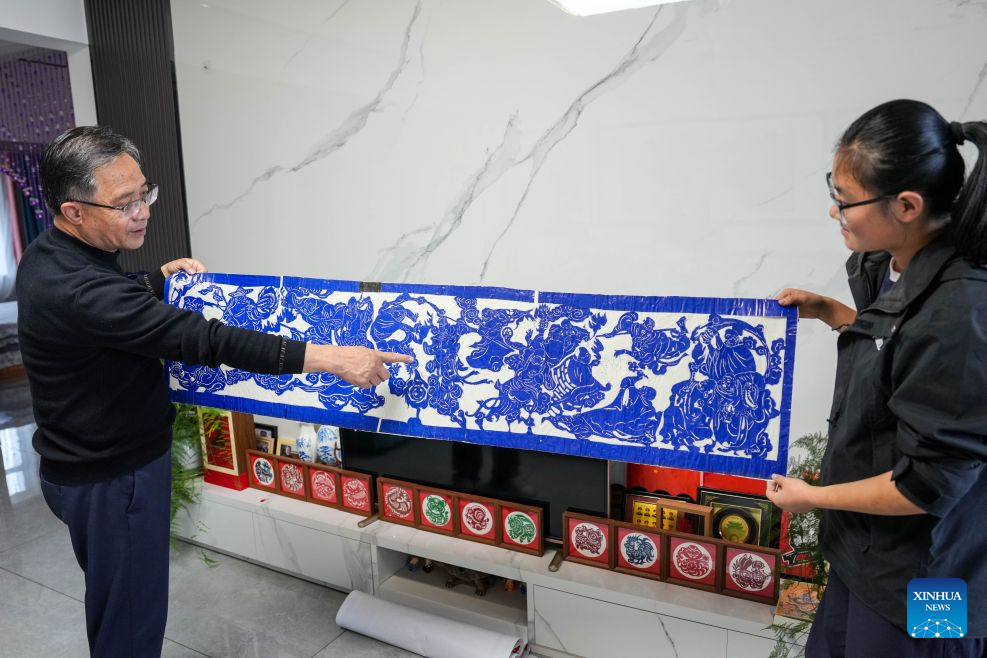
Wang Xinsheng shows his grandniece the first paper-cutting work he created in Huining County, northwest China's Gansu Province, Oct. 17, 2026. Wang Xinsheng, 56, a representative inheritor of Huining paper-cutting, has spent years using the traditional art form to tell stories of the Long March. Known for its vivid designs and diverse themes, Huining paper-cutting was listed as a national intangible cultural heritage in 2011.
Wang learned paper-cutting from his mother at an early age, developing his skills through works featuring flowers, animals and traditional opera characters. After he began working, he gradually shifted his focus from traditional subjects to real-life themes, particularly stories of the Long March associated with Huining.
In 2025, Wang spent several months creating a 15-meter-long paper-cutting scroll titled "The Long March." The artwork combines major events of the historic journey with poetry and traditional floral and bird patterns. It is now in the collection of the cultural center of Huining County, and has been exhibited to mark the 90th anniversary of the victory of the Red Army's Long March.
Today, Wang is passing the craft to his children and grandchildren. "As paper-cutting artisans, we have a responsibility to keep this tradition alive," he said. (Xinhua/Lang Bingbing)
点击右上角 微信好友
 朋友圈

请使用浏览器分享功能进行分享