

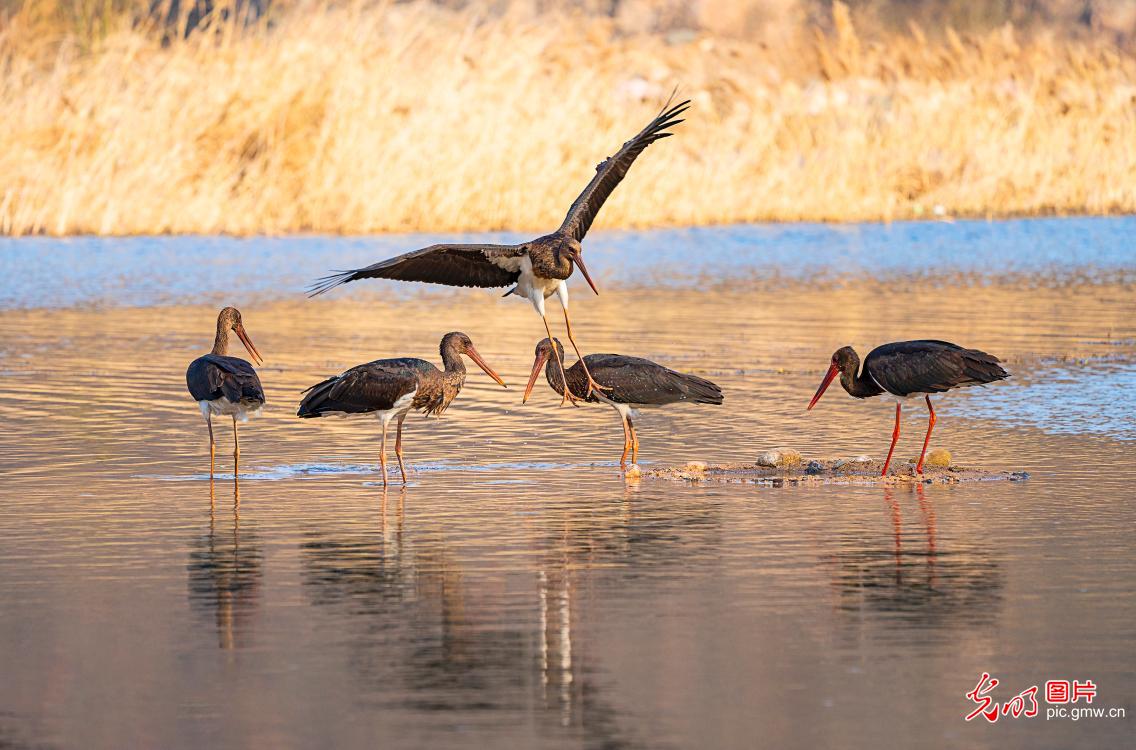
Photo taken on March 7, 2024 shows 12 rare black storks foraging and resting in the riverbank at Lushan County, Pingdingshan City of central China’s Henan Province. Black storks are known as the “bird of pandas”, they are wild animals under first-class national protection, with a rare number of only about 1,000 in the country. For three consecutive years, these environmentally demanding black storks have chosen to spend winter in Shahe River, demonstrating that the ecological environment of Shahe River continues to improve. (Li Peixian/Guangming Picture)
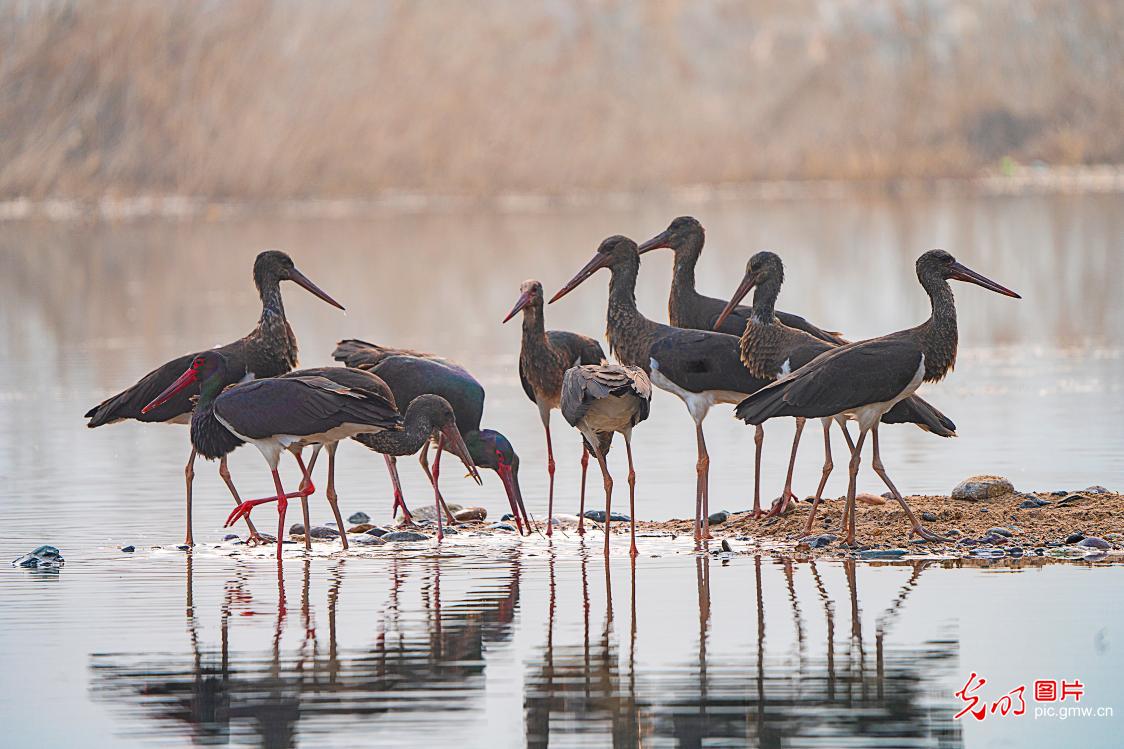
Photo taken on March 7, 2024 shows 12 rare black storks foraging and resting in the riverbank at Lushan County, Pingdingshan City of central China’s Henan Province. Black storks are known as the “bird of pandas”, they are wild animals under first-class national protection, with a rare number of only about 1,000 in the country. For three consecutive years, these environmentally demanding black storks have chosen to spend winter in Shahe River, demonstrating that the ecological environment of Shahe River continues to improve. (Li Peixian/Guangming Picture)
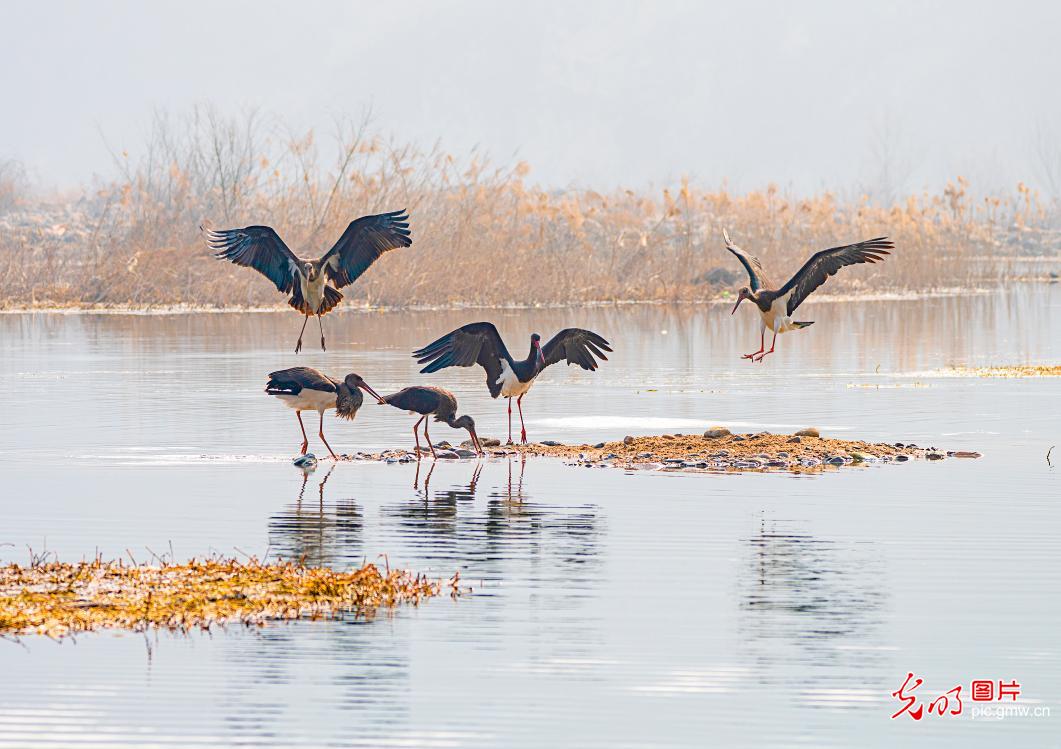
Photo taken on March 7, 2024 shows 12 rare black storks foraging and resting in the riverbank at Lushan County, Pingdingshan City of central China’s Henan Province. Black storks are known as the “bird of pandas”, they are wild animals under first-class national protection, with a rare number of only about 1,000 in the country. For three consecutive years, these environmentally demanding black storks have chosen to spend winter in Shahe River, demonstrating that the ecological environment of Shahe River continues to improve. (Li Peixian/Guangming Picture)
点击右上角 微信好友
微信好友
 朋友圈
朋友圈

请使用浏览器分享功能进行分享