


URUMQI, Oct. 26 (Xinhua) -- A recent study has shed new light on how global warming has reshaped extreme rainfall and snowfall across the Northern Hemisphere over the past seven decades.
The study, led by researchers from the Xinjiang Institute of Ecology and Geography of the Chinese Academy of Sciences, has been published in the journal Advances in Climate Change Research.
According to the study, global warming has modified the distribution of both solid and liquid precipitation -- leading to changes in the intensity and frequency of extreme rainfall and snowfall.
Using ERA5-Land reanalysis data spanning from 1950 to 2022, the researchers conducted a comprehensive analysis of long-term trends, temperature sensitivity, and the driving mechanisms of extreme rainfall and extreme snowfall across the Northern Hemisphere.
They found that over the past seven decades, extreme rainfall has intensified at a rate of 0.269 mm per year -- nearly nine times faster than the rate of increase for extreme snowfall, which is 0.029 mm per year.
The study also suggested that warmer temperatures will mainly contribute to an increase in extreme rainfall but exert relatively modest effects on extreme snowfall.
"Extreme precipitation is a critical factor in risk management," said Li Yupeng, first author of the study. "Mid-latitude regions should prioritize managing flood risks driven by intensified rainfall, while high-latitude and alpine regions need to address hazard risks related to snow."
Li added that the study offers an insight for understanding global extreme precipitation patterns and supports the design of region-specific climate adaptation and disaster prevention strategies.
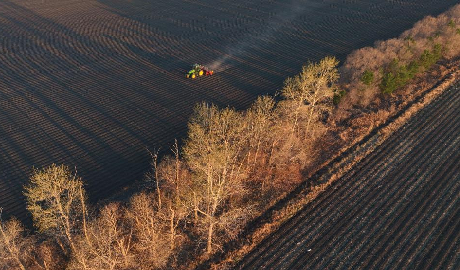
China's Heilongjiang busy with sowing operations in farming season

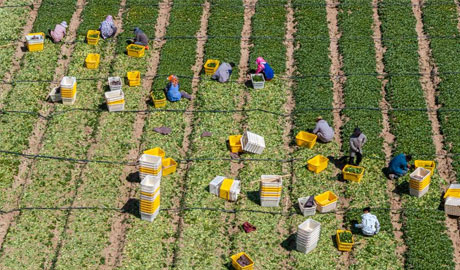
First crop of cool-season vegetables in China's Helan enters harvesting season
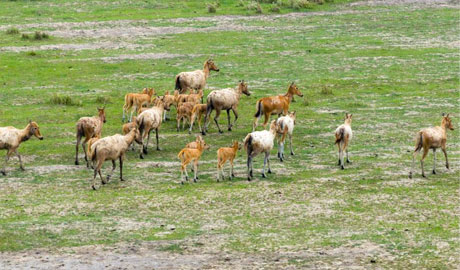
Tiaozini wetland in China's Jiangsu creates ideal habitat for milu deer

Masterpieces of Italian Renaissance exhibited at National Art Museum of China in Beijing
点击右上角 微信好友
微信好友
 朋友圈
朋友圈

请使用浏览器分享功能进行分享